Is this the third industrial revolution?

hologram-brain-on-cpu-chip-grow-artificial-intelligence-technology_bjs2b-f__F0010

We are standing at a moment in history where we are about to witness a third industrial revolution brought about by the fast increasing adoption of digital technology by industry after industry.

We have already seen the Internet deliver a second industrial revolution in the postal and telecoms industries, the publishing world and the music industry to name just a few that are extremely obvious.

We also seen new disruptive business models from companies like Uber and Airbnb. This has been called “innovation through creative disruption” by economist Joseph Schumpeter.

I agree with Matthias Stettler of greenmatch AG, who says in a recent Medium article that although there is a tendency for some to focus on the risks apparently associated with the speed at which the digital world is taking over our lives, there is a lot more that needs to be said about the opportunities it offers.

There is the Internet of Things as well as the Internet of Assets, which Stettler suggests combine the real and virtual worlds. And in this realm, it is the Fintechs that are seeing the opportunity to disrupt the conventional financial services, a sector that hasn’t had a shake-up since the first industrial revolution in the 19th century. In this respect, it seems rational to say that it was due for a change.

One thing that fascinates me about Stettler’s view is his argument that what we are seeing now is another industrial revolution. We know that the first one changed society dramatically with the advent of the steam train, followed by the invention of the telephone and so on.

He argues that we most definitely can call it a third industrial revolution, and says: “Considering that an industrial revolution occurs whenever a new primary energy source starts being used (keyword renewable energies), and that new communication technologies (the internet) emerge and changes in mobility (autonomous driving) are involved: then the answer is yes!”

He also points out that robotics and AI are making rapid progress, plus the new technology is decentralised and has virtually no marginal costs. It will also impact on society in every way. Already we are seeing a move towards one that is less divided by the notions of left wing and right wing: these are being replaced by “liberal-global and national-conservative,” as he puts it.

What personally interests me most is this: “Industrial revolutions are times of tremendous opportunities for founders of new businesses.” This third one will be blockchain-backed I would predict and we will see some interesting new products in the fintech arena in particular.


Bringing AI and the blockchain together

shutterstock_618815732

Artificial intelligence (AI) is one of the major technologies of our time. It has introduced numerous innovations, many of which we are not even aware of as we use apps employing it. The blockchain is the other technological breakthrough that is introducing radical shifts in the way we store information amongst its many other potential uses.

Each of these technologies has its own complexity and business use cases, but what would happen if we brought the two together? There are some interesting possibilities, benefits and challenges arising from coupling them.

The blockchain technology is a “foundational technology” changes the basis of relationships from a centralised model to a decentralised one. It has the potential through the distributed ledger technology (DLT) to “reduce both the costs of verification and networking, influencing then the market structure and eventually allowing the creation of new marketplaces.” It could change business models, because it doesn’t just store information or allow transactions, it can also support smart contracts that operate effortlessly.

AI could change various current aspects of the blockchain. For example, mining new blocks on the blockchain uses a lot of electricity. AI is known to optimise energy consumption, so this is one way in which it could positively affect the blockchain and the mining operations.

It could also solve the blockcian’s scalability issues with the use of an AI sharding technique or decentralised learning system. Security is another major headache for the blockchain. It is supposed to be unhackable, but theft from exchanges like Mt. Gox and Bitfinex show that isn’t the case. AI could come into play here and add another level of security.

Of course, the blockchain may also have an effect on AI. It could help AI explain itself by providing a clear audit trail. It could also make it more effective by supporting better AI models, actions, results and networks. And it could increase artificial trust. For example, where bots manage various tasks, the clear audit trail will help these bots to trust each other more.

So far, we have not seen many companies operating an AI-blockchain convergence, with the majority in the decentralised intelligence sector, although there are a few in conversation platforms, trading, intellectual property and data provenance. But, they are literally a handful, and it is still difficult to assess the potential impact of bringing these two world-changing technologies together.


Canadian Bunz gives you BTZ

2018041003135713

Canada has a tradition of coming up with interesting community-oriented solutions and a report from The Globe and Mail about Bunz, a Toronto-based online barter market, illustrates the kind of innovative thinking that comes out of this country.

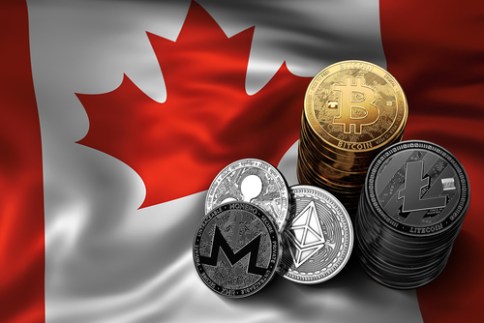
The group has launched a cryptocurrency called BTZ (pronounced ‘bits’) for use by its members. BTZ is an acronym for Bunz Trading Zone and it became available to community members on 9th April.

Each member of the barter platform has been given 1,000 BTZ and they can exchange them with each other, or use them to pay for goods and services at the 100 merchants on the Bunz site. It is estimated that the 1,000 BTZ is worth about three or four cups of coffee, but even in this smallish community, the cryptocurrency value can fluctuate.

Sascha Mojtahedi, CEO of Bunz, told the Toronto paper, “We know the technology works … but we haven’t really seen a viable use case that the mass market can get behind. I think we’re going to be the first example of that.”

The Bunz concept started off as a small Facebook group organised by fashion designer Emily Bitze. She was looking for a place to swap unwanted items with friends. Selling items for cash wasn’t part of the idea; it was completely focused on the barter system. As simple as it may sound, it was an idea that took off through word of mouth and by 2016, Bunz had its own website.

However, the lack of cash transactions posed a problem for the enterprise, because without it there was “no obvious income stream” says its CEO. He hopes that by launching the BTZ cryptocurrency, more users will join the platform. As he told Cointelegraph:

“You have to be able to reward people with cryptocurrency that they’ve earned as a result of their passive involvement in the network and then enable them to use it with their peers and merchants. It gives us the room to create new models that people may not have thought of.”

Mojtahedi came from a financial background at the Dominion Bank and it is also notable that Bunz has attracted institutional investors such as Fidelity Investments. Bunz users have completed more than a million transactions, with 2.3 million items currently on offer in more than 200 cities around the world. BTZ from Bunz could be an interesting crypto ecosystem to watch as it develops and we may see other similar schemes emerging in the future.


The human genome: a suitable case for the blockchain

blockchain

New blockchain projects are announced every day in the crypto press. They range from the practical to the fantastical, but one that caught my eye this morning, is the Shivom project that aims to “enable DNA data owners to collaborate with revolutionary change-makers in biotechnology, healthcare industry and government-ordained research institutes and contribute to an unprecedented era of medical marvels.”

What is the offer for you and me? Essentially, we can ‘donate’ our DNA for use by researchers, have a guarantee that there is securely controlled access to our DNA data and get rewarded for making the donation.

If you’ve been following the human genome story, you’ll know that since 2003, research into this element of the human makeup has been ever more intensely researched. It has already led to increased understanding of the way specific genes contribute to our health and to disease.

Shivom wants to build the world’s largest genomic hub. Participants will be rewarded for sharing their DNA with scientists and the sale of DNA testing kits to donors is another element of Shivom’s revenue stream. Cointelegraph writes: “Members of the Shivom ecosystem will have access to ‘an open marketplace for healthcare providers to add their apps and services, alongside genomic data analytics and personalised medicine.”

The most important thing with this project, in my view, is security. No DNA donor wants this most personal of data, the blueprint of who each individual is, getting into the hands of persons unknown. The Facebook-Cambridge Analytica case has already put the wind up a number of social media users, who feel betrayed that their personal data was essentially sold on without their agreement. To put it bluntly, it was stolen. But there is a significant difference between a Facebook profile and a person’s DNA.

According to Shivom, there is tight security around the DNA that will be stored on the blockchain. When data is sold to third parties, each of these must have a paired private key to access the data, with donors controlling access to their information even after it has been sold.

The scientific potential of this project is not to be underestimated. For example, the data could be used in clinical trials, or for more general drug research and development.

It is selling the OmiX token that will give holders access to the benefits of rewards for donating data, accessing genome database and acquiring DNA kits. It is working with several scientific bodies, the Indian state of Andhra Pradesh, which will give Shivom access to around 60 million people’s DNA, and India’s largest cancer care and research facility.

It’s another example of just how flexible and diverse the blockchain is; it isn’t just about cryptocurrency, it is potentially changing the direction of every aspect of the world we inhabit, and the future of humans in it.