Are celebrity brand ambassadors worth it?

ico

Generally, having a celebrity endorse your product is a ‘good thing’! Advertisers will give their right arms for a famous face to front their product. In 2017, Paris Hilton, Floyd Mayweather, Ghostface Killah (Wu Tang Clan) and Jamie Foxx were among the celebrities who were most vocal about their support for crypto and ICOs and they all used their social media platforms to let their followers know what they’re doing in the crypto world.

One thing that ICOs who use celebrity endorsements need to note is that if celebrities don’t disclose if they are benefiting from making an endorsement, the Securities and Exchange Commission in the USA may view it as illegal.

And that is what has happened to Bitcoiin2Gen (B2G) ICO, which has been using Steven Seagal to endorse its offering. As reported in Cointelegraph and many other outlets, New Jersey Bureau of Securities (BoS) regulators issued a ‘cease and desist’ order on 7th March and have accused the team behind the ICO of “fraudulently offering unregistered securities in violation of the Securities Law.”

Clearly the B2G team didn’t get the memo from the SEC about the dangers of celebrity endorsements!

The BoS order focused on what it said was “the secretive nature” of Steven Seagal’s involvement with the business and its ICO. A statement from the regulators said:

The Bitcoin Websites do not disclose what expertise, if any, Steven Seagal has to ensure that the Bitcoiin investments are appropriate and in compliance with federal and state securities laws.”  And added, “Additionally, there are no disclosures as to the nature, scope, and amount of compensation paid by Bitcoiin in exchange for Steven Seagal’s promotion of the Bitcoiin investments.”

Perhaps Seagal was not the best choice of celebrity for a blockchain business, as he is better known as an actor specialising in martial arts, but then none of the other celebrities backing crypto in 2017 are immediately linked to Bitcoin or the blockchain either.

But, it is easy to see where the problem lies from a regulatory perspective. These celebrities have an enormous power over their fans, so when Steven Seagal tweeted on March 6th that B2G would shortly be listed on major exchanges, his fans will take his word as gospel. If he says, “invest in this ICO because I have” in so many words, then that is what his followers will do, and many of them will not be savvy investors who understand the risks and rewards of crypto assets. This is something that the SEC is well aware of, and now it is acting on its previous warnings.

So, whilst a celebrity may do wonders for your alcohol brand or similar consumer item, they are not quite so desirable when it comes to promoting your ICO – unless every aspect of their involvement is completely transparent and regulators can see that they are active in and knowledgeable about the blockchain and cryptocurrency.



Cybercriminals hijack major cryptocurrencies

Cyber Stock

There is a common misconception in the mainstream media that cryptocurrency, especially Bitcoin, is primarily used by criminals as a means of payment. However, the real scenario is that cryptocurrency is a target for criminal hackers. As a result, they have unwittingly created a new market for cyber security firms.

Since cryptcurrencies emerged almost a decade ago, about $1.2 billion of Bitcoin and Ether have been stolen by hackers, according to Lex Sokolin, global director of fintech strategy at Autonomous Research LLP. And as crypto values keep rising, it is more likely that crypto hacking is an ‘industry’ worth $200 million per annum.

It also costs governments and companies a substantial amount in lost revenues and illegal transactions. Susan Eustis, CEO at WinterGreen Research estimates that this figure is around $11.3 billion and she points out that the blockchain ecosystem is also at risk. Eustis also believes that his criminal activity could skyrocket as more investors and businesses enter the cryptocurrency market, especially if they do so without adequate protection.

Setting up for super security

There is a perception that the blockchain is innately secure because its records are shared and hard to alter. But, blockchain security company Comae Technologies says it is no safer than any other form of software. Indeed, its experts argue that because the blockchain is still in its infancy, it may be even less secure than software that has existed for some time. And when you factor in the issue of there being so many cryptocurrencies, each with its own particular bugs, it is a challenge to make them all secure. The answer to this will be to whittle the sector down to a few key players it seems.

Andras Cser at Forrester Research adds:” So while hacking a blockchain may be harder than breaking into a retailer’s database, the rewards are greater and you have much more information you can steal.”

A business opportunity

The situation is good news for cyber security firms. Quantstamp plans to release an automated tool that searches smart contracts for bugs, and established security firms such as McAfee Inc. may also repurpose their products for the blockchain community.

The market for software, services and hardware to secure blockchain activity was $259 million in 2017 and WinterGreen estimates it will grow to $355 billion as the digital economy expands and banks and financial institutions adopt it.  No doubt they will be keeping those funds secure.


Jobs Act 2.0 on the blockchain would work says Weild

Blockchain_Black

The JOBS Act, formally called Jumpstart Our Business Startups, changed the business landscape in the USA during the Obama administration. Now, David Weild IV, one of the people who inspired it through his research into the destructive nature of equity markets, is calling for a ‘Jobs Act 2.0’ to have blockchain at its core, according to an interview with Michael de Castillo, published on Coindesk.

Weild, who is head of investment banking firm Weild and Co. Holdings, says that although he is known to many as ‘The Father of the Jobs Act’, there are a number of things about it that he would change if he had actually written it. As a result, he has been searching for solutions since the legislation passed in 2012 that was intended to help small businesses find funding by easing securities regulations.

His research brought him to the blockchain, which he has steadily become more excited by, especially the opportunity to offer an alternative solution to IPOs. In his 2010 research paper that led to the government putting the Jobs Act in place, he “blamed the drop in IPOs largely on a lack of support for aftermarket business services that help make going public profitable for the post-trade world at large.” As he said in his interview with Castillo: “These small-cap offerings require intermediaries that are adequately compensated to find the other side of the trade, and when you deprive that marketplace of the oxygen that’s required to sustain it, you end up with an erosion of the entire ecosystem of support providers.”

Weild’s now believes that tokenised securities on the blockchain will solve that problem and possibly remove the need for any intermediaries, i.e. trusted banks, in the future. He accepts that the process of making ICOs a securities compliant process will take time, but if he is right, and it seems a probable move, then he will finally realise his original goal for the Jobs Act, and we will have Jobs Act 2.0 on the blockchain.


Bill Gates says crypto causes deaths: WTAF?

Bill-Gates-states-Crypto-caused-deaths-820x500

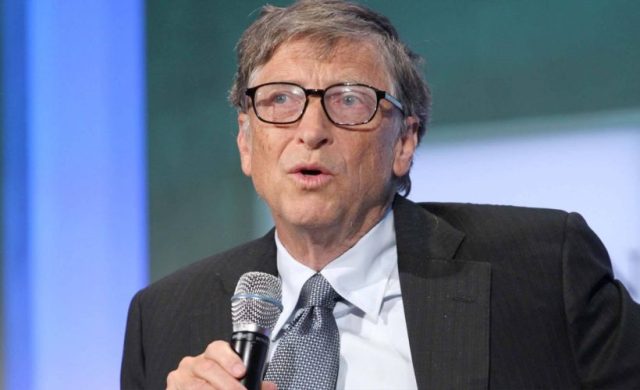
One assumes Bill Gates is a fairly intelligent man, but this became doubtful when he caused an uproar at a Reddit ‘Ask Me Anything’ session by asserting that cryptocurrencies are “a rare technology that has caused deaths in a fairly direct way.”

This is the full text of what he said, as published in Cointelegraph:

“The main feature of crypto currencies is their anonymity. I don’t think this is a good thing. The Government’s ability to find money laundering and tax evasion and terrorist funding is a good thing. Right now crypto currencies are used for buying fentanyl and other drugs so it is a rare technology that has caused deaths in a fairly direct way. I think the speculative wave around ICOs and crypto currencies is super risky for those who go long.”

But, hold on a moment – aren’t more people using dollars and other fiat currencies to buy drugs? Indeed, the 2017 Global Drug Survey shows that whatever country you look at, less than 50% of drug users purchase their fix via the dark web, which is the only online drug source using crypto for payment, and the global average is 10%.

As a result, Bill Gates’ statement went down like a bowl of cold sick with the Reddit audience. Some participants advised him to re-read the Bitcoin whitepaper, whilst others accused him of using his celebrity status to influence a negative view of the cryptocurrency market.

Is it possible that Bill Gates is being deliberately obtuse? When one audience member pointed out that fiat currencies can also be used for illegal activities such as money laundering, tax evasion, terrorist funding, and drug purchases, a statement that you don’t need to have a Harvard education to figure out (oh yes, Bill Gates dropped out of Harvard!), Gates replied: “the necessity of a physical presence makes illicit activities and transfers more difficult.”

Where has this man been living? Because, if you visit any city, even a small town, there are people paying cash for drugs on a regular basis, and it isn’t difficult o find out where it’s going on.

Is there something more shady behind Gates’ announcement? In 2015 he said, “Bitcoin is better than currency.” And the Bill & Melinda Gates Foundation has sponsored the development of blockchain solutions so that Kenyan merchants can accept cryptocurrency.  And, Microsoft is pursuing the development of blockchain technology. So, what’s happening Bill? Who’s pulling your strings?