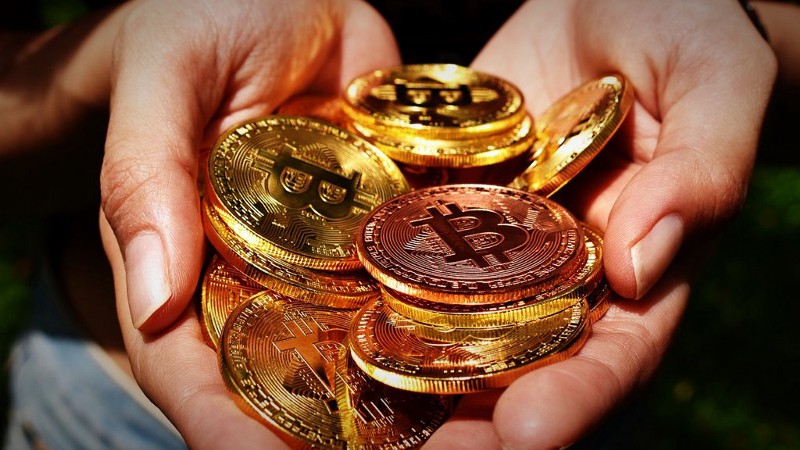
Will the Year of the Ox be bullish?

This year the Chinese New Year is on 12th February and traditionally this event appears to coincide with a ‘Bitcoin dump’ and resulting price drop. However, analysts believe that this year will be quite different, simply because the “impact of retail traders in China has been reduced,” Coindesk reports.

Instead, in recent months, institutional investors in the USA and Europe have been the main drivers of the current bull run, whereas in 2017, Asian retail investors were the driving force.

According to Muyao Shen Chinese language social media platforms have been discussing the possibility that the bull run might have to pause over the New Year holidays, and concerns about Bitcoin have been reinforced by news showing that some Chinese miners sold their Bitcoin in January. There is speculation that this sell-off might have been prompted by the miners anticipating a bearish sentiment arising around the Year of the Ox festivities, as traditionally “Chinese traders tend to withdraw their crypto assets and cash out,” Alex Zuo, vice president of China-based crypto wallet Cobo, told CoinDesk.

The Chinese tradition of giving money to family and friends at New Year is well established. Felix Wang, managing director and partner of investment research firm Hedgeye Risk’s China business explained, “They need cash so they need to liquidate some of their financial holdings, and that could lead to a little bit of pressure in some of the financial markets.”

There is also a need for liquidity, as businesses, including over-the-counter service and crypto trading desks, are closed for a week. Data collected over the past two Chinese New Years shows that trading volume on Binance, Huobi and OKEx were down during the holiday period, and data from TradingView on Binance’s bitcoin/USDT pair shows “in each of the past three years, bitcoin’s price went down before the Chinese New Year.”

Significantly, whilst the Bitcoin price drop at the holiday time was 37.2% in 2018, in 2019 and 2020, it was only 8.3% and 10.5% respectively.

But, as this is the Year of the Ox, perhaps a more bullish sentiment will be sustained with the majority of Chinese traders and investors betting on a positive market trend and so holding on to their Bitcoin.

The Gamestop frenzy that shocked Wall Street

Shareholders in video game retailer, Gamestop, have had a fantastic week, especially the top three thanks to a “frenzied dual between Wall Street traders and small investors, “ as The Guardian reports. Please note that it’s a story so big that has hit the MSM as well as the crypto media.

On Wednesday, the company shares hit a fresh “52-week high of $354.83, making the 13% stake held by Ryan Cohen, 34, GameStop’s largest single shareholder, worth more than $1.3bn.” CNBC reported that Cohen’s wealth   increased an average of $90m a day, or nearly $4m per hour over the last two weeks. The other two major shareholders, Donald Foss and George Sherman made $500m and $350m respectively. Let’s not forget that the stock was trading at less than $20 per share earlier this month. However members of a subreddit group believed Gamestop stock was under attack by a hedge fund that had disclosed a large short position in the stock.

For these small investors the action took place in a Reddit chat room called r/WallStreetBets, where they organised their strategies, their aim being to beat Wall Street traders and funds, such as Black Rock, which holds Gamestop shares now valued at $3 bn. The subreddit members coordinated a pump action on the stock on Reddit, which was executed by individual traders using platforms like TD Ameritrade and Robinhood.

What happened is that these subreddit small investors poured their money into the retailers stocks, while the hedge funds, which had been betting against Gamestop ultimately lost billions. The action became so heated that even the Biden administration announced they were monitoring it.

Over at Cointelegraph, the commentary is focused more on the implications for decentralization. It says, “The success of the GameStop short squeeze in pumping the price above $370 has highlighted the need for decentralized finance, according to some in the crypto industry.”

Why are they talking about decentralization? Because, “Various centralized trading platforms have now put limits on trading the stock and the president of NASDAQ — the exchange on which GME is listed — suggested that trading could be temporarily halted on stocks deliberately targeted by internet users, in order to give investors a chance to ‘recalibrate’.”

Anthony Scaramucci of SkyBridge Capital, believes these recent events surrounding GME are good for crypto and especially bitcoin. He told Bloomberg, it was “more proof of concept that Bitcoin is going to work.”

Furthermore, thanks to activity by derivatives and futures specialists FTX, which has listed a tokenized version of Gamestop futures that can be traded against crypto collateral, the price of GME opened at $354.83 on Wednesday, representing a 140% gain overnight. Keep an eye on this story, as it could be the beginning of something very interesting.

Visa goes for USDC with Circle

Visa, the credit card giant, has joined with Circle to connect 60 million merchants to the US Dollar Coin (USDC), a coin on the Ethereum blockchain. This is yet another sign that cryptocurrencies are integrating even further with mainstream payment currencies.

Although Visa won’t have custody itself of the USDC, it is going to work with Circle to select Visa credit card issuers and integrate the USDC software with their platforms, so that it can be used for payments. What this means is that businesses will soon enough be able to make international payments in USDC to other businesses supported by Visa. The funds will then be converted into national currencies when they are spent anywhere that accepts Visa.

Circle is a part of Visa’s Fast Track program, and when it completes the course next year, that is when this new USDC program will begin, with the issuance of a new credit card that allows users to spend USDC. Visa’s head of crypto, Cuy Sheffield, said, “This will be the first corporate card that will allow businesses to be able to spend a balance of USDC. And so we think that this will significantly increase the utility that USDC can have for Circle’s business clients.” 

The partnership between Visa and Circle, helped by the $40 million investment Visa made in another firm developing a platform for holding similar assets issued on a blockchain, “is the latest evidence that the credit card giant sees the technology first popularized by bitcoin as a crucial part of the future of money,” Michael de Castillo writes at Forbes.

Sheffield said, “Blockchain networks and stablecoins, like USDC, are just additional networks. So we think that there’s a significant value that Visa can provide to our clients, enabling them to access them and enabling them to spend at our merchants.”

Currently, according to Visa’s data, “$120 trillion in payments annually are made using checks and instant wire transfers, costing as much as $50 each.” By contrast, since USDC settles on the ethereum blockchain, transactions can close in a little a[s] 20 seconds and, importantly, can be done for nearly free.

Visa has been making strong moves in the cryptocurrency sphere this year. In February 2020. Coinbase became the first company granted principal membership status by Visa. This means that Coinbase, one of the biggest crypto exchanges globally, can in turn issue cards to others.

Circle has done some rethinks of its own in regard to cryptocurrency. In 2019 it had a fire sale of its assets including Poloniex, Circle Invest and Circle Pay. It also rebranded its home page with a focus exclusively on stablecoins and central bank digital currencies. The attraction of the USDC is that it is built on the Ethereum block chain and only tiny amounts of the cryptocurrency ETH are used as “gas” to pay for the transactions.

Jeremy Allaire, the CEO of Circle Internet Finance, says of the new partnership and its probable outcome: “Imagine a capital marketplace that is for anyone who needs capital, or anyone who needs to offer capital that has the same efficiency that Amazon has for e-commerce, the same efficiency that YouTube has for content, effectively, capital markets with the efficiency of the internet, which is essentially zero.” He added, “And that will ultimately return trillions of dollars in value back to the economy, it will reduce costs for every business in the world, it will accelerate the way in which individuals can participate in commercial activity and commerce activity, in conducting their labor and interacting with businesses around the world.”

Why Bank Stocks Tanked in 2020

If there were ever an indication that the digital age is taking over in finance, it is the state of bank stocks. This year has been an extraordinary one in many respects, and the effects of the pandemic have thrown the banking sector into a quandary as fintech companies have outperformed the traditional players in he banking sector.

BNN Bloomberg’s senior anchor, Jon Erlichman, came to this conclusion after studying stock performance reports for banks, fintechs and the two largest cryptocurrencies, ETH and BTC.

A graph created by CryptoPotato, shows a YTD gain of 217% for ETH, while Wells Fargo bank shows a -58% loss. This is a massive change over a decade: “The stocks of some of the world’s largest banks were on a roll since the previous financial crisis over a decade ago. Bank of America shares had increased approximately ten-fold since 2009 to their highs in February 2020 of about $35,” writes Jordan Lyanchev. He also notes that in the same period, “Citigroup stocks went from $15 to $80, JP Morgan Chase & Co (JPM) from $20 to $140, and Wells Fargo (WFC) surged from $11 to above $50.”

What changed for banks in 2020?

The simplest answer is the Covid-19 pandemic. Even in March banks were seeing a significant slump with some losing 50% of their valuation in a matter of days. Some have regained a little of their former value, but they will still end this year in the red. And it is not just banks; Western Union and American Express have also suffered. Lyanchev notes that Warren Buffett, a major investor, sold all his bank stocks this year.

Visa and Mastercard both took a bit of a hit, but have managed to pull back into the green by small percentages. However, they must be looking at companies like PayPal and Square with a feeling of envy.

PayPal’s stocks (PYPL) started 2020 at $110 and have increased by 94% since then. It did see a collapse to $85 in March, but as we can see, it has completely turned that around. Square’s yearly gains have even seen triple-digit percentages, and it has seen a 178% growth since January 2020. Both of them are now connected with cryptocurrency: Square bought Bitcoin valued at $50 million this year, and PayPal is allowing its US-based customers to buy, sell, and store several digital assets.

The crypto markets

It is undeniable that the cryptocurrency markets also took a hit around March. Today BTC is at $13,000, but it dipped to $3,700 back then. Ethereum, now at $400 dropped to $100. Both have overcome the slump, with Bitcoin in particular being increasingly seen as a safe haven asset in the same way as gold.

Analysts are unsure exactly why Bitcoin has seen a YTD surge of 80%, and whether it can be attributed to more interest from institutional investors, the May halving or large companies investing in it. Ethereum has been riding the wave of the growing trend supporting decentralised finance, as its blockchain operates as the underlying technology behind most DeFi projects. Even though this utility has highlighted some of Etherieum’s weak points, such as high transaction fees and slow transaction rates, “none of that matters as ETH has been on a roll during most of the year, especially since the summer.” Now the second-largest cryptocurrency has become the best-performing asset, with an increase of over 200%.

What we can take away from this is that Covid-19 has driven dramatic changes that have made people become more focused on the digital world. They are looking more to online ventures and digitally transferred funds. What we may be witnessing now is the real beginning of a mass movement to an online world that will leave traditional banking behind.