A Real Estate Boom in the Metaverse is Coming

If Irina Karagyaur is correct, 2022 will see the beginning of a gold rush in virtual land, especially as a “more efficient and scalable future for the intersection of blockchain and real estate is being built as we speak – and it’s not solely confined to the Ethereum blockchain.”

As I’ve mentioned in previous articles, the future of NFTs is a multi-chain one. This solves the limitations of the Ethereum blockchain and enhances its usage, and we will see “unimaginable opportunities” in every corner of commerce. Alternative chains, such as Solana, Tezos, Polkadot, Kusama, Cardano and many others make more diverse use cases possible and they answer issues such as scalability, network congestion and the ability to truly fractionalize ownership, so that NFTs become usable and transferable in the Metaverse. It may also mean that NFTs are able to “break out of the confines of traditional digital collectibles,” and be part of the ‘real world’. But while NFTs have been until now primarily focused on collectible memes, art, sports and luxury goods, Karagyaur argues that the potential for real estate to be modernized and made more efficient on the blockchain is powerful, inevitable even.

Buying and selling real estate is a time-consuming business, as well as an expensive one. But with virtual real estate in open metaverses, it will be possible to use peer-to-peer transactions alongside smart contracts that automate and speed up every part of the process. For example, property asset transactions, can be executed in minutes instead of weeks or months.

Furthermore, Karagyaur points out, “virtual real estate can unlock liquidity via decentralized global markets that enable tradable assets and allow for metaverse assets to be used as extractable collateral to fuel innovative methods of lending in decentralized finance (DeFi). Potentially, owners of digital homes may be able to use them as collateral for loans, and it may be possible for owners of a valuable piece of virtual land to exchange it for a property or land in the real world.

Most importantly, Karagyaur claims that Ethereum’s network, whicle it is the dominant smart contract blockchain, will not be enough to host all this activity. This is why the talk about multi-chain development is so important. As she says, “Although Ethereum layer 2 solutions (add-ons that help the network process more transactions) work well, new blockchains have seen exponential growth and promise fertile new ground,” and there is plenty of room for the creative builders that are looking beyond Ethereum.

Some well-known names, such as Snoop Dogg, are already investing millions of dollars in virtual real estate, and Fortune magazine calls it “a multi-trillion dollar opportunity”. For the younger generation it is possible that their first property purchase will be in the Metaverse, an idea that the Boomer generation may struggle to comprehend. Of course, there is a lot of work to be done before we get to that point, and there are some who believe it is a ‘pie in the sky’ notion, some criticising it as ‘novelty’ driven by hype and speculation, whilst others argue that buying and selling real estate requires legal due diligence, and they can’t see how that might be possible in a virtual world. And of course there is the real estate sector itself, which may not be too keen on seeing their old-fashioned but profitable business model turned on its head. Still, as Karagyaur says, “real estate NFTs promise the ability to democratize property ownership, a space that has historically excluded a majority of the world.” It’s just a potential market at the moment, and building it will take time, but it’s not too difficult to imagine the day when it’s a reality.

Money in the Metaverse

Over the past year, DeFi and NFTs have been making the case for the potential of blockchain technology. Many of them used the Ethereum blockchain, known for its smart contracts, which are an essential part of the decentralised ecosystem. Indeed, as Edward Oosterbaan writes in Coindesk Insights, “scalability products that can increase performance in response to changes in processing demands are starting to unlock the vast potential Ethereum holds,” adding that Vitalik Buterin, a co-founder of Ethereum, has his eyes firmly set on decentralising social media, gaming and anything else that comes along.

Ethereum is the main place where crypto lending and trading takes place, for example, you’ll find Uniswap and Aave there, and the emergence of second-layer platforms that are built on top of Ethereum, such as Arbitrum and Optimism, “will drag down transaction fees and open Ethereum to decentralized social media platforms like Reddit.”

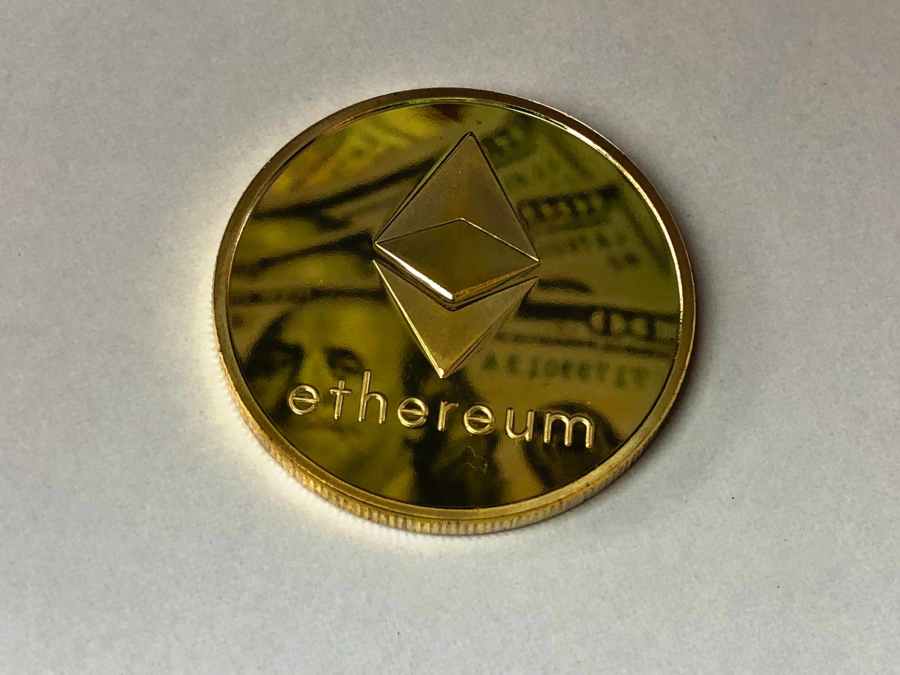
Ethereum’s native token ETH

The interesting part of this is that in all the use cases mentioned, users will need to own Ethereum’s native token ETH. Indeed, ETH is the key to unlocking this particular blockchain space, whether you want to launch new apps, use existing ones, or send tokens to different wallets. Furthermore, ETH “has become a unit of account and the most common pairing on decentralised exchanges (DEX).”

Oosterbaan believes “the definition of money will become much broader than its fiat limitation today,” especially if alternative base layer protocols, such as Solana and Avalanche, are successful. He says, “We are already seeing protocols raising capital, and investors measuring their portfolios against ETH instead of dollars, or even stablecoins, and that it could “potentially become a currency of the metaverse.”

Oosterbaan reflects that digital assets are a much better investment than fiat currencies at the moment, but more importantly, he points out, “the larger the Ethereum ecosystem grows, the better the currency ETH becomes.”

Currently there are more speculators in crypto than actual blockchain users, but that is changing thanks to Ethereum’s potential for use with DeFi, NFTs, validation, social media and more. Coinbase has already reported that it has seen a major shift, as more people make use of blockchain technology by taking their tokens off exchanges. This is a sign that people increasingly want to interact with applications on the Ethereum blockchain. It has also benefited the cheaper blockchain alternatives, such as Polygon.

Ultimately, as we move towards Web 3.0, the definition of money will become more fluid as the digital economy grows, and as Oosterbaan says, “This fits perfectly with the narrative of the metaverse, where the line between the digital world and real life becomes thinner and thinner.”

NFTs and DeFi are the keys to a functioning Metaverse

When Facebook announced it was investing $10 billion in the development of a ‘Metaverse’, a platform based on augmented and virtual realities, the term suddenly started appearing in multiple headlines. However, Facebook didn’t invent it: the term first appeared in Snow Crash, a 1992 sci-fi novel by Neal Stephenson. In the book humans interact with each other and with software agents, such as avatars, in a three-dimensional space that acts as a metaphor for the real world. It might have been fiction 30 years ago, but now it’s fast becoming a reality.

What is the ‘Metaverse’?

Broadly speaking, the technologies that make up the metaverse can include virtual reality—characterized by persistent 3-D virtual worlds that continue to exist even when you’re not playing—as well as augmented reality that combines aspects of the digital and physical worlds.

Metaverses, in some limited form, have already been implemented in video games, such as Second Life and Fortnite. It is also a digital economy, where users can create, buy, and sell goods. 

It’s all about Web 3.0

Nobody knows yet exactly what Web 3.0 will be like eventually, but we do know that it will allow individuals to use the Internet without giving up their privacy and valuable personal data. The downside of Web 2.0, which is where we are now, was that users were providing the companies that controlled platforms, such as Facebook, with personal information and data. This contributed significantly to the platforms’ profits, as they sold this data to third parties without the knowledge or agreement of users.

Web 3.0 would remove this theft, as many see it, because it will be made possible by decentralised networks, such as those of Bitcoin and Ethereum. In this system no single entity controls a platform, yet we will be able to trust them because every user and operator on the network must follow a series of hard-coded ‘consensus protocols’. Blockchains with smart contracts, such as Ethereum, EOS and Tron, are leading the way in building this new iteration of the Web.

But Web 3.0 has even more innovations to offer. The networks will allow ‘money’ or ‘value’ to be transferred between accounts. Furthermore, as Decrypt points out, “On Web 3 money is native. Instead of having to rely on the traditional financial networks that are tied to governments and restricted by borders, money on Web 3 is instant, global, and permissionless. “

NFTs are the key to accessing the metaverse

Non-fungible tokens (NFTs) will be critical to making the vision of integrating the digital and physical world by giving a unique identity to avatars or digital items, writes lawyer Michael Tomasulo. He goes on to say: “For example, an NFT-supported avatar would be comprised of all the user’s prior digital interactions and experiences (effectively reflecting their digital “life”) and possessing all the digital items the user has accumulated (which would themselves be backed by NFTs). In effect, NFTs give users and items an “identity” within a virtual space that is completely independent from a developer’s control of the code.”

Due to the explosion of interest in art-based NFTs, there is likely some confusion over their potential use. Chief amongst their potential is NFT-controlled access to the metaverse. In the future world of Web 3.0 all the processes and protocols will coalesce into a central, interoperable space offering finance, communications, game worlds and much more. Crucially, NFTs in the form of real life identities tied to a digital avatar, are one way to access this metaverse world. As Decrypt says, “In time, the metaverse may even develop an independent state of its own, presided over by various DAOs.” (A DAO is a dentralised autonomous organisation).

And in terms of DeFi (decentralised finance), peer-to-peer lending and trading, could take on the role of a virtual financial system while NFTs represent our keys, ID cards, and passports.

The marriage of DeFi and NFTs

It’s important to remember that all NFTs are unique and can’t be swapped/traded or replaced with another NFT of equivalent value. This makes an NFT an illiquid asset, meaning that finding a seller or buyer would be harder compared to traditional cryptocurrencies.

Romi Kumar at Hackernoon points out that although we have seen a meteoric rise in the NFT Market, clocking over 2000% in just a little over a year, the segment still remains highly illiquid. He suggests that problems in the NFT sector may be solved by combining NFTs with DeFi applications (Dapps) and that those working on this have seen “results that are truly splendid.”

Suppose you bought an NFT at a price of 2 ETH during a specific period when that NFT was popular. A year later you decide to sell it, but your NFT is now unfashionable, and you struggle to find a buyer, let alone make a profit. The problem is that you can’t exchange it for anything else because it’s non-fungible, whereas ETH or BTC can be exchanged for fiat currency or products, because they are fungible.

DeFi can solve this NFT problem. With Defi in play, NFT owners can fractionalise the asset so more than one person can own fractions of it. Furthermore, it will create a liquid environment for NFTs because you can use fractional selling.

For example on Werewolf, a DeFi platform with Dapps, including yield farming, a decentralised exchange (DEX) and a blockchain game, users can access a dedicated NFT marketplace. Here there is an auction system and a raffle-style competition pool. An NFT holder can start a competition, deciding the minimal entry price, minimum and maximum number of entrants, and a period to run the pool. The seller sells the NFT faster, and the winner only has to pay a fraction of what the NFT was worth.

While many may still see NFTs as a passing fad, industry leaders have realised that incorporating blockchain technology with NFTs for integration into the Metaverse is the missing piece in the creation of a ‘Functional Metaverse’. This is one where the way people interact with and transcend the digital world, merges with the real world. And DeFi will play a central role in making that fully functioning Metaverse happen.

Are the rewards of DeFi platforms sustainable?

Decentralised finance (DeFi) has emerged as a very productive economy within the crypto industry. It is generating billions of dollars in fees and “distributing vast wealth to project founders and users,” says Edward Oosterbaan. But, he wonders if there is a chicken and egg question to be answered. “Are users using these applications out of genuine want/need or are token incentives and yield artificially boosting demand?”

As he says, there is really no easy answer to this, because there is a “positive feedback loop” between real adoption and the amazing yields that many users are enjoying. It’s this loop that has boosted the market, with users either earning yield on both sides of lending platforms, or receiving 50% interest annually on trading fees and token incentives for providing stablecoin liquidity to exchanges.

From what he is saying it would appear that the rewards DeFi can give to users is driving use of its platforms, rather than a more purist belief in the future potential of DeFi to disrupt the financial system. It’s a case of the small picture towering over the bigger picture.

But it won’t always be this way. As Oosterbaan says, even the DeFi community agree that the substantial rewards will not last forever, and are in fact unsustainable. He points out that yields dropped harshly in the early summer as asset prices fell and trading volume slowed. And if we hit a sustained bear market like the one we experienced from 2018 to 2020, what then?

Compound, which is a leader in the DeFi lending market, recently issued a report highlighting the fact that when token incentives were factored in, protocol earnings were negative. Oosterbaan points out that what Compound has basically been doing is this: “It has essentially been trading equity to rent liquidity that may or may not be sticky when it eventually decides to stop emitting COMP in coming years, as per the Compound governance model.”

Others are doing the same, except for a few notable names, such as Uniswap, Maker and OpenSea. For example, Curve distributed 33.3 million CRV to liquidity providers over the past 30 days worth $156 million. During the same period, Curve had $5.7 million in earnings for its protocol and token holders. However, there is an important difference between Curve and some of the other platforms. Curve has created a strong utility for its token, so its token distribution does not equate to selling pressure.

But Curve is quite distinct. In the DeFi ecosystem there are many, many more platforms that “use inflationary tokenomics for short-term speculation and attention.” As Oosterbaan says, inflation and yield without adoption is a recipe for disaster.