The Cloud is the Future

Cloud storage is an interesting phenomenon. For anyone who is unsure about what the ‘cloud’ is, put simply it is a means of storing and accessing data and programmes on the Web, freeing up space on computer hard drives. It is easy to understand its advantages, especially for businesses that need to store large amounts of data.

cloud-computing-1050x700

Cloud computing is big for business

And, to date, it is largely businesses and government-based organisations that use cloud computing. For example, over 60% of firms use the cloud for their IT-related operations and it is increasingly chosen by healthcare providers to store images from CT scans, MRIs and the like. Education services, the financial sector and even the construction industry are also using the cloud because it is efficient and it adds a valuable mobile access to information element.

Consumers slower to adopt the cloud

However, it must also be said that whilst corporate entities have adopted the cloud, it has been more difficult to engage the average computer user. There is a reason for this, and it is not because the individual doesn’t understand the cloud; it is because there are fewer ways for them to access cloud computing. For example, business customers can choose from a range of cloud computing systems, whilst the consumer only really has Google Drive, Apple iCloud and Amazon Cloud Drive to choose from, but this might change if they were made more aware of the advantages of the cloud for the personal user.  Sometimes we are not even aware that we are using the cloud, but every time you consult a Google Map, or download a coupon, you are accessing cloud storage of information.

Multi-cloud trend expands the industry

Economically the cloud is important. Seagate, a cloud solutions business, estimated in 2013 that the U.S. market for cloud related equipment, i.e. servers, storage, networking hardware and high-speed links, would be worth around $79 billion in 2018. In 2017, Gartner says it will be worth $240 billion in 2018, much of this due to the growth in the use of multi-cloud services. This is a new and growing trend, where a business uses as many as four cloud computing providers. There are good reasons for this; it reduces vulnerability. Organisations prefer a multi-cloud strategy to avoid any “keeping all your eggs in one basket” problems that could leave them vulnerable to a variety of issues, such as cloud data centre outages, bandwidth problems and vendor lock-in.

And a report by Ovum suggest that 25 percent of European “are unhappy with their cloud service provider largely due to poor service performance, weak service-level guarantees and a lack of personalised support.” However, a lot of work is being done on rectifying these issues and streamlining the transference of data storage between multi-cloud systems.

One hint we have that multi-cloud environments are the future comes from Google, which has recently purchased Orbitera, a platform that supplies multi-cloud commerce. Although, Google still faces stiff competition from Amazon Web Services in this arena, but it is clear that ‘cloud wars’ may be coming simply because businesses want to avoid being locked in to one vendor. Increased competition will be good news for the businesses looking for flexibility and cost savings, as well as better cloud computing solutions,

The cloud is growing fast – you only have to look at the revenues for Amazon Web Services, Microsoft and Google in early 2017 to realise that despite cynicism from some analysts, the cloud is an IT sector that is going to shape the future.

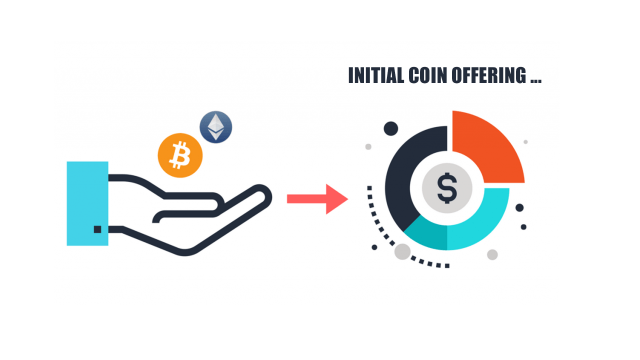


ICOs will be the future of fundraising

If you haven’t heard about Initial Coin Offerings, or ICOs as everyone calls them, then you must have had a break from being on the Internet. They have been around for a few years, but in 2017 this form of raising funds for new startups has really blasted off and although there are questions about them, it seems to me that this is a tide that won’t be pushed back.

Search for information about ICOs and I guarantee that the next time you go on Facebook or read a newspaper or magazine online, you’ll see endless adverts for a whole host of new ICOs. Why are they so popular? The short answer is that an ICO enables a company to raise money fast and without having to pay fees to middlemen.

It isn’t just new businesses that are using ICOs; it is well-established companies, and whilst China may have drawn even more attention to them by banning them, the rest of the world is continuing to support the platform. And, with institutional investors starting to invest in them, this is a strong indicator that this new approach to crowdfunding has a strong future.

pexels-photo-251287-1024x576

How does an ICO work?

How does an ICO work? It is a crowdsale mechanism built on the blockchain open-source technology; the same blockchain that supports Bitcoin and Ethereum as well as other cryptocurrencies. ICO investors buy ‘tokens’ that they pay for with a crypto or fiat currency. The tokens are like shares and investors hope that the values and prices will rise as the project achieves success.

Another way to look at an ICO token sale is this: the token can represent some sort of value or be of value itself, or an ICO might attribute equity to a token. Quite frequently, the token issued in an ICO gives a person access to the features of a particular project. For example, tokens are used to pay for goods and services from the company offering the ICO instead of having cash or Bitcoin. You could say that these tokens are similar to a store’s loyalty points. So, there are a number of ways that an can ICO operate, and this is another part of their appeal for both the businesses starting an ICO and investors.

More confidence in the blockchain

A number of startups, some with a well-known name behind them like that of Paris Hilton, have raised millions in minutes, showing that the public’s appetite for this form of investment is very strong. This is largely because Bitcoin and Ethereum have had excellent results during the last year and more people have confidence in cryptocurrencies. It is also due to the fact that there is greater understanding of the blockchain and why a decentralised platform works for the benefit of the average person who is often cut out of the investment world by bigger corporate entities. And, there is trust in the blockchain as people become more aware of its security mechanisms.

ICOs in 2017

Currently, an average of about 20 ICOs hit the market every month. According to Autonomous NEXT, more than $1.2 billion in cryptocurrency was raised through ICOs in the first half of 2017, which is well above $300 million made in the previous years.

The advantages of ICOs

There will probably be much discussion in the coming months about ways in which ICOs might change in the future, but they will certainly be a part of it thanks to their inherent advantages, such as: they provide efficient and low cost funding to startups and are accessible to any participant in any geographical location. They also provide an opportunity for investment in a new and disruptive technology and for financial gains based on the future potential of blockchain. We are witnessing another new step in the revolutionary power of the crowd and ICOs are one of its most powerful tools for change.


The craze for ICOs explained

Initial Coin Offerings, which are usually referred to as ICOs, are the hottest trend in the financial world. This is the amazingly innovative tool that businesses are using to raise funds rather than use the more traditional routes of banks and venture capital.

ICOs are proving especially popular with startups as a way to raise cash for projects, because it is more democratic, transparent and faster. It also uses a digital currency or a token, which is a term you’ll hear used by companies launching ICOs.

ico

Tokens or digital coins

So, how do they do it? An ICO typically involves selling a new digital currency, or token at a discount. When the cryptocurrency succeeds and appreciates in value, the investor has made a profit. These tokens are often exchanged against digital currencies like Bitcoin or Ethereum and the new tokens can easily be sold and traded on existing cryptocurrrency exchanges.

Ripple and Ethereum set the trend

The first cryptocurrency to employ an ICO was Ripple, which is a payment system that promises to supplant the current SWIFT transaction procedure used by international banking. Its developers issued 100 billion XRP tokens, and the sale of these funded the development of the Ripple system, which is now finding traction with major banks.

The most prominent ICO, however, has been Ethereum. In mid-2014 the Ethereum Foundation sold ETH coins against a 0.0005 Bitcoin value for each one. This gave them nearly $20 million, which served as the capital base for the development of Ethereum, which is one of the biggest newcomers to the blockchain.

2017 – The Year of the ICO Trend

But 2017 is the year that ICOs really took off. And just to show you how hot the ICO trend is, look at these two examples: Gnosis raised $12 million in 10 minutes, and a new web browser, created by the founder of Mozilla, raised $35 million in 30 seconds. Yes, that’s right, not even one minute.

We are seeing new ICOs being announced every day. For example, a hotel booking company based in Bulgaria that will use blockchain to save its customers from paying expensive booking fees is promoting its LOK tokens via social media. It has the potential to become the next Booking.com, and if it does, then the people who have bought the LOK tokens at the pre-sale price, which is discounted, will stand to make an excellent profit. Just look at the figures for Ethereum and Gnosis and you will get a good idea of just how big these ICOs go, and how fast.

For example, if you had bought ETH, the Ethereum ICO coin, when it was sold at 0.0005 Bitcoin and that value is now 0.05 Bitcoin., you would have made substantial gains. Successful, ICOs can provide gains to their investors of anything from 100 to 500 per cent.

We’ll be bringing you more information about ICOs and how they use smart contracts, another blockchain innovation that is set to enter the mainstream thanks to Ethereum. This is truly an exciting time for startups, because ICOs offer a truly revolutionary way to raise funds for a business dream.


Mobile Technology Trends of 2017

The development of mobile technology continues to move at speed and this year we have seen some critical new applications, so much so, that I believe 2017 will be seen as the benchmark year for mobile technology, especially in its use by small businesses.

There have been some outstanding apps developed by consumer brands like Subway and Starbucks, and this opens the way for less well-known businesses to do the same. In fact, I read that 50% of small businesses are creating a mobile app this year and that is a great indication of the importance they place on mobile for growing a company.

wordpress m

Location, location

Another trend that has grown impressively this year is that of location-based apps. These allow a business to offer a service based on the customer’s location and it is not difficult to foresee that the ability to offer real-time services in a specific location will have an impact on a variety of small businesses, and the larger ones.

Augmented reality

Augmented reality apps are another trend that is gaining traction. Some people thought these were just a gimmick, but when you combine the AR technology with a utility app, in other words one that is practical and useful, you have an app that is very engaging. They particularly appeal to the millennial generation and businesses that work on using augmented reality will have better engagement with customers in this group.

Instant apps are a winner

I also see that instant apps are becoming more important, for obvious reasons. There is no need to find the app and download it, install it and all the rest. The apps that run instantly when needed and are the secret of a faster, simpler mobile experience. Google’s new technology is leading this sector.

Artificial Intelligence

Artificial Intelligence (AI) is also making inroads in mobile apps. A number of developers are embedding it in their apps, which is a significant step forward for educational apps. For example, apps that teach children based on how that child learns are emerging. All children have different learning styles and these apps will help them to achieve even better exam results. It can also be applied to consumer shopping with the creation of apps that help you to shop based on what you like, so that the consumer would essentially have a personal shopper on their mobile device.

Remote control

We are also seeing more gadgets and household equipment being linked to the Internet and this requires apps to control them remotely. This is another trend that will boost the growth in mobile technology. And, security is another factor that developers are working on this year, as our mobile devices become increasingly storage devices for money and its equivalent.

It has been predicted that around 268 million mobile apps will be downloaded by the end of 2107 and this translates into $77 billion in business revenue. This sum doesn’t just come from purchasing apps; it is revenue that is also based on increased sales through improved customer engagement and loyalty. This is the secret of growth and why businesses should be adopting mobile technology as soon as possible.