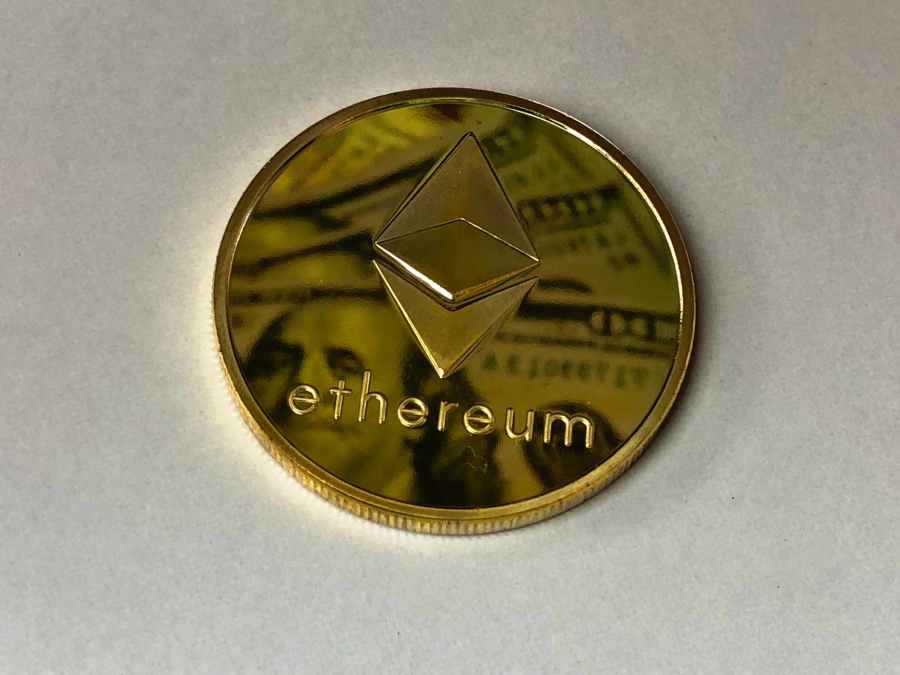
Is Ethereum too expensive?

I’m not referring to the Ethereum token (EYH), but to the gas fees associated with using the Ethereum blockchain, the main ‘go-to’ for DeFi. Will Gottsegen in a fine opinion piece for Coindesk quotes a crypto investor named Zhu Su who pulled no punches last weekend, when he tweeted, “Yes Ethereum has abandoned its users despite supporting them in the past. The idea of sitting around jerking off watching the burn and concocting purity tests, while zero newcomers can afford the chain, is gross.”

Before we go any further, Gottsegen says we should be aware of the fact that Su is a founder of investment firm Three Arrows Capital, which is betting big on an Ethereum competitor called Avalanche. So there is an agenda behind Su’s attack on Ethereum, but he may have a point about the gas fees.

If you want to use dapps, explore DeFi protocols, or get in on the NFT (non-fungible token) trend, you will eventually come up against Ethereum’s fees which – at this point in the development of the blockchain – can be shockingly high, as Gottsegen says. He points out that minting an NFT on Ethereum will generally cost between $60 and $250, depending on the time of day and the stress on the network. And the more users there are competing to get their transactions through, the higher the fees go.

Gottsegen describes his own experience when he tried to swap “about six cents worth of ETH for 50 Pisscoin”, the latter being an Ethereum-based token he was researching for a story, only to be told “I would need to pay an additional $616.10 for a transaction that might clear in about 40 minutes.” What is more, if the transaction failed the fees would be lost forever, as is the case with crypto.

Of course, Ethereum has its many defenders. Crypto venture capitalist Chris Dixon, whose company, Andreessen Horowitz, is heavily invested in the Ethereum ecosystem replied to Su’s tweet suggesting that the network is still in its infancy, and that infrastructure may eventually make things cheaper and easier to use.

But at the moment infrastructure is minimal. Polygon, a so-called “layer 2″ scaling product built on top of Ethereum, is designed to make fees a little cheaper. Other networks, like Solana, are betting that users may just ditch Ethereum altogether.

Gottsegen concludes by saying, “As it’s now set up, Ethereum is like a poker table with a high buy-in. Everyone else will have to wait for a cheaper option.”

What is the impact of Ethereum’s EIP 1559?

It has been about two months now since the Ethereum hard fork –EIP 1559 – was implemented. This is a very brief time in which to evaluate its effects, but Edward Oosterbaan, in an opinion piece for Coindesk, believes we might already be able to see some of the positives it is bringing, especially the upgrade’s base fee burn.

Ethereum uses block rewards to incentivize miners and validators of the chain under both proof-of-work (PoW) and proof-of-stake (PoS). Bitcoin uses a similar model, except that every four years it decreases the amount paid to miners, “until the reward is extremely negligible and the bitcoin supply tops at 21 million.” Once they reach this point, miners will have to rely on transaction fees for income. This means the network will need to sustain a high level of activity in order to pay miners for their services.

With EIP 1559 Ethereum has taken an action that is the opposite of Bitcoin’s. EIP 1559 took away the vast majority of transaction fee revenue that miners previously received, but Ethereum will continue to emit block rewards to miners (and eventually validators), indefinitely. And, whilst Ethereum has an uncapped supply, the new fee burn system will counteract ETH inflation.

As we know, Bitcoin has become seen as a hedge against inflation, but if it is seen primarily as a store of value, will there be enough in transaction fees to keep miners interested in the network?

This is a difficult question to answer, because Bitcoin’s fixed supply is what makes investing in the asset so attractive. By contrast, as Oosterbaan points out, “Ethereum’s supply will be extremely dependent on network activity and the demand for blockspace.”

As he says, his comparison of the two is entirely based on how they approach miner incentives, something which EIP 1559 addresses, and he believes that if Ethereum can continue to subsidize validators without diluting those that hold ETH then it will be very promising for the network.

Why do people own crypto?

It’s an interesting question. Back at the beginning, when Bitcoin emerged,for some  the interest in crypto was partly a way of flipping the bird at the big banks and governments that had let the 2008 financial crash to happen, while for others the technology drew them in. But where are we at now in terms of sentiment?

A Coindesk opinion piece by Raphael Auer and David Tercero-Lucas starts by suggesting that at a time when cryptocurrencies’ market capitalizations are returning to all-time highs, it’s a good time to examine investor views, characteristics and sophistication. They ask, “Are cryptocurrencies sought out of distrust in fiat currencies or regulated finance? And who invests in cryptocurrencies?”

According to data from the “Survey of Consumer Payment Choice” (SCPC), a dataset that is representative for the U.S. population and spans the period from 2014 to 2019, the Coindesk authors say “there is no evidence to support the hypothesis that cryptocurrencies are sought as an alternative to fiat currencies or regulated finance in the U.S.” Nor do cryptocurrency investors have heightened concerns about the security of mainstream payment options, such as cash or commercial banking services.

Education level is a pointer to crypto ownership

What the research does show is that cryptocurrency is a niche market dominated by young, male, educated investors: “In fact, one of the main socioeconomic determinants of U.S. cryptocurrency investors is educational attainment.” Also, if you’re young, you’re more likely to own at least one cryptocurrency.

The pandemic effect

The pandemic appears to have been a factor in demand for crypto, and might the “recent crypto hype might have changed the composition of investors,” they ask. The “Survey of Consumer Payment Choice” for the year 2020 indicates that the pool of investors was much wider in 2020 than in 2019, and that almost 4% of U.S. citizens own at least one cryptocurrency in comparison with the 1.9% of the previous year. There is also an upward trend in the number of people who know about cryptocurrencies (more than 72% in 2020). Furthermore, the survey shows that crypto owners are less of a ‘niche group’ now, and are a better reflection of the general population. For example, more of the less educated people adopted crypto in 2020 than in 2019. The average age of cryptocurrency investors has also increased, with more of what might be considered “standard” investors becoming interested in this asset class.

Taking all this into account, it would seem that crypto ownership is not related to any growing distrust in today’s regulated financial markets. Nor are they bought as an alternative to fiat currencies or regulated finance. The main drive to buy appears to be their value as a speculation asset. “From a policy perspective, if the objectives of investors are the same as those for other asset classes, so should be the regulation,” the authors say, pointing out that as crypto goes more mainstream and investors better reflect the general population, then “a clarifying regulatory and supervisory framework for cryptocurrency markets may be beneficial for the industry in a context where cryptocurrencies are being targeted by less-educated investors and adoption is becoming widespread.”

Smart investors check out a crypto’s utility

There are somewhere in the region of 4,000 cryptocurrencies to invest in, each representing a different blockchain project. When investment experts look at the array available, they don’t base their choice on price, they look at the utility.

When the exeperts talk about Utility, they are referring to digital tokens built on a specific blockchain ecosystem – most often based on Ethereum’s ERC-20 standard – which grants token holders certain rights. As Katharine Wooller, UK and Ireland managing director at crypto wealth-building platform Dacxi told Rich McEachran, “Any cryptocurrency is only as good as its use case.”

There is a tendency amongst investors to buy Bitcoin simply because it is the most famous cryptocurrency. But Bitcoin’s utility is limited to promoting financial inclusion and cross border payments. Ethereum on the other hand is the preferred ecosystem for building cryptocurrency projects. So, it is not hard to figure out which of the two has more long-term potential.

One of the issues facing investors, particularly retail investors, is that the digital assets they hear the most about and are therefore drawn to, are the “cryptocurrencies addressing or solving specific problems on a macro level,” says Roman Matkovskyy, an associate professor in finance and accounting at Rennes School of Business. But there are many, many more that offer solutions to more ‘micro’ questions. As Wooller says, “it’s essential to do your homework and spend time researching and analysing a coin’s long-term intended use,” usually via the project’s white paper that should be freely available online.

Of course, a coin may appear to have great utility, but that doesn’t guarantee it will be successful. What is required for that to occur, is demand for the coin’s ecosystem. Let’s not forget that there are over 2000 coins that have come and gone, their related projects dead due to lack of demand.

The meme coins, such as Dogecoin, are a good example of complete lack of utility. Yet, investors have poured money into them, resulting in a 12,000% gain for DOGE between January and May 2021. They may look good right now, but they won’t last, as they serve no purpose. Dogecoin was started as a joke, and that should really tell you all you need to know. Still, people buy DOGE because they hope for its value to skyrocket. It’s speculation rather than investment.

Where should you look for long-term investments?

For long-term gains based on utility rather than making a quick profit, experts point to Ethereum (ETH) as the top choice, because it provides a platform for developers to create apps and run them on a blockchain without the involvement of third parties.

Paddy Osborn, managing director of the London Academy of Trading, suggests three others with potential: Polkadot – a network that can support multiple different blockchains and enable them to work together; Internet Computer, which aims to disrupt the internet space by building a decentralised web platform that runs on a blockchain and vechain, which helps companies track their products safely and securely through each stage of the supply chain.

To conclude, nothing is certain, but if you’re looking for a solid, long-term investment, look for the cryptos that are showing the greatest level of user adoption and functionality.