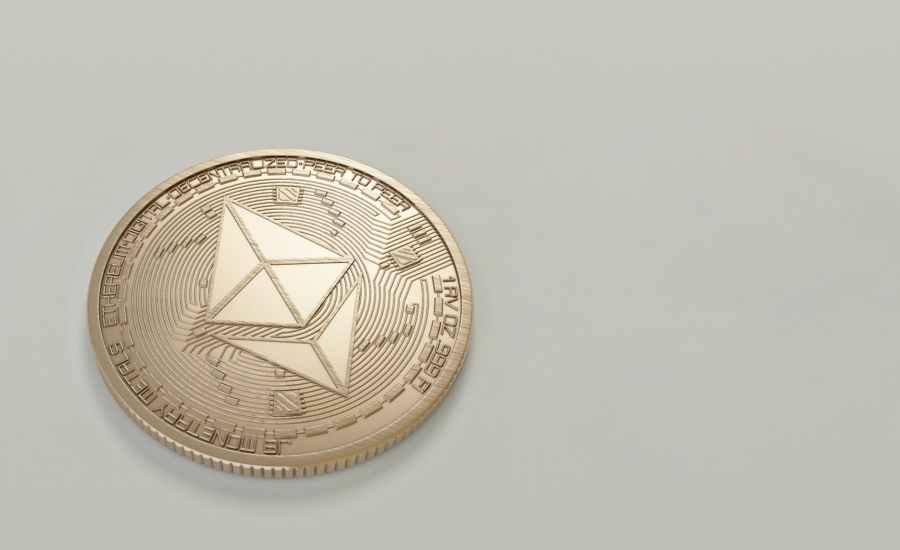
Ethereum fights off its ‘killers’

Ethereum has hit another all time high (ATH), even though the gas fees associated with using some complex DeFi protocols has increased above $1,000. This makes many decentralized finance protocols unusable for casual investors, with average Ethereum transaction fees now at a record $17.67, according to Cointelegraph. However, Bitcoin’s gas fees are not much lower.

But this is not deterring DeFi developers, who appear to be abandoning the so-called ‘Ethereum killers’, such as EOS, and sticking with the old guard. According to a Blockchain Development Trends report by venture capital firm Outlier Ventures, reported by Cointelegraph, “Ethereum remains the most actively developed blockchain protocol, followed by Cardano and Bitcoin.” The report adds, “while some new platforms such as Polkadot, Cosmos, and Avalanche are seeing an increase in developer activity, many of the traditional Ethereum competitors are seeing a decline in core development.”

You can read the Outlier Ventures Full Report here.

DeFi strength supports Ethereum

Certainly in 2020, the majority of DeFi platforms were Ethereum based, and even now “Ethereum still remains the king overall though, with 14% more developer activity than its closest rival, Cardano, and almost double that of Bitcoin in terms of commits,” Outlier Ventures says.

“Ethereum miners have been the key beneficiaries of the fee spike. The industry earned some $830 million in ether last month with 40% attributed from fees alone,” Coindesk reports, also noting that the increase in fees correlates with ETH’s current bullish price run, which also reflects the high demand for ERC-20-based tokens for stablecoin and DeFi projects.

It would also appear that Ethereum’s new ATH is bringing DeFi tokens along with it. Coindesk says: “According to research firm Messari, after ether went on a tear several DeFi tokens including chainlink (LINK), sushiswap (SUSHI) and aave (AAVE) followed the bullish trend, logging historic high prices Wednesday.”

Hunain Naseer, senior content editor at crypto exchange OKEX’s research unit, OKEx Insights said: “Ether made a significant push [since Tuesday] and that is causing projects linked to the DeFi space – as well as DOT, which is seen as a potential ‘Ethereum killer’ – to appreciate and aim for new all-time highs.”

Ethereum also got a big push from Grayscale, which added approximately 24,800 ETH on Tuesday, then worth more than $37.8 million, and it reopened its Ethereum Trust (OTCQX: ETHE) for accredited investors. This had been closed in late December, but as of 29th January 2021, the Grayscale Ethereum Trust had more than $4 billion in assets under management.

What is causing this price drive? It is thought that more investors are starting to see value in the projects behind these DeFi tokens, so market excitement is building. And with so many on the Ethereum blockchain, it seems the Ethereum killers may have more of a fight on their hands than they realised.


Visa goes for USDC with Circle

Visa, the credit card giant, has joined with Circle to connect 60 million merchants to the US Dollar Coin (USDC), a coin on the Ethereum blockchain. This is yet another sign that cryptocurrencies are integrating even further with mainstream payment currencies.

Although Visa won’t have custody itself of the USDC, it is going to work with Circle to select Visa credit card issuers and integrate the USDC software with their platforms, so that it can be used for payments. What this means is that businesses will soon enough be able to make international payments in USDC to other businesses supported by Visa. The funds will then be converted into national currencies when they are spent anywhere that accepts Visa.

Circle is a part of Visa’s Fast Track program, and when it completes the course next year, that is when this new USDC program will begin, with the issuance of a new credit card that allows users to spend USDC. Visa’s head of crypto, Cuy Sheffield, said, “This will be the first corporate card that will allow businesses to be able to spend a balance of USDC. And so we think that this will significantly increase the utility that USDC can have for Circle’s business clients.” 

The partnership between Visa and Circle, helped by the $40 million investment Visa made in another firm developing a platform for holding similar assets issued on a blockchain, “is the latest evidence that the credit card giant sees the technology first popularized by bitcoin as a crucial part of the future of money,” Michael de Castillo writes at Forbes.

Sheffield said, “Blockchain networks and stablecoins, like USDC, are just additional networks. So we think that there’s a significant value that Visa can provide to our clients, enabling them to access them and enabling them to spend at our merchants.”

Currently, according to Visa’s data, “$120 trillion in payments annually are made using checks and instant wire transfers, costing as much as $50 each.” By contrast, since USDC settles on the ethereum blockchain, transactions can close in a little a[s] 20 seconds and, importantly, can be done for nearly free.

Visa has been making strong moves in the cryptocurrency sphere this year. In February 2020. Coinbase became the first company granted principal membership status by Visa. This means that Coinbase, one of the biggest crypto exchanges globally, can in turn issue cards to others.

Circle has done some rethinks of its own in regard to cryptocurrency. In 2019 it had a fire sale of its assets including Poloniex, Circle Invest and Circle Pay. It also rebranded its home page with a focus exclusively on stablecoins and central bank digital currencies. The attraction of the USDC is that it is built on the Ethereum block chain and only tiny amounts of the cryptocurrency ETH are used as “gas” to pay for the transactions.

Jeremy Allaire, the CEO of Circle Internet Finance, says of the new partnership and its probable outcome: “Imagine a capital marketplace that is for anyone who needs capital, or anyone who needs to offer capital that has the same efficiency that Amazon has for e-commerce, the same efficiency that YouTube has for content, effectively, capital markets with the efficiency of the internet, which is essentially zero.” He added, “And that will ultimately return trillions of dollars in value back to the economy, it will reduce costs for every business in the world, it will accelerate the way in which individuals can participate in commercial activity and commerce activity, in conducting their labor and interacting with businesses around the world.”

The rise of the neobanks Part 1

Should we focus more on bitcoin’s use case than its price?

The crypto rollercoaster has morphed into ride with only slight dips and rises this month. It seems s if every few days traders need to take a rest and the bitcoin price sags a bit, The majority of the leading altcoins appear to follow what happens with bitcoin, although not uniformly.

As we head into next week, it’s hard to predict what we might see, although the weekends tend to bring some dips, suggesting that on Friday traders think about exiting the market for a couple of days. Jim Preissler writing at Forbessuggests: “Heading into the new week, expect possible dips to still be well supported at $4,700 in BTC and $154 in ETH. $5,800 and $187 could be tough resistance.’

As Preissler points out, XRP does not seem to have benefited from the latest crypto rally as much as BTC. ETH and LTC and there appears to be resistance at the $0.38 mark. ETH has been consistently outperforming XRP since February and it doesn’t look like there is going to be much change there.

Omkar Godbole at Coindesk suggests that what is needed to move the market along is a breach of BTC’s new resistance level of $5.200. As I write on 17th April, we have a slight glimpse of that as BTC touched $5,200.14. The market-leading cryptocurrency picked up a strong bid at lows below $4,200 on April 2 and jumped to 4.5-month highs above $5,300 on April 8, confirming a bullish reversal. However, over the last couple of days that rally paused, which Godbole attributed to BTC being overbought amongst other factors. But momentum seems to moving in an upward direction again. And, as Godbole has pointed out, “the longer duration outlook will remain bullish as long as prices are trading above $4,236.”

For the moment, bitcoin is trading above that level, but are we too focused on price?

As more real life use cases for bitcoin appear, such as the news that UK’s largest travel agency Corporate Traveller is now accepting bitcoin for payments, and the town of Innisfil in Ontario accepts BTC to pay property taxes, it is to be hoped that the public sees more advantages to using bitcoin for a range of payment purposes. That should encourage more belief in the cryptocurrency, and boost the number of people owning e-wallets and joining exchanges to purchase crypto. Slowly, slowly, cryptocurrency is edging forward toward mass adoption. We are a long way from that yet, but there’s no need to panic. It takes time to adjust to the new, even when the use case and the benefits are clear to a few. Just think back to the beginning of the Internet and the length of time it took the average consumer to feel comfortable with it. When people understand the benefits of using bitcoin and focus less on the price it is trading at, I believe that is when we’ll see a sea change in the crypto market.