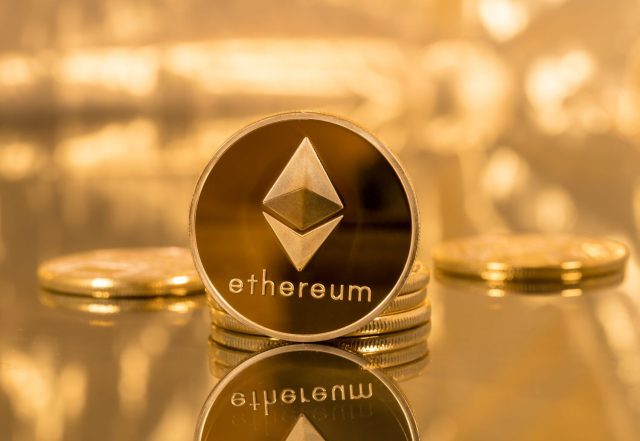
What decision will the SEC make about Ethereum?

ethereum

This week, Monday May 7th to be exact, the Security & Exchange Commission (SEC) started a series of meetings to decide whether Ethereum 9ETH) is a security. At the moment we’re not sure how the decision will turn out, but let’s think about what the SEC will be considering and how it might affect ETH owners.

If you’re an ETH owner, you might expect to see two extremes as a result of any decision: an unexpected high, or a devastating low. For example, if ETH is considered a security by the U.S. government, then there may be a negative, short-term price reaction. However, because Ethereum’s underlying technology, is borderless and does not depend on the opinion one country’s regulatory committee, its long-term prospects should be unaffected. And, if it is decided that it is not a security, then it is very likely that the long-term prospects of the technology and its financial standing within the community will prosper.

If no decision is made about the status of ETH we might see a major upsurge in the market, especially as Buterin and his developers have been talking up new solutions for scaling in recent days and while this might be a short-term uplift in the market, there is also reason to think it might become a long-term trend.

What is Ethereum saying?

For it’s part, ETH founders are sure that it is not a security. Joseph Lubin, one of the co-founders said prior to the SEC meeting this week: “We spent a tremendous amount of time with lawyers in the US and in other countries, and are extremely comfortable that it is not a security; it never was a security… many regulators that matter understand what Ethereum is.”

Will the SEC agree with Lubin’s assessment, and with the way other regulators claim to see it – that I what we’re waiting to find out.


Is the crypto market history repeating itself?

1_44y-gHFOTuPUMnqBV84qeg

At the turn of the twentieth century, Jesse Livermore wrote a book titled “Reminiscences of a Stock Operator.” It’s about his life as a trader. One of the things he said back in 1900 was this:

 “When you read contemporary accounts of booms or panics the one thing that strikes you most forcibly is how little either stock speculation or stock speculators to-day differ from yesterday. The game does not change and neither does human nature.”

And he also wrote: “I used to think that people were more gullible in the l860’s and ’70’s than in the 1900’s. But I was sure to read in the newspapers that very day or the next something about the latest Ponzi or the bust-up of some bucketing broker and about the millions of sucker money gone to join the silent majority of vanished savings.”

Doesn’t this sound familiar? It does to me. It’s pretty much what people are writing about the cryptocurrency market. It’s a bubble, it’s a Ponzi scheme, it’s another boom and bust.

But the most important point he makes is this: that the game doesn’t change and neither does human nature.

The derivatives market provides us with a good example of the sameness between what is happening in crypto now and markets of the past. A derivative is “an arrangement or product (such as a future, option, or warrant) whose value derives from and is dependent on the value of an underlying asset, such as a commodity, currency, or security.” Derivatives trading has been around since ancient Mesopotamia. For example, a tablet from 1809 BC documents a Mesopotamian merchant borrowing silver, promising to replay it with sesame seeds “according to the going rate” after six months.

The Briitish South Sea Company of 1711 led to a wave of new joint-stock companies with dubious business plans that created one of the first bubbles, alongside the Dutch tulip fever.

What emerged from this was the realisation that derivatives, and now the crypto market, need governance and regulation. Self-policing must be encouraged, and work in tandem with government-enforced rules. Bad actors must be kicked out of the market, just as they were in early days of the London Stock Exchange.


There’s another way to look at Crypto Tokens

Ethereum-ICOs-Bitcoin-Ethereum-Comparison

Crypto tokens, and their ICOs, have taken a fair amount of bashing in the media over the past few months, but a paper published by two researchers from MIT and University of Toronto, argues that utility tokens might have a “valuable price discovery role,” according to Coindesk. It also suggests that tokens that act as ‘true commodities’, which the report authors attribute to Bitcoin and Ether, could offer the same service.

When you look at crypto tokens form this perspective, it looks like consumers could turn out to be the biggest winners, provided the tokens are correctly designed.

The paper, called, Initial Coin Offerings and the Value of Crypto Tokens by Christian Catalini (MIT) and Joshua S. Gans (University of Toronto) explores how entrepreneurs can use initial coin offerings — whereby they issue crypto tokens and commit to accept only those tokens as payment for future use of a digital platform — to fund venture start-up costs. It makes interesting reading for ICO entrepreneurs, because as the paper’s synopsis states, “the ICO mechanism allows entrepreneurs to generate buyer competition for the token, which, in turn, reveals consumer value without the entrepreneurs having to know, ex ante, consumer willingness to pay,” amongst other things.

In fact, it goes so far as to claim that in the future, tokens will “empower consumers to choose an optimal price for a service collectively.” It also looks at the benefits of tokens, including the aforementioned benefits of entrepreneurs being able to test the token fundraising model with consumers to see how it goes. This could greatly minimise risk for ICO startups and their founders.

As we have seen, regulatory bodies like the SEC have started to show more interest in ICOs and the remarkable sums of money they are capable of raising. However, Gans, told Coindesk: “”The problem the regulators have is they don’t know what the goals are. Instead the regulators are coming in saying ‘I don’t really know how the market should be working, but it smells terrible.'”

This new paper and its authors want to start a new conversation about “the right way to think about tokens so that societies could rationally consider the correct approach to managing them.”

It’s a more helpful and sane approach than the ‘just ban them’ rhetoric that is coming from some corporate entities and other organisations. It is not against regulation; that is necessary for transparency and consumer comfort. As the guys admit, they have no idea how the ‘token economy’ will play out, but they have laid the groundwork for more research and more balanced thinking. That’s a good start.


A ‘ Crypto Bubble’ with benefits?

btc

Michael Casey, chairman of coindesk’s advisory board and a senior advisor at MIT’s Digital Currency Initiative has a different view of the much-discussed ‘Bitcoin Bubble’. While most commentators present a ‘bubble’ as a harbinger of doom, he sees it as a positive situation.

He likens it to the late 1990s dot-com boom, and while he acknowledges that there are some who will disagree with him, he has suggested that what he refers to as the “Pets.com phenomenon” was a constructive event and that we should approach the ‘crypto bubble’ from the same perspective.

How does he reconcile the ‘boom and bust’ of the dot-com era with a positive outlook? Read on and find out.

Yes, he admits that many crypto coins will fail and people will lose money. But, he applies a theory from Carlota Perez, a Venezuelan theorist who wrote about the interplay between technology and capital markets in an influential book called “Technological Revolutions and Financial Capital: The Dynamics of Bubbles and Golden Ages.”

She claims that bubbles and their collapse are “an integral, in fact necessary, part of the economic dynamics through which transformational technologies take root in society.” Speculation, she says, is unavoidable element during time of technological transformation. Actually, the same could be said of gold, spices and tulips. As Casey puts it, “Whenever a new technology contains a wide-enough accepted promise that it can redefine core aspects of how our economy functions, people start throwing money at it.”

Why do we behave like this? According to the theory it’s because nobody really understands how things will turn out, and who the winners and losers will be. We just know that something big and important is happening, so we all get involved in wild and unstructured speculative behaviour.

Mike Casey believes we should see the ‘crypto bubble’ as “an affirmation that the technology we’re all so excited about it does indeed have huge potential even if it is still too nascent for major, disruptive deployment in the mainstream economy.”

How this will play out, nobody yet knows, but if Casey is right, we can be fairly sure that we’re on the road to building a transformational open-access platform that represents a collective evolutionary step – even if the bubble bursts along the way.