The ICO Chill Factor

shutterstock-6919764464054-620x354

Parts of Western Europe have been at the mercy of the “Beast from the East”, an icy wind that swept down from Siberia bringing havoc in its wake. Now a different kind of chilling wind is blowing in from the USA as regulatory bodies talk about putting ICO token trading on ice for 12 months.

As Mike Lempres, chief legal and risk officer at Coinbase put it, “the market is being chilled.” As crypto entrepreneurs in the U.S. shiver, it seems that months of uncertainty about how the country’s regulatory bodies would approach “wanton market growth” is coming to a head, if perhaps not an end.

Events leading up to this include the SEC’s announcement last week that

it is investigating companies and startups associated with ICOs. As a result, which Brady Dale writes about at Coindesk, “entrepreneurs are largely surrendering on the idea that new cryptocurrencies created and sold to investors could be considered so-called ‘utility tokens,’ a term denoting a digital commodity meant to represent the share of a blockchain protocol.”

However, these companies still have a problem: as yet there are no registered broker-dealers capable of trading security tokens in the U.S. Furthermore, and this view comes from a number f ICO founders, when they do issue tokens under a Schedule D exemption, a 12-month lock-up is still required.

A statement from Nick Ayton, CEO of Chainstarter, who was in a panel discussion at the MIT Bitcoin Expo on 17th-18th March, addressed this issue. He predicted that the SEC will view all tokens as a security and stated: “Most exchanges are listing coins that are securities, and our view is a large number of these exchanges are going to be closed.”

Another voice at the conference, that of Gary Genseler, an MIT professor and former CFTC chair, said: “I think it is without a doubt that numerous exchanges will have to seek exemptions under alternative trading system [rules] because many of the exchanges, not all, have tokens that are securities trading on them.”

Currently, the problem is that even when companies want to comply with the rules, they still don’t know what the rules are. There is some knowledge about what is forbidden, but when it comes to avoiding the wrath of the SEC they are operating in the dark.

Munche is cited as the case that alerted some to what was coming from the SEC. This little known ICO received a bunch of subpoenas from the SEC, requesting information typically includes lists of investors, emails, marketing materials, organisational structure, amounts raised, the location of the funds and the people involved and their locations. In the case of Munchee, “what the federal regulators think of as a utility token and not a security token is so small, and the eye of the needle got even smaller,” said Joshua Klayman, legal counsel at Morrison Foerster.

What will be the end effect of this chill factor in the U.S? Well, Mike Lempres of Coinbase told Congress about one potential scenario if the United States doesn’t “provide a clear, thoughtful regulatory environment, the investment can very quickly move to other countries.”  Perhaps that will encourage the government and its regulatory bodies to bring a little sunshine to its crypto companies.



Are celebrity brand ambassadors worth it?

ico

Generally, having a celebrity endorse your product is a ‘good thing’! Advertisers will give their right arms for a famous face to front their product. In 2017, Paris Hilton, Floyd Mayweather, Ghostface Killah (Wu Tang Clan) and Jamie Foxx were among the celebrities who were most vocal about their support for crypto and ICOs and they all used their social media platforms to let their followers know what they’re doing in the crypto world.

One thing that ICOs who use celebrity endorsements need to note is that if celebrities don’t disclose if they are benefiting from making an endorsement, the Securities and Exchange Commission in the USA may view it as illegal.

And that is what has happened to Bitcoiin2Gen (B2G) ICO, which has been using Steven Seagal to endorse its offering. As reported in Cointelegraph and many other outlets, New Jersey Bureau of Securities (BoS) regulators issued a ‘cease and desist’ order on 7th March and have accused the team behind the ICO of “fraudulently offering unregistered securities in violation of the Securities Law.”

Clearly the B2G team didn’t get the memo from the SEC about the dangers of celebrity endorsements!

The BoS order focused on what it said was “the secretive nature” of Steven Seagal’s involvement with the business and its ICO. A statement from the regulators said:

The Bitcoin Websites do not disclose what expertise, if any, Steven Seagal has to ensure that the Bitcoiin investments are appropriate and in compliance with federal and state securities laws.”  And added, “Additionally, there are no disclosures as to the nature, scope, and amount of compensation paid by Bitcoiin in exchange for Steven Seagal’s promotion of the Bitcoiin investments.”

Perhaps Seagal was not the best choice of celebrity for a blockchain business, as he is better known as an actor specialising in martial arts, but then none of the other celebrities backing crypto in 2017 are immediately linked to Bitcoin or the blockchain either.

But, it is easy to see where the problem lies from a regulatory perspective. These celebrities have an enormous power over their fans, so when Steven Seagal tweeted on March 6th that B2G would shortly be listed on major exchanges, his fans will take his word as gospel. If he says, “invest in this ICO because I have” in so many words, then that is what his followers will do, and many of them will not be savvy investors who understand the risks and rewards of crypto assets. This is something that the SEC is well aware of, and now it is acting on its previous warnings.

So, whilst a celebrity may do wonders for your alcohol brand or similar consumer item, they are not quite so desirable when it comes to promoting your ICO – unless every aspect of their involvement is completely transparent and regulators can see that they are active in and knowledgeable about the blockchain and cryptocurrency.


Bill Gates says crypto causes deaths: WTAF?

Bill-Gates-states-Crypto-caused-deaths-820x500

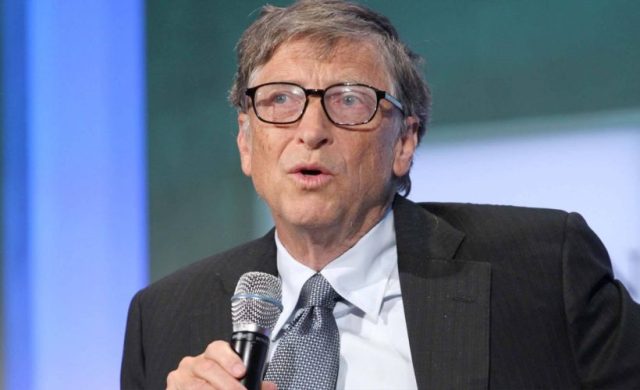
One assumes Bill Gates is a fairly intelligent man, but this became doubtful when he caused an uproar at a Reddit ‘Ask Me Anything’ session by asserting that cryptocurrencies are “a rare technology that has caused deaths in a fairly direct way.”

This is the full text of what he said, as published in Cointelegraph:

“The main feature of crypto currencies is their anonymity. I don’t think this is a good thing. The Government’s ability to find money laundering and tax evasion and terrorist funding is a good thing. Right now crypto currencies are used for buying fentanyl and other drugs so it is a rare technology that has caused deaths in a fairly direct way. I think the speculative wave around ICOs and crypto currencies is super risky for those who go long.”

But, hold on a moment – aren’t more people using dollars and other fiat currencies to buy drugs? Indeed, the 2017 Global Drug Survey shows that whatever country you look at, less than 50% of drug users purchase their fix via the dark web, which is the only online drug source using crypto for payment, and the global average is 10%.

As a result, Bill Gates’ statement went down like a bowl of cold sick with the Reddit audience. Some participants advised him to re-read the Bitcoin whitepaper, whilst others accused him of using his celebrity status to influence a negative view of the cryptocurrency market.

Is it possible that Bill Gates is being deliberately obtuse? When one audience member pointed out that fiat currencies can also be used for illegal activities such as money laundering, tax evasion, terrorist funding, and drug purchases, a statement that you don’t need to have a Harvard education to figure out (oh yes, Bill Gates dropped out of Harvard!), Gates replied: “the necessity of a physical presence makes illicit activities and transfers more difficult.”

Where has this man been living? Because, if you visit any city, even a small town, there are people paying cash for drugs on a regular basis, and it isn’t difficult o find out where it’s going on.

Is there something more shady behind Gates’ announcement? In 2015 he said, “Bitcoin is better than currency.” And the Bill & Melinda Gates Foundation has sponsored the development of blockchain solutions so that Kenyan merchants can accept cryptocurrency.  And, Microsoft is pursuing the development of blockchain technology. So, what’s happening Bill? Who’s pulling your strings?


The importance of decentralization

ea87086c485460123cd2978fd7e46dbe

If you cast your mind back to the early days of the Internet, many of the services were built on open protocols owned by the Internet community. Big platforms like Yahoo, Google and Amazon started during this era, and it meant that centralised platforms, like AOL, gradually lost their influence.

During the Internet’s second growth phase, which largely started in the mid-2000s, the big tech companies like Google, Apple, Facebook and Amazon built software and services that left open protocols trailing behind. The skyrocketing adoption of smartphones helped propel this as mobile apps started to dominate the way we used the Internet. And, even when people did access the open protocol that is the worldwide web, they usually did it through the medium of Google and Facebook etc.

On the one hand, people worldwide benefited from free access to cutting edge technology, but on the downside, startups couldn’t grow their Internet presence without worrying that one of the centralised platforms, like Google, would simply change the game plan and take away any chance of growing an audience and making a profit. This has stifled innovation and in many ways made the Internet less interesting. And, there is a global political aspect to the dominance of centralisation, which we have seen most clearly in the emergence of ‘fake news’ that has turned some social hubs into battlegrounds.

The third age of the Internet

And so we arrive at the third age of the Internet. And as Chris Dixon says in his incisive article on Medium, crypto-economic networks, which in turn owe their existence to the networks developed by Bitcoin and Ethereum, will enable its further evolution. Dixon says: “Cryptonetworks combine the best features of the first two Internet eras: community-governed, decentralized networks with capabilities that will eventually exceed those of the most advanced centralized services.”

The case for decentralisation

First let’s look at the problem with centralised platforms. They have a predictable modus operandi, such as a big drive to recruit users, adding third-party developers and media organisations, and as they grow, so does their power over users. Dixon quite rightly says that when they hit the top of the S curve, “their relationships with network participants change from positive-sum to zero-sum.” And for the third-party platforms, the game has changed from cooperation to competition. So, all the entrepreneurs n the third-party community start to shun the centralised platform.

Now enter the decentralised cryptonetworks. Dixon defines them as:  “networks built on top of the internet that 1) use consensus mechanisms such as blockchains to maintain and update state, 2) use cryptocurrencies (coins/tokens) to incentivize consensus participants (miners/validators) and other network participants.”

Cryptonetworks are also able to maintain a level of neutrality that the centralised platforms can’t offer, and don’t want to either. Plus participants and users are given a voice through the community governance of these decentralised networks. This is available, “both “on chain” (via the protocol) and “off chain” (via the social structures around the protocol). Participants can exit either by leaving the network and selling their coins, or in the extreme case by forking the protocol.”

To sum it up: cryptonetworks align network participants to work together toward a common goal — the growth of the network and the appreciation of the token. That’s why they just can’t keep Bitcoin and Ethereum down, no matter how much they try, because there is a community that believes in it.