Crypto Commandos: The Blockchain Forces vs Big Finance

0

The last few weeks have seen the forces of Big Finance arranging in battle formation to take on what its ‘generals’ see as the usurper forces on the blockchain.

FUD spreading media

From the initial rumours and misinterpretation of crypto-related announcements from the Far East, the FUD (Fear, Uncertainty, Doubt) statements coming from the international economic summit at Davos to the loud-mouthed Augustin Carstens of the Bank for International Settlements, the institutional forces have been set on destroying Bitcoin and the other coins on the blockchain. It is nothing less than a declaration of war, and those of us who believe in blockchain technology knew it would come one day. How could it not? The blockchain is a threat to the status quo enjoyed by governments and financial institutions since the Medicis got into banking.

Carstens, appropriately portrayed as a ‘fat bastard’ in Cointelegraph, called Bitcoin, “a combination of a bubble, a Ponzi scheme and an environmental disaster.” And he is one of the bankers screaming for more regulation. Of course they want to regulate cryptocurrency. Anything which is outside their control and which might put a dent in their resources is an enemy that must be executed or at least imprisoned. Because that is what regulation will effectively do: it will suck all the revolutionary qualities out of the blockchain and its crypto progeny until its potential to change the world is put back in the box and locked away for good.

It’s a ‘Criminal’ Currency

He’s not the only one who bleats on about the use of cryptocurrency for criminal activities. The mainstream media and the voices it chooses to publish, also keeps coming back to this time and again, demonstrating a massive lack of imagination, not to mention a real paucity of knowledge about the use of cryptocurrency. But, it’s easy to spot why they focus on this: they want to scare the average Joe away from crypto. Perhaps they missed the memo that showed less than one percent of Bitcoin transactions are involved with money laundering. In fact, the big banks handle more dirty money than the blockchain. But, the media doesn’t let that detail get in the way of the ‘criminal’ story.

The Control Freaks

Of course, the FUD coming from the Big Finance forces is emanating from their collective fear of losing control of the established financial system. Without that, how will they line their pockets? It is unthinkable to them that ‘the people’ might have access to an alternative resource that endangers the use of fiat currency. Big Finance may claim that they want regulation in order to protect ‘us’, but those of us who have been supporting blockchain achievements for many years, know that it is the ideology behind the blockchain that instils a terrible fear in the central and national banks.

Two years ago they didn’t care about Bitcoin, neither did the mainstream media; it was for geeks, not for ordinary citizens. But the crypto events of 2017 spurred them into action. A force was coming that had the potential to “replace the current model based on FIAT money and tax collection and change the current economic power system, which earns profits with financial services, interests and transaction fees,” as Abel Colmenares wrote in Cryptocoin News.

Fear is the weapon

Now we can expect crypto regulation to be the buzz topic at the next G20 summit in Argentina, as France and Germany have already announced their intention to push for global Bitcoin regulation. The French Finance Minister, Bruno Le Maire said: “We have a responsibility towards our citizens to explain and reduce the risks.” Lobbyists at the International Monetary Fund are keen to make sure the IMF is on board with ‘world governance’ for cryptocurrencies. All of the arguments in favour of this focus on spreading fear about the new digital currencies without any regard for the benefits it brings.

Paul Gordon, in an article published by Steemit, summed up why Big Finance is waging war against the blockchain: “Cryptocurrencies create two of the most dangerous potentials for individuals and free associations. They create the potential for anonymity and they significantly increase the ability of individuals and free associations to become self-reliant.”

So, far we have just experienced the first skirmish. This may be a protracted war, and whilst the Blockchain Forces may need to rally more troops, the odds are in favour of it winning. Because Big Finance needs the blockchain to evolve, more than people need centralised financial services. This is a war against liberty – which side are you on?

Will ICOs outperform Venture Capital in 2018?

ico

Although there has been some negative press around ICOs since they skyrocketed in 2017, it hasn’t stopped them from raising more funds for blockchain-based startups than traditional venture capital (VC). Indeed, according to Jason Rowley, a contributor at Techcrunch, ICOs are on track to do even better in 2018.

The investment from VC in 2017 was $900 million and in the first two months of 2018 it amounted to $375 million, but this looks like chump change compared with the ICO fundraisers.

Crunchbase recorded a total of 527 funding rounds by both VC and ICOs for 2017 and 2018 to date. In terms of numbers of startups, VC still has 68% of the market, but, whilst ICOs may only have 32%, the dollar volume is considerably higher.

Basically, as Jason Rowley says: “despite the smaller number of ICOs, these funding events — on average — attract much more capital than the average venture funding round.” In fact, if you look at the dollar volume, ICOs take 78% of the market for blockchain-related startups. In figures, this equates to $1.3 billion raised through VC and $4.5 billion raised by ICOs, according to Crunchbase.

Of course, not all ICOs have been a runaway success. Bitcoin news reported that out of 902 businesses raising an ICO, some 142 failed before they could even close the funding round, and another 276 failed after the fundraising was completed. A further 113 projects have been classified as ‘semi-failed’, either because they have stopped posting on social media, or because experts have assessed that the community is too small to give the project a chance of success. Ultimately, “59% of last year’s crowdsales are either confirmed failures or failures-in-the-making.”

This doesn’t mean that the ICO sector is doomed, there are still going to be many successful coin offerings – Telegram’s ICO is just one example of healthy show of support. Undoubtedly some will continue to view this form of fundraising with scepticism, but if investors do their due diligence and more regulation comes into play, there are no good reasons to think that the ICO does not have a secure and sustainable future.

Are celebrity brand ambassadors worth it?

ico

Generally, having a celebrity endorse your product is a ‘good thing’! Advertisers will give their right arms for a famous face to front their product. In 2017, Paris Hilton, Floyd Mayweather, Ghostface Killah (Wu Tang Clan) and Jamie Foxx were among the celebrities who were most vocal about their support for crypto and ICOs and they all used their social media platforms to let their followers know what they’re doing in the crypto world.

One thing that ICOs who use celebrity endorsements need to note is that if celebrities don’t disclose if they are benefiting from making an endorsement, the Securities and Exchange Commission in the USA may view it as illegal.

And that is what has happened to Bitcoiin2Gen (B2G) ICO, which has been using Steven Seagal to endorse its offering. As reported in Cointelegraph and many other outlets, New Jersey Bureau of Securities (BoS) regulators issued a ‘cease and desist’ order on 7th March and have accused the team behind the ICO of “fraudulently offering unregistered securities in violation of the Securities Law.”

Clearly the B2G team didn’t get the memo from the SEC about the dangers of celebrity endorsements!

The BoS order focused on what it said was “the secretive nature” of Steven Seagal’s involvement with the business and its ICO. A statement from the regulators said:

The Bitcoin Websites do not disclose what expertise, if any, Steven Seagal has to ensure that the Bitcoiin investments are appropriate and in compliance with federal and state securities laws.”  And added, “Additionally, there are no disclosures as to the nature, scope, and amount of compensation paid by Bitcoiin in exchange for Steven Seagal’s promotion of the Bitcoiin investments.”

Perhaps Seagal was not the best choice of celebrity for a blockchain business, as he is better known as an actor specialising in martial arts, but then none of the other celebrities backing crypto in 2017 are immediately linked to Bitcoin or the blockchain either.

But, it is easy to see where the problem lies from a regulatory perspective. These celebrities have an enormous power over their fans, so when Steven Seagal tweeted on March 6th that B2G would shortly be listed on major exchanges, his fans will take his word as gospel. If he says, “invest in this ICO because I have” in so many words, then that is what his followers will do, and many of them will not be savvy investors who understand the risks and rewards of crypto assets. This is something that the SEC is well aware of, and now it is acting on its previous warnings.

So, whilst a celebrity may do wonders for your alcohol brand or similar consumer item, they are not quite so desirable when it comes to promoting your ICO – unless every aspect of their involvement is completely transparent and regulators can see that they are active in and knowledgeable about the blockchain and cryptocurrency.


Bill Gates says crypto causes deaths: WTAF?

Bill-Gates-states-Crypto-caused-deaths-820x500

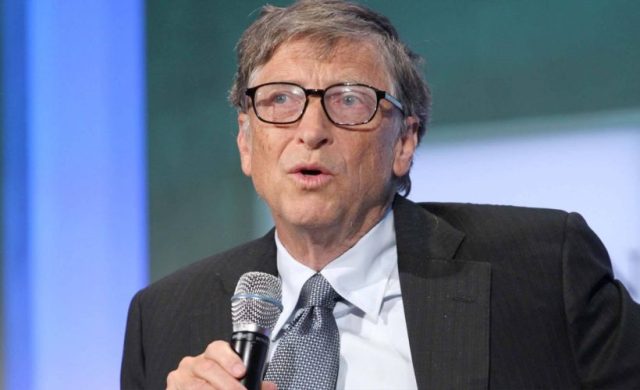
One assumes Bill Gates is a fairly intelligent man, but this became doubtful when he caused an uproar at a Reddit ‘Ask Me Anything’ session by asserting that cryptocurrencies are “a rare technology that has caused deaths in a fairly direct way.”

This is the full text of what he said, as published in Cointelegraph:

“The main feature of crypto currencies is their anonymity. I don’t think this is a good thing. The Government’s ability to find money laundering and tax evasion and terrorist funding is a good thing. Right now crypto currencies are used for buying fentanyl and other drugs so it is a rare technology that has caused deaths in a fairly direct way. I think the speculative wave around ICOs and crypto currencies is super risky for those who go long.”

But, hold on a moment – aren’t more people using dollars and other fiat currencies to buy drugs? Indeed, the 2017 Global Drug Survey shows that whatever country you look at, less than 50% of drug users purchase their fix via the dark web, which is the only online drug source using crypto for payment, and the global average is 10%.

As a result, Bill Gates’ statement went down like a bowl of cold sick with the Reddit audience. Some participants advised him to re-read the Bitcoin whitepaper, whilst others accused him of using his celebrity status to influence a negative view of the cryptocurrency market.

Is it possible that Bill Gates is being deliberately obtuse? When one audience member pointed out that fiat currencies can also be used for illegal activities such as money laundering, tax evasion, terrorist funding, and drug purchases, a statement that you don’t need to have a Harvard education to figure out (oh yes, Bill Gates dropped out of Harvard!), Gates replied: “the necessity of a physical presence makes illicit activities and transfers more difficult.”

Where has this man been living? Because, if you visit any city, even a small town, there are people paying cash for drugs on a regular basis, and it isn’t difficult o find out where it’s going on.

Is there something more shady behind Gates’ announcement? In 2015 he said, “Bitcoin is better than currency.” And the Bill & Melinda Gates Foundation has sponsored the development of blockchain solutions so that Kenyan merchants can accept cryptocurrency.  And, Microsoft is pursuing the development of blockchain technology. So, what’s happening Bill? Who’s pulling your strings?