Beyond the Screen: Why Smart Glasses Will Eclipse Smartphones

Did you feel the buzz around the new iPhone 16E launch? Neither did most people. Gone are the days of overnight lines outside Apple Stores, applause echoing as early adopters unboxed the latest iDevice. These days, iPhone updates feel more like software patches than technological revolutions.

So what happened? Has Apple lost its innovative touch, or is the entire smartphone industry running on fumes?

Despite improvements like foldable displays, better cameras, and premium finishes, smartphones simply don’t excite us like they used to. And maybe that’s okay. Many users now prioritize reliability over novelty. In the words of Steve Jobs, devices should “just work.”

Smartphones have matured. They’re not just phones anymore—they’re mini-computers, cameras, GPS systems, wallets, and more. The real magic lies in the services they support: Uber, Google Pay, Apple Wallet. They don’t just have NFC or GPS; they unlock entire ecosystems.

There are 7.5 billion active smartphones globally. That’s more than enough to raise the question: what could possibly come next? Are we destined to stare at little screens for another hundred years?

What Made Smartphones So Ubiquitous?

To guess what might replace smartphones, it’s essential to understand why they succeeded in the first place. The smartphone’s rise came down to three traits:

  1. Functionality consolidation: It absorbed dozens of devices and tools.
  2. Always-on presence: It’s with us 24/7.
  3. Innovation enabler: It created new industries and habits.

When the iPhone debuted in 2007, it wasn’t just a phone. It was an iPod, a web browser, and a cellular device—all in one sleek package. Over time, it quietly absorbed cameras, alarm clocks, calculators, maps, radios, handheld gaming consoles, and even keys.

Apps turned it into a scanner, a pedometer, a banking terminal, a photo studio, and a shopping mall. Paper maps, boarding passes, cash, physical tickets, even house keys—gone or going.

Its impact wasn’t just in hardware absorption. It also shifted our habits. Bank transfers, food delivery, fitness tracking, social networking—all moved to mobile.

The Power of Being Always On

A big reason for the smartphone’s dominance is that it’s always on, always connected. Unlike landlines or desktops, we never truly put them away. Whether we’re waiting in line or killing time, the smartphone is always our companion.

This always-on nature is what makes smartphones so effective—and so addictive. In contrast, VR headsets like the Apple Vision Pro, while impressive, demand a level of immersion and isolation that doesn’t fit with day-to-day life. You can’t walk down the street in a headset. You can’t wear it while driving or chatting with friends.

Innovation as a Platform

The iPhone didn’t just change what we do—it changed what we could build. Entire industries were born because the smartphone existed: Uber, TikTok, DoorDash, Duolingo. All of them rely on GPS, real-time data, and mobile apps. The smartphone turned into the ultimate innovation platform.

Any device that wants to replace it must not just compete with its features but offer a similar platform for new ideas.

So, What’s Next?

What device can be always with us, absorb other functions, and power new innovations?

Enter: Mixed Reality Smart Glasses (MRSG).

Not to be confused with clunky VR headsets or gimmicky audio glasses, MRSG are sleek, everyday-looking glasses that blend the digital and physical worlds. They project information onto transparent lenses, integrating the real world with digital overlays.

The Case for Smart Glasses

Unlike phones, which make us look down at small screens, smart glasses offer a heads-up experience. No more hunching over; instead, information is available in your field of view. Think navigation directions that appear while you walk. Notifications that float beside your real-world surroundings. Real-time translation or facial recognition.

Technologies being developed for MRSG include:

  • Micro-LED or OLED projectors
  • Waveguide displays that embed digital images into your line of sight
  • Laser projection systems that beam images directly to your retina

Companies like Meta are already prototyping these devices, aiming for glasses that combine power, comfort, and everyday utility.

MRSG won’t be worn 24/7 (at least not initially), but they have the potential to meet the three criteria that smartphones fulfilled so well:

  • Absorb multiple functionalities
  • Remain passively present and always accessible
  • Unlock new services and industries

The Post-Smartphone World

Smartphones were never perfect. They cause eye strain, bad posture, social isolation. Smart glasses could solve these problems while offering even deeper integration with our digital lives.

We might not be there yet, but the writing is on the wall. As display tech improves and use cases expand, MRSG could very well be the next big shift in personal computing.

The smartphone changed the world by pulling dozens of devices into one. Smart glasses might just change it again by pulling that screen off your hand—and into your world.

Software Is Eating the World — But SaaS Is Full of People Who Don’t Know What They’re Doing

A decade after Andreessen’s famous proclamation, software has indeed consumed the world. SaaS has become the default delivery model for everything from billing systems to meditation apps. But in this new age of infinite tools and endless funding, something strange has happened:

SaaS has grown faster than our collective understanding of what good software actually is.

While the industry is flooded with capital and hype, it’s also riddled with shallow execution, misaligned incentives, and a troubling lack of real expertise.

This isn’t about gatekeeping. It’s about calling out a culture where too many people are building businesses they don’t fully understand, solving problems they never deeply explored, and scaling software they never stress-tested.

Let’s unpack the hidden delusions inside the modern SaaS ecosystem.


🧩 1. Confusing “Product” with “Platform”

Everyone wants to be a platform. But most SaaS tools shouldn’t be.

A true platform offers extensibility, ecosystem integration, and network effects. But many tools labeled “platforms” are actually narrow, single-purpose apps with shallow APIs and brittle infrastructure.

Why? Because it sounds better in a pitch.

We need fewer “platforms” and more focused, opinionated tools that solve real user problems elegantly and completely.


🧪 2. Building for Funding, Not for Users

Too many SaaS startups are designed for the pitch deck, not the end-user. Roadmaps become theater. Features are rushed to hit fundraising milestones. Product-market fit is simulated with ad budgets, not traction.

This misalignment means that what gets built isn’t necessarily what’s needed—it’s what investors want to hear.

Result: bloated tools, artificial retention loops, and disillusioned users.


🛠 3. MVP Culture Has Gone Too Far

Yes, “ship fast” is still a good principle. But MVP culture has metastasized into minimal everything—minimal thought, minimal quality, minimal understanding.

An MVP is meant to be a starting point. But too often it becomes the product. Corners stay cut. Infrastructure remains fragile. UX is forever “temporary.”

Craftsmanship is replaced by velocity. But real products demand both.


🔁 4. Feature Creep Without Problem Depth

SaaS teams love adding features, but few truly go deep into user problems. The goal becomes parity with competitors, not innovation.

  • Need analytics? Add a dashboard.
  • Need stickiness? Add gamification.
  • Need AI? Plug in ChatGPT.

But layering on features without understanding workflows results in clunky, complex, hard-to-love products.


🧃 5. Over-Indexed on Design, Under-Indexed on Durability

Modern SaaS looks beautiful. Smooth gradients, clean interfaces, polished landing pages.

But under the hood?

  • Fragile backends
  • Poor scalability
  • Technical debt disguised as “agility”
  • Critical user paths breaking at scale

Design wins the first impression. Reliability wins long-term trust.


💸 6. Everyone’s a Buyer, No One’s a User

One of the most ironic problems in SaaS: buyers and users are rarely the same person. This leads to mismatched priorities.

  • Sales builds for decision-makers.
  • Product tries to satisfy end-users.
  • Marketing sells simplicity, while onboarding delivers complexity.

When users are treated as a secondary audience, churn becomes inevitable.


💬 7. Sales-Led, but Product-Starved

SaaS companies often scale sales faster than product maturity. This results in:

  • Over-promised features
  • Broken onboarding experiences
  • High CAC and low LTV
  • Burned trust and canceled renewals

Selling a vision is easy. Delivering value takes time, context, and care.


🤖 8. Throwing AI at Problems They Don’t Understand

The rise of LLMs and AI APIs has introduced a new wave of “AI-powered” SaaS that adds automation without insight.

It’s not that AI isn’t useful—it’s that many teams are solving symptoms, not root causes. Automating bad UX doesn’t make it better. Suggesting actions doesn’t replace strategy.

AI should enhance understanding—not distract from the lack of it.


⚠️ 9. The Talent Mismatch

The SaaS boom attracted brilliant minds—but it also attracted opportunists.

Today we have:

  • Founders who’ve never been customers of the space they’re building in
  • Product managers driven by velocity over vision
  • Engineers building for abstractions, not real users
  • Designers focused on UI kits, not usability

This talent mismatch leads to a graveyard of tools that “look right” but don’t work in the wild.


💡 10. What Real SaaS Needs Now

We don’t need more SaaS.

We need:

  • Deeper understanding of specific problems
  • Domain experts leading product direction
  • Technologists with humility, not just ambition
  • Craftsmanship, not speed addiction
  • Companies that grow slower—but smarter

The future of SaaS belongs to those who build quietly, patiently, and expertly. Those who obsess not over scale, but over substance.


🧠 Conclusion: SaaS Needs Its Reality Check

Yes, software is eating the world.
But some of it is junk food.

It’s time for a recalibration.
The next generation of SaaS companies will be built not by people chasing trends, but by those who actually know what they’re doing.

Because in an industry where anyone can build anything, the most valuable thing you can offer is depth.

China’s alarming plan for tech dominance

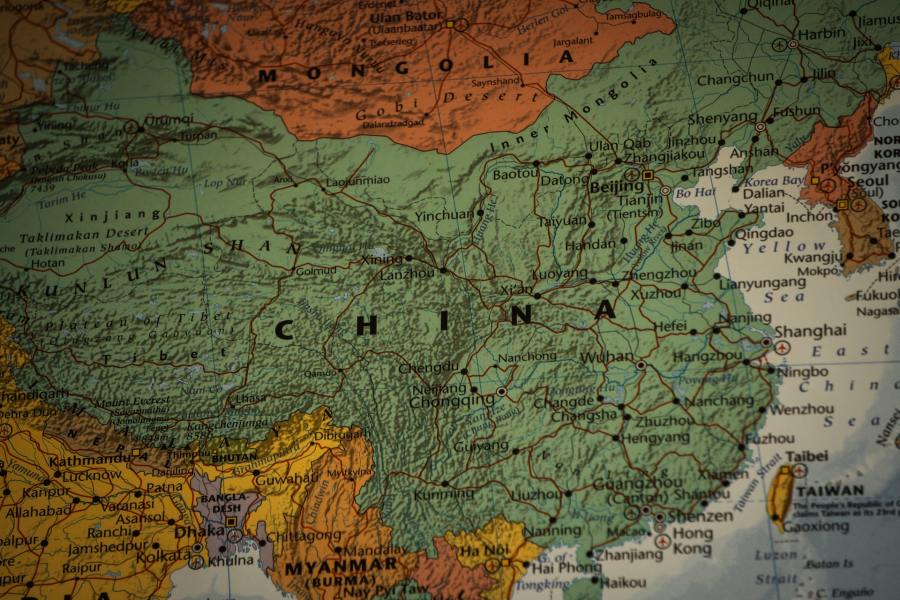
China has been using robotics in its manufacturing for quite some time, and it has some very powerful AI tools as well that automate processes in its factories. This is going to push other countries to match China, particularly the USA.

However, while America may be regarded as a world leader in tech, China’s President Xi has a plan to take that role for his country, and ensure that China is not using US-made tech either.

In an article published by the South China Morning Post, in May of 2020, President Xi presented his vision for China and his goal of achieving global tech supremacy by 2025. This is an extract from the piece:

“Beijing is accelerating its bid for global leadership in key technologies, planning to pump more than a trillion dollars into the economy through the roll-out of everything from next-generation wireless networks to artificial intelligence (AI).

In the master plan backed by President Xi Jinping himself, China will invest an estimated 10 trillion yuan (US$1.4 trillion) over six years to 2025, calling on urban governments and private hi-tech giants like Huawei Technologies to help lay 5G wireless networks, install cameras and sensors, and develop AI software that will underpin autonomous driving to automated factories and mass surveillance.

The new infrastructure initiative is expected to drive mainly local giants, from Alibaba Group Holding and Huawei to SenseTime Group at the expense of US companies. As tech nationalism mounts, the investment drive will reduce China’s dependence on foreign technology, echoing objectives set forth previously in the “Made in China 2025”programme. Such initiatives have already drawn fierce criticism from the Trump administration, resulting in moves to block the rise of Chinese tech companies such as Huawei.”

Tim Bajarin in Forbes, asks us to consider Xi’s use of the term, “tech nationalism.” He explains that Xi plans to “nationalise everything in China so it is the main provider of goods, services and tech-related products to China itself.” He wants China to be completely self-sufficient in tech by 2025, and nationalised tech will “receive a huge financial boost from China’s $1.4 trillion dollar fund.”

In early September former Google CEO Eric Schmidt commented that China’s leadership in AI posed a security threat and could lead to “high-tech authoritarianism” worldwide.

According to Bajarin, the US government is aware of the problem, but so far nobody knows exactly what actions it might take. Will it counter China’s influence by remaining a tech powerhouse, or what? If China is successful in fulfilling Xi’s vision, then it is also likely that “there could be a time when products we get from China are no longer available to the west.” Currently, China is still committed to globalisation, so its products will continue to reach us, but if it scales back on that, then those products will need to be sourced elsewhere. The question is, where might that source be? It is time the USA and any other countries likely to be negatively affected by a lack of good from China form a plan – the clock is ticking!

Covid-19 sparks the tech trends of 2021

This year, 2020, has been such a disaster that looking forward to 2021 is our only option. Of course, while making predictions used to be a fairly safe occupation, now it feels slightly dangerous. Furthermore, as Bernard Marr reminds us in Forbes, “tech has been affected just as much as every other part of our lives.”

It is also true that tech promises to play a major role in adapting to whatever the future may now look like. As Marr says: “From the shift to working from home to new rules about how we meet and interact in public spaces, tech trends will be the driving force in managing the change.”

You would be correct in thinking that Covid-19 has accelerated tech advances that were already in the pipeline, due to our increasingly digital lifestyle. Now they will happen quicker, because necessity is driving the change.

In Marr’s latest book, Tech Trends in Practice, he has identified some of the things we may see in 2021, many of which will support the recovery from the effects of the pandemic on almost every part of our lives.

He identifies Artificial Intelligence (AI) as a leading tech trend. In 2021 “it will become an even more valuable tool for helping us to interpret and understand the world around us.” We have seen an unprecedented amount of data collected around Covid, and machine-learning algorithms “will become better informed and increasingly sophisticated in the solutions they uncover for us.” Some of the AI tools Marr envisages include “ computer vision systems monitoring the capacity of public areas to analyzing the interactions uncovered through contact tracing initiatives, self-learning algorithms will spot connections and insights that would go unnoticed by manual human analysis.”

The provision of services that we need to live and work through cloud-based, on-demand platforms, known as ‘as a service’ providers are also key. Just look at how quickly Zoom entered our personal and business lives during the last few months.

5G is another key tool, and not just so you can download films faster. 5G will support services relying on advanced technologies, such as augmented reality and virtual reality (discussed below) as well as cloud-based gaming platforms, and it will likely make cable and fibre-based networks redundant.

Extended reality, virtual and augmented reality that uses glasses or headsets to project computer-generated imagery directly into the user’s field of vision is growing. Emergency services have already been using it for training during Covid, as real-life training situations for firefighters and police were not feasible. We may also see it used more in medical diagnostics, as face-to-face consultations decrease.

There will be many more tech advances as we grapple with an uncertain future. The aim is to make everyday activities safer for everyone, and to allow business to continue as we negotiate our way through a new environment.