6 Ways Technology Has Changed The World

We speak about ‘technology’ in almost reverent tones and assign it a special role in the economy. Mostly we think of this as being the provision of electronic products, information and communications services and software in its many forms. However, this is a rather limited way to look at technology and we should broaden its definition to include everything that humans have ever invented, from the Stone Age axe to the self-driving car.

L2b4uTr

In many ways, the things we invent are a defining characteristic of being human. In some historic eras, we seem to invent at a faster pace – the Industrial Revolution is a good example of this – and the emergence of the Internet in the 90s appears to have ushered in another period in which we are working at speed to produce products that exploit the connectivity of the web to change society, business and the economy. Here is my selection of the top six ways in which new technology has changed all three sectors and the world.

Mobile communications

By the end of 2015, mobile phone penetration was 97% compared with about 10% in 2000. Internet access grew in parallel with this. These two factors led to the arrival of ecommerce, which has transformed retailing and the music industry to name just two business sectors. It has also radically changed the way humans interact with each other.

Global inequality

It also shows up inequalities in the world, with the developed world having above 80% access to the Internet compared with 34% for developing countries.

Since information is power, it is vital that the developing countries have greater access to connectivity and we are seeing that those places where they have managed to overcome the problems of poor communications networks are progressing faster than those who don’t.

It hasn’t increased productivity

Contrary to what you might expect, mobile phones and the Internet have not made us more productive. If you look at the USA, which is both the world’s largest economy and the leading producer of new technologies, you will notice that although productivity rose slightly after the launch of the web, it has now dropped again to around 1 per cent in the last 10 years. But in the 1960s it was at 3 per cent annually.

This seems surprising, but Robert Gordon of Northwestern University says that electricity, modern sewage, the telephone, radio, internal combustion engine, the car and aeroplane, all had a much bigger effect on productivity and society than the web and your mobile.

It divides the world

In addition to there being inequalities in access to information technology around the world, the new technologies have created other types of inequalities. There are the markets where a handful of people and businesses dominate the world economy – Microsoft and Bill Gates are examples of this. Globalisation is another product of the new technology and there has been a huge growth in financial trading thanks to online access.

Big Brother is watching

Global communications have raised the question of security in cyberspace and the use of ‘big data’ brings the question of our personal privacy to our attention. The amount of data about each one of us that is stored on computers is enormous compared to the pre-computer and Internet era. It has also changed the individual’s relationship with government and corporate entities, and in a way that not everyone is happy about. The sense that Big Brother is watching us has led to all kinds of fears about infringement of our rights.

The Fake News thing

And finally it has created a monster in politics that we are now referring to as ‘fake news’. Whilst our almost instant access to global information has many benefits, it has also spawned an online media presence that spews out hatred, lies and often just plain stupidity.

We can see that new technology has brought us many benefits, but we must always remain aware of its dangers as well. If we use it thoughtfully it will advance us; if we don’t pay attention to its adverse effects, it can potentially destroy us.

Future World Governments

Political systems go through change, as history shows us, and as technology and society advances and changes, we are certain to see some alterations in the style of government around the world. There are a few ways that our governments may look dramatically different in the future and some of them are potentially terrifying. Here are five possible scenarios.

WGS17

A Noocracy

This is a political system based on the “priority of the human mind.” The concept comes from the Jesuit mystic Teilhard de Chardin, who saw this as a possible evolution of democracy that would create “a flexible and adaptable system comprised of conscious, systematic, and institutionalized elements which will operate in decentralized autonomous subsystems.” The upshot of a system like this is the development of a hive-like civilisation brain that integrates all individual minds, both human and AI, through information networks.

A Cyberocracy

In this system, governments would rule by the effective use of information. This could take two forms: one that supplants bureaucracy and technocracy as we know it, and or one that redefines the relationship between the state and society. It will be driven by decisions based on information, which means a government will seek to obtain as much information as possible about everyone and every entity. It is likely to result in a bureaucratic system run by administrative AIs.

A democratic global government

A global liberal democracy will be one capable of “ending nuclear proliferation, ensuring global security, intervening to end genocide, defending human rights, and putting a stop to human-caused climate change,” says George Dvorsky. We are already on the way to this in terms of culture and economics, but we have yet to reach the political stage. The European Union is an example of this type of government on a small scale.

A Futarchy

This system is the creation of economist George Mason and futurist Robin Hanson. They say that under a futarchy we would “vot on values, but bet on beliefs.” How does that work? Hanson says: “Elected representatives would formally define and manage an after-the-fact numerical measure of national welfare. Market speculators would set prices that estimate national welfare conditional on adopting proposed policies. When the market estimate of welfare conditional on adopting a policy is higher than the estimate conditional on non-adoption, that proposal becomes law.”

Post Apocalypse Hunter-Gatherers

Finally, there is the possibility that we will experience a catastrophic event – natural or man made– that forces us back into a paleolithic political system in which we will return to living in small tribal groups, existing by hunting and gathering for our existence.

Which type of futuristic government would you prefer if you had a choice? I look forward to hearing your views.

I hope you enjoyed this and found it useful. Please subscribe to my blog if you’d like to receive an alert when I post new content.

The Internet of Value: What It Means and How It Benefits Everyone

Blockchain has been called the “second significant overlay on the Internet” with the web being the first layer when it appeared back in 1990. That’s how important blockchain is. I know that when I mention blockchain to a lot of people, the first thing that comes into their minds is “Bitcoin.” That’s fair enough, because Bitcoin cryptocurrency has made blockchain famous. You’re probably aware that there is now a whole bunch of cryptocurrencies in addition to Bitcoin and although it remains the coin with the highest value, others like Ethereum are taking hold in the markets. But, there are many more exciting things that can be done with this technology beyond financial transactions using digital currencies and it is called “The Internet of Value’.

1475782089285494

Instant transactions

What is it? It is when Internet technology makes it possible to exchange ‘value’ as quickly as information. The banking system is one place where the Internet of Value can really make a big difference. For example, although information moves around the world instantly, a single payment from one country to another is slow, expensive and unreliable. According to Ripple, a blockchain transaction solution, in the US, a typical international payment takes 3-5 days to settle, has an error rate of at least 5% and an average cost of $42. Worldwide, there are $180 trillion worth of cross-border payments made every year, with a combined cost of more than $1.7 trillion a year.

But, with the technology from the Internet of Value, a value transaction, like a foreign currency payment, can happen instantly.  And it doesn’t have to be limited to money, although currently that is the primary use of this aspect of blockchain – the Internet of Value will enable the exchange of any asset, including stocks, votes, frequent flyer points, securities, intellectual property and more.

Blockchain and Value exchanges

The most common way of exchanging assets is using a bank, credit card or a booking service, but blockchain technology is changing all that. It allows these assets to be transferred directly from me to you without any other entity in the middle. The transfer is validated, permanent, and completed instantly – just like sharing information on the web. It has huge potential to change the world as we know it. It will decentralise every transaction, empower the individual and it will disrupt the financial markets as well as consumer ones.

This is not something that is a futuristic dream. It is already happening. Exchanges like NASDAQ are using blockchain technolog, Estonia, which is becoming the Silicon Valley of Europe, stores its citizens’ health records on blockchain and some airlines are accepting cryptocurrency payments for flights.

Very soon we will see the adoption of industry standards using an Interledger Protocol (ILP) that will set the standards for the settlement of transactions across different networks. ILP can be thought of much like the protocol HTTP used in web address that became the global standard for online information exchange.

With the use of this protocol there will be one, frictionless experience to send money globally using the power of blockchain. It will connect billions of people globally and give rise to new businesses and it will also liberate the millions of people who don’t have access to banking. The Internet of Value is bringing us into a bold, new world where the individual has more power. The Internet revolution is taking another step forward – we must embrace it.

I hope you enjoyed this and found it useful. Please subscribe to my blog if you’d like to receive an alert when I post new content.


Canada – a leader in innovative technology

I was fortunate to move to Canada in the 1980s and be educated there. It’s a country of extraordinary beauty and diverse cultures. The Canadian Rockies are breathtaking and Whistler, its prime ski resort, is a match for any in the world. It’s a fantastic place for a family vacation, and you’ll find that Canadians are generally friendly, kind and welcoming to all visitors.

I’m also proud of Canada’s achievements in technology. I studied for my Bachelor’s and MBA at Prince Edward Island University and it gave me the solid foundation I needed to take me into the communications and IT industries, and my particular specialism –mobile communications – is a sector where Canada has a leading edge.

Canada and communications

maxresdefault
The first company I worked for was FCC Ltd. We collaborated with Bell Canada to Fix and Bring mobile traffic origination and termination consolidation.

Out of all Canadian technology innovations, the phone has had the most profound effect on the world. Scottish-born Alexander Graham Bell (1847-1922) and Nova Scotia resident, who is credited with inventing the telephone, founded the Bell Telephone Co, which today is called BCE Inc and is Canada’s largest communications company.

And, Canada is the home of Blackberry. It may be facing a lot of competition now from Apple’s iPhone, but its secure BlackBerry Messaging service remains tops in the industry, party due to the fact that BBM’s encrypted data makes it hard to trace the messages back to the owners. Plus, Blackberry has added an even more secure version of the service aimed at users in healthcare, finance and government.

Canada also brought you the IMAX. The concept started in Montreal back at Expo 67 when three artists designed an installation of an immersive movie experience. Three years later the first IMAX film appeared and soon after the IMAX theatres appeared as well.  Now, there are IMAX cinemas and films all around the world.

Investing in Canada

1280px-Canadian_flag_on_building

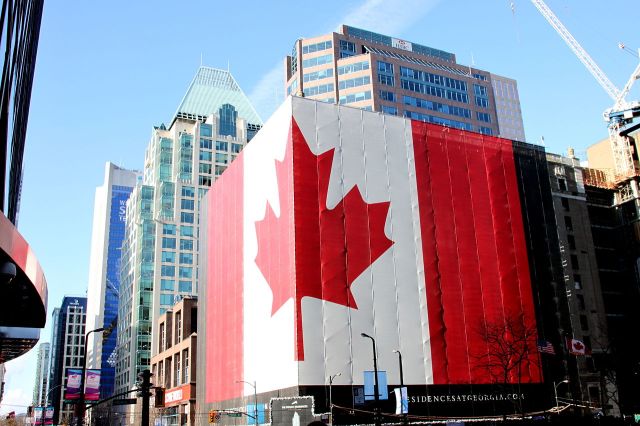
The election of Donald Trump in the USA prompted an increase in business people thinking of relocating to Canada. Canada’s world profile is also much bigger than in the past, in part due to Prime Minister Justin Trudeau’s activities. Therefore, more eyes are on Canada than ever before and market analysts suggest that investing in Canadian real estate is a good move. I’d agree and suggest investors look at areas with strong population and employment growth. Brampton in Ontario for example, which has Coca Cola, Air Canada, Canon Canada are just a few of the blue chip employers relocating there or expanding existing facilities. Other cities I’d recommend looking at real estate in are Milton and Richmond Hill, and I’m sure there are many more.

Canada’s strong economy and well-educated labour are also key reasons why global companies want to establish or expand their business in Canada. We have a broad selection of industry sectors that are ripe for investment. These include digital media, wireless communications and software, areas that are of personal interest to me. Did you know that Canadian studios are responsible for developing one in every six top-selling console games? Blockbuster titles from Canada include Ubisoft’s Assassin’s Creed, EA/BioWare’s Mass Effect, EA Sports’ FIFA Soccer.

And, Canada is leading the growing international demand for wireless technologies with leading infrastructure vendors, application developers and telecom software companies based in Canada. We are also seeing cutting-edge R&D work coming out of Canada from some of the biggest names in the sector: Alcatel-Lucent, AT&T, Avaya Inc., BlinQ, Ciena, Cisco Systems, Deutsche Telekom, Ericsson, JDSU, Nokia Solutions & Networks, Samsung and Sony.

Canada may have been overshadowed for some time by its neighbour to the south, but all the signs are that Canada is poised to maximise its opportunities for investment and to continue playing a leading role in high tech innovation that will secure for it a new status in the world economy. ‘