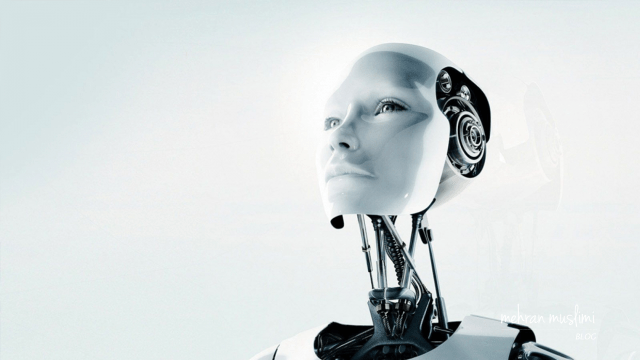
I Robot? No, I Creative

robot

In my last blog post I wrote about Artificial Intelligence (AI) and how it is modelled on the human brain’s neural pathways. However, as the post pointed out, whilst AI algorithms can mimic our thinking to a certain extent, as yet it can’t think at the same level of complexity as us. I’m aware that while some people are excited by the potential of AI, there are others who fear that it will replace human activity in the form of robots. The good news is, robots will increasingly help us by performing specific tasks – manufacturing is an example of where robots are useful—but there is one area in which the robots will not take over, and that is in the realm of creative thinking.

Robots free up time for more human creativity

Merrill Lynch published a report a couple of years back suggesting that 47% of jobs are “at risk of replacement by robots over the next 20 years.” These jobs are mostly in manufacturing and service industries. This kind of statistic plays into the hands of those who fear robotics. But, what we should be looking at is this; these robots will take over menial tasks, freeing humans up to use their time in being more creative. The report asked: “A major question is whether this will empower humans to go further than before, or if people will just be pushed out?”


The positive view of the advance of robots is that there are still many areas of work where the machines simply can’t replace humans. As I mentioned earlier, they can’t think creatively and there are other skills it is unlikely that will replace, at least for the next several decades. There are certainly some professions where we are unlikely to ever see robots.

Robots can’t teach kids

For example, robots can’t replace teachers, because a robot can’t relate to a child through human experience. As Ian Pearson from the World Academy for Arts and Sciences told Business Insider:

“A human will always be able to identify with another human on an emotional level better than a robot can.”

So, if you are a teacher you can feel confident that your job is safe, at least from robots.

Robots likely to make wrongful arrests

Another workforce that is unlikely to see its members’ replaced by robots is the police. The reason for this is that policing requires the skill of making judgements about situations. A robot can’t be programmed to make a judgement about a scenario. If robots were employed in this role, it is likely that they couldn’t differentiate between action that may look criminal but aren’t and an actual crime. A human can make a judgement call about what they are observing, and approach it based on previous experience and other aspects of our knowledge.

Robots can’t motivate

Motivational leaders and management positions are similarly safe from robots. Pearson even points out that people who are leading industry or service sectors will gain advantages from the employment of robots for menial tasks: “You will spend more time with colleagues, more time in meetings, more time in emotional analysis and trying to sway people. All of these other human skills become more important as the information skills become less important.”

Robots create more jobs

And finally, if you are still worried about being replaced by a robot, here is the good news from the Merrill Lynch report: countries like Germany and South Korea that have a high level of robots in manufacturing show a less decline in human employment than those countries with fewer robots employed, plus, “even as robots replace jobs, another 3.5 million jobs will be created because of robots.”

Our creative thinking is unique to us – it will be some time before robots and AI can replace that.

I hope you enjoyed this and found it useful. Please subscribe to my blog if you’d like to receive an alert when I post new content.




Artificial intelligence is all around you

Artificial intelligence

Step by step Artificial Intelligence has infiltrated our lives to the point where it is all around us. Its developers have made remarkable progress with its uses; it can play games of strategy with us, but more often it has a more serious commercial use that we encounter every day.

AI is based on the human brain

Human intelligence is the blueprint for AI. How else could its creators construct it? Its very workings are the product of humans and their thinking, so it is natural that it emulates human brain functions. Having said that, it has not yet acquired all our skills, because we don’t even know all the ways in which our brains work, so until we have that knowledge, we can’t replicate it in an algorithm. For example, one of the burning questions amongst those who follow the development of AI is, “does AI actually think?”

Does AI really ‘think’?

The answer is that to some extent, yes it does. The neural pathways of the human brain dynamically exchange information all the time and transmit bits of data to its different centres, such as memory and language. We also have the ability to learn and connect what we learn to what we already know. The complexity of these processes is mind-boggling and each one of us has a unique intelligence; you will rarely find a person who encompasses all the types of intelligence we have catalogued in our world, such as academic excellence, street smarts, EQ, business acumen, artistic vision, manual skills and spiritual wisdom. And that’s just the tip of the iceberg. But, can AI ever hope to replicate our diversity in thinking?

AI imitates the brain’s neural pathways

Well, it is already able to ‘think’ to a certain extent, otherwise we wouldn’t be able to play chess with AI as the opponent. Instead of neurons carrying information, AI has Artificial Neural Networks (ANN). These are “a type of machine learning algorithm in which nodes simulate neurons that compute and distribute information,” says technology writer Joelle Renstrom. These algorithms allow AI to follow the same ‘layered’ thinking that we do. For example, Renstrom in her excellent article on AI in the Daily Beast, explains how we view a sporting event, taking in an enormous range of diverse information and in processing it, we use, “memory, pattern recognition, statistical and strategic analysis, comparison, prediction, and other cognitive capabilities.” The, what is called ‘deep learning’ of AI is doing the same and we encounter its ‘thought’ processes every day.

AI in your media

Have you ever posted a message on social media about shopping for shoes and moments later you notice that adverts for shoe brands are popping up on your screen? That’s AI. You mentioned shoes; it will give you shoes. And it is capable of finding the type of shoes you like, because at sometime or other you’ve probably browsed shoes online, and now Facebook’s algorithm shows you some alternative brands, and in a style that corresponds with your original choice. Mention that you’re visiting Ibiza on social media and you’ll discover ads for Ibiza-related products when you go to read a newspaper online. It’s uncanny.

There are many more exciting aspects to AI that I will look at in future blogs, including how it will acquire general intelligence and whether or not it will ever have the capacity to replicate human creative thinking. AI is here to stay, so we must learn how to maximise its use for our benefit, rather than see it as a competitor to our intelligence.


I hope you enjoyed this and found it useful. Please subscribe to my blog if you’d like to receive an alert when I post new content.


How to choose the best business phone system

How to choose the best business phone system

mm blog


I’m passionate about communication and about communications systems, which is why I’ve spent a good deal of time designing and developing them. When VOIP systems appeared, it was one of the most exciting developments in telecommunications and I worked on developing a VoIP system for mobile devices, because I could see both the need and an opportunity. And I got it out a year before Viber appeared. That’s the entrepreneurial way!

As an expert in VoIP systems, I am often asked about how to choose a cost-effective phone system for your business that is also stable and reliable. It is difficult to give a ‘one system to suit all’ answer, but I have put together some tips that will help business users explore the choices available in a more informed way.

1.Look for mobility

More workers are less attached to their desks now, so any business system MUST allow them to communicate as easily while they are on the road as they can from the office. The feature to look for is ‘twinning’. This allows users to receive calls on mobile device and transfer calls seamlessly with a desk phone, plus place outgoing calls from their mobile devices. Also look for click-to-dial call control and on-phone corporate directory features.

2. Integrate with CRM

For some businesses, integration with CRM is critical for being competitive. So, I suggest you look for a system that allows screen-pop when looking up caller ID information, click-to-call and access to call settings.

3.Single inbox

I like unified messaging systems that deliver multiple messaging formats (mail, voice mail and fax) to a single email inbox. A system that also sends an SMS to your mobile device announcing that you have received a message is another feature that ensure you don’t miss anything critical. It is especially useful to people who are often out of the office and enables them to manage their messages in a more time-efficient way.

4.Instant messaging

An instant messaging feature that is integrated with the business phone system and each user’s calendar enables every user to see who is available to talk in real time, or if they are in a meeting or on another call. These tools are vital when so many businesses now rely on collaboration with colleagues.

5.Video calling

This is an absolutely essential feature of today’s business phone systems. You need integrated video calling for easy, face-to-face interactions between colleagues from any location via video-enabled HD Voice desk phone, which works for Windows or MAC clients, and for mobile on both the iOS and Android devices.

These are enough features to begin with and I also strongly advise you to look beyond the features and ensure you are working with an experienced service provider with a system on a solid platform.

I hope you enjoyed this and found it useful. Please subscribe to my blog if you’d like to receive an alert when I post new content.


Improve Customer Experience with New Phone System

A company always needs to find ways to improve customer service.  There ae many different channels such as live chat, email, Instant Messaging to connect to clients and they are all important in customer service. But among all of them, the phone is still the #1 in the provision of customer service for most, if not all businesses.

dhdhd1

There are now many new and innovative strategies that can improve your customer service level. There are tools such as CRM software, automated live chat, ticket support, client’s portal and of course your phone. Now it is possible for a phone to help a company to provide even better customer support. The Voice over Internet Protocol – VoIP phone system can help you to provide the best customer service possible with an amazing call experience and have it integrated with other business applications.

Where Cloud Phone System meets Great Customer Service

A Cloud Phone System uses VoIP Technology to provide a superior customer experience over the phone, both for inbound and outbound calls. The benefits of automating the call flow, having all details saved (both call logs and call recordings), optimising response time and others not only provide more productivity for the business but it also affects positively how the customer is being serviced over the phone. This means that the customer will be happy with the service they get and this can be translated into more sales.

Based on information provided by NUACOM, a Business Phone System provider in Ireland, here are some VoIP Phone System features that will improve customer service:

Interactive Voice Response:  This feature allows all your incoming calls to be automatically answered with a personalised greeting message and gives the callers options such as which department they wish to contact.

Call Groups: It is possible to set up all incoming calls in relation to customer service to ring on all your agents’ devices in this department, simultaneously, for better response time.

Call Conference: if a customer is not getting the help that they need from a customer service agent then extra assistance can be added.  A call can be turned into a call conference with 3 participants at any time and this will ensure that your customer gets all the help that they need. For example, an IT expert can be added to a call to make sure that the customer gets the right technical assistance.

Call Queuing:  This function of a phone system means that there is no more engaged tone.  If all your operators are busy, all incoming calls are placed in a queue until an agent is available to answer the call.

Number-name indicator: this feature assists your operators to know the identity of a customer so they can be prepared and greet them with a personal message.

Toll-Free number: providing a toll-free number for your customers to contact you could just make the customer service easier. This allows them to communicate with you freely, at no extra cost for them.

Call recording: This feature records all your business calls. This is very useful for training and evaluation. Calls can also be played to ensure that their order or request is fully understood.

Salesforce Integration: You can dial directly from Salesforce interface, have the calls logged and the call recordings available onto the contact details. This can be used for support and sales.

Source