Future World Governments

Political systems go through change, as history shows us, and as technology and society advances and changes, we are certain to see some alterations in the style of government around the world. There are a few ways that our governments may look dramatically different in the future and some of them are potentially terrifying. Here are five possible scenarios.

WGS17

A Noocracy

This is a political system based on the “priority of the human mind.” The concept comes from the Jesuit mystic Teilhard de Chardin, who saw this as a possible evolution of democracy that would create “a flexible and adaptable system comprised of conscious, systematic, and institutionalized elements which will operate in decentralized autonomous subsystems.” The upshot of a system like this is the development of a hive-like civilisation brain that integrates all individual minds, both human and AI, through information networks.

A Cyberocracy

In this system, governments would rule by the effective use of information. This could take two forms: one that supplants bureaucracy and technocracy as we know it, and or one that redefines the relationship between the state and society. It will be driven by decisions based on information, which means a government will seek to obtain as much information as possible about everyone and every entity. It is likely to result in a bureaucratic system run by administrative AIs.

A democratic global government

A global liberal democracy will be one capable of “ending nuclear proliferation, ensuring global security, intervening to end genocide, defending human rights, and putting a stop to human-caused climate change,” says George Dvorsky. We are already on the way to this in terms of culture and economics, but we have yet to reach the political stage. The European Union is an example of this type of government on a small scale.

A Futarchy

This system is the creation of economist George Mason and futurist Robin Hanson. They say that under a futarchy we would “vot on values, but bet on beliefs.” How does that work? Hanson says: “Elected representatives would formally define and manage an after-the-fact numerical measure of national welfare. Market speculators would set prices that estimate national welfare conditional on adopting proposed policies. When the market estimate of welfare conditional on adopting a policy is higher than the estimate conditional on non-adoption, that proposal becomes law.”

Post Apocalypse Hunter-Gatherers

Finally, there is the possibility that we will experience a catastrophic event – natural or man made– that forces us back into a paleolithic political system in which we will return to living in small tribal groups, existing by hunting and gathering for our existence.

Which type of futuristic government would you prefer if you had a choice? I look forward to hearing your views.

I hope you enjoyed this and found it useful. Please subscribe to my blog if you’d like to receive an alert when I post new content.

The Internet of Value: What It Means and How It Benefits Everyone

Blockchain has been called the “second significant overlay on the Internet” with the web being the first layer when it appeared back in 1990. That’s how important blockchain is. I know that when I mention blockchain to a lot of people, the first thing that comes into their minds is “Bitcoin.” That’s fair enough, because Bitcoin cryptocurrency has made blockchain famous. You’re probably aware that there is now a whole bunch of cryptocurrencies in addition to Bitcoin and although it remains the coin with the highest value, others like Ethereum are taking hold in the markets. But, there are many more exciting things that can be done with this technology beyond financial transactions using digital currencies and it is called “The Internet of Value’.

1475782089285494

Instant transactions

What is it? It is when Internet technology makes it possible to exchange ‘value’ as quickly as information. The banking system is one place where the Internet of Value can really make a big difference. For example, although information moves around the world instantly, a single payment from one country to another is slow, expensive and unreliable. According to Ripple, a blockchain transaction solution, in the US, a typical international payment takes 3-5 days to settle, has an error rate of at least 5% and an average cost of $42. Worldwide, there are $180 trillion worth of cross-border payments made every year, with a combined cost of more than $1.7 trillion a year.

But, with the technology from the Internet of Value, a value transaction, like a foreign currency payment, can happen instantly.  And it doesn’t have to be limited to money, although currently that is the primary use of this aspect of blockchain – the Internet of Value will enable the exchange of any asset, including stocks, votes, frequent flyer points, securities, intellectual property and more.

Blockchain and Value exchanges

The most common way of exchanging assets is using a bank, credit card or a booking service, but blockchain technology is changing all that. It allows these assets to be transferred directly from me to you without any other entity in the middle. The transfer is validated, permanent, and completed instantly – just like sharing information on the web. It has huge potential to change the world as we know it. It will decentralise every transaction, empower the individual and it will disrupt the financial markets as well as consumer ones.

This is not something that is a futuristic dream. It is already happening. Exchanges like NASDAQ are using blockchain technolog, Estonia, which is becoming the Silicon Valley of Europe, stores its citizens’ health records on blockchain and some airlines are accepting cryptocurrency payments for flights.

Very soon we will see the adoption of industry standards using an Interledger Protocol (ILP) that will set the standards for the settlement of transactions across different networks. ILP can be thought of much like the protocol HTTP used in web address that became the global standard for online information exchange.

With the use of this protocol there will be one, frictionless experience to send money globally using the power of blockchain. It will connect billions of people globally and give rise to new businesses and it will also liberate the millions of people who don’t have access to banking. The Internet of Value is bringing us into a bold, new world where the individual has more power. The Internet revolution is taking another step forward – we must embrace it.

I hope you enjoyed this and found it useful. Please subscribe to my blog if you’d like to receive an alert when I post new content.


Star Wars: The Galactic Economy and the Real World

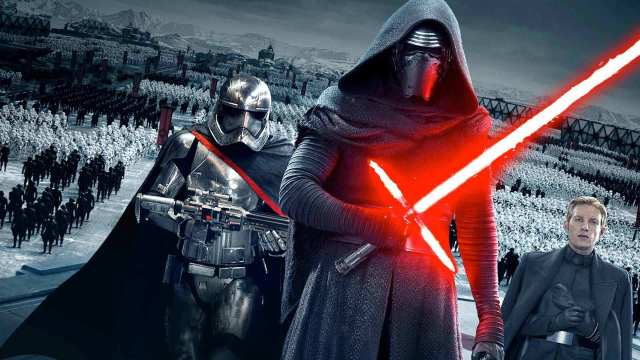
May 25th this year was the 40th anniversary of the first Star Wars film. Fans of the franchise may wonder what Luke and Co have to do with economics, but if you study the films and look beyond the quirky creatures and the fantasy storylines, you’ll notice that the Star wars story is underpinned by an economic and political system that mirrors the real world. At its most basic, it is economic problems that lead the Empire into war. That is something we are familiar with.

star-wars-the-force-awakens

The galaxy and the global economy

To start with, the Star Wars economy is galactic in scope –a situation similar to the globalised economy—and it is based on the working principles of modern trade. For example, planets trade products and services and the trade routes traverse multiple galaxies. This planets based at major intersections on these trade routes tend to do best, and there are plenty of real world examples that match this. Think of where Hong Kong and Singapore are located in Asia, the position of Dubai in relations to Europe, Africa and Asia, London’s location as a bridge between North America and Europe and the list goes on. It also goes way back in time to trade routes like the Silk Road and the Incense Route of antiquity. Cities along these trade routes grew in prosperity and some of them had a monopoly on specific products.

In Star Wars, Bothawui is poised at the crossroads of four trade routes, This makes it a popular meeting place and a venue for trade negotiations. The intergalactic firms operate across several planetary systems – think Microsoft, Coca Cola and all the global businesses we have today that operate in the same way.

The Corporate sector and free zones

It also has a Corporate Sector, which is really like a free trade zone and it has a simplified tax code compared with other parts of the Empire. To make trade easier they also have trade agreements and consortiums that wield political and economic influence. In the real world, we have the Pacific Trade Agreement, the WTO, the EU and EFTA amongst others that act in the same way. And, there is the Intergalactic Banking Clan – a parallel universe for the IMF, ECB and World Bank?

The German economy of the 1930s

George Lucas, the creator of Star Wars based the Galactic Empire’s economy on that of Nazi Germany. As he pointed out, both emerged on the back of an economic crisis. If you watch the films with that in mind, you’ll see other similarities, including the compulsory military service that made both ‘states’ ready for war. The Death Star station is a war machine and there is a dedication to building military might across the Empire that strongly echoes 1930s Germany.

A Military Industrial Complex

And as in the real world, the planets on the Outer Rim of the system are more oriented towards agriculture, design technology and the further out the planet from the centre, the more primitive its economy. Their distance from the power of a Military Industrial Complex, which results in them having weaker economies reflects the situation in the real world.

If you thought Star Wars was just a bit of fun entertainment, perhaps you’ll watch the whole series again and realise that George Lucas was giving us all a lesson in world economics, in the most entertaining format he could come up with.


I hope you enjoyed this and found it useful. Please subscribe to my blog if you’d like to receive an alert when I post new content.


Opportunities for Entrepreneurs in China

China is a very exciting country, both culturally and in terms of business. For foreign entrepreneurs it offers a number of interesting opportunities, although you will need to hold you nerve in this often volatile and diverse market.

20150603173046-investment-from-afar-red-door-lions-china-chinese

Some of the positives you may get in China are: cheap and reliable technology, cheap and highly productive workforce, fertile land and good weather. China is also the country that has the second highest purchasing power parity when compared to the rest of the world.

In my experience, the overseas entrepreneurs who have succeeded where others have failed in China are those who have really explored the opportunities and sectors that are most open to new businesses and I’ve put together some business areas where there are openings in this huge economy that is also the largest importer and exporter of goods in the world.

Education services

Native English speakers are in big demand in China. Clearly, just teaching in a school will not build a business, but if you explore the provision of online courses you have a chance of creating a business with real value, especially when you consider the numbers in the Chinese population.

Ecological and environmental products

China has a serious problem with pollution and it is looking at ways to mitigate this with projects that include new energy, clean and renewable energy, green technology, reforestation, gardens and landscaping.

An Internet business

Most Chinese have access to the web and it is not difficult for overseas entrepreneurs to start a small-scale business online for the Chinese market. You will find that there is less bureaucracy than you might expect and fewer licenses and certifications required than in other countries.

Mobile phone accessories

China made mobile phones cheaper for the rest of the world.They can also supply USB cords, memory cards, batteries and other accessories. If you can find a supplier in China and sell their wares to the rest of the world, you potentially have a very profitable business.

Trading platforms and online businesses

The technology available in China favours online business and trading platforms. The main advantage of owning an online shop is that you don’t have to own or possess all the products listed in your on-ground warehouse. Just talk to some manufacturers and have an agreement that allows them to list their products in your store.

I’d also advise anyone doing business in China to bear the following in mind:

  • Cultural differences – make sure you know your business etiquette
    · Language difference – find a good interpreter and this won’t be an issue
    · Loyalty – loyalty is very important to the Chinese
    · Getting qualified and reliable manufacturers – do your research and due diligence.

Anyone can overcome these by being prepared, getting an interpreter where needed and having credible Chinese partners to help you out. This is a country that will continue to go from strength to strength – explore it now and find your niche as a foreign entrepreneur. It pays to get into the market early on.

I hope you enjoyed this and found it useful. Please subscribe to my blog if you’d like to receive an alert when I post new content.