AI and information crime

Artificial Intelligence (AI) is moving at speed into the mainstream. Almost every day we are learning about new uses for it, and discovering the ways in which it is already a part of our daily lives. Just this week medical researchers have revealed that the use of AI in testing for breast cancer is more effective than the work of expert radiologists. As one doctor interviewed said, this use of AI frees up radiologists to do other important work. And that’s a great benefit, as it takes roughly 10 years to train in radiology.

On the other hand, people are concerned that AI may take over almost every area of our lives, from self-driving cars to fighting wars. And it may do our laundry as well. Basically it comes down to this — will AI replace humans? That’s the great fear, but one which is largely exaggerated. As Kathleen Walch writes: “However, it’s becoming increasingly clear that AI is not a job killer, but rather, a job category killer.” I have also written about this aspect of AI before, pointing to the fact that “jobs are not destroyed, but rather employment shifts from one place to another and entirely new categories of employment are created.”

Indeed, as Walch says, “companies will be freed up to put their human resources to much better, higher value tasks instead of taking orders, fielding simple customer service requests or complaints, or data entry related tasks.” What businesses must do is have honest conversations with their employees about the use of AI and show how it can allow humans to be more creative by giving the dull, routine tasks to AI.

The one area where AI is causing us issue is in the generation of fake news in a range of formats. It is already almost impossible to tell if an image is real or AI-generated, or if you’re talking to a bot or a real person? AI-generated ‘disinformation’ is not necessarily generated by criminals: as we all now know, State actors are perhaps the worst offenders, and we have plenty of example to look at coming from Russia, the USA and the UK. Lies are fed to the citizens using social media accounts that appear to be reputable government sources, and the social media companies collude with these sources, as Facebook has shown us. Walch says, “Now all it takes is a few malicious actors spreading false claims to traumatically alter public opinion and quickly shift the public’s view.” Brexit and the election of Trump are good examples of this in play.

And it is in this area that we must consider the ethics of using AI most closely right now. As Walch says, “Governments and corporations alike will have to think about how they will reign in the potential damage done by AI-enabled content creation,” and she adds, “we must encourage companies and governments to consider fake content to be as malicious as cybersecurity threats and respond appropriately.”

What we are talking about is essentially propaganda. There are those of us who can see through the smoke and mirrors, but many can’t, and these citizens need protection from the malicious acts of the information criminals.
The everyday uses of AI

When it comes to Artificial Intelligence (AI), many of the people I talk to think that it is either something that is coming in the future, or interest in it is limited to geeks. Some see it as a negative tool that will destroy employment for people. And they are surprised when I tell them that they are probably using AI in their everyday lives already — they just aren’t aware that something like a Google search is AI based. And those adverts you keep seeing on social media because one day last week you searched for ‘holidays in the Maldives’ — that’s all down to AI.

Here are some of the everyday uses of AI that you may not be aware of. They have been compiled by 12 experts from Forbes Technology Council.

1. Customer Service

Data analytics and AI help brands anticipate what their customers want and deliver more intelligent customer experiences — better than the old call centre one anyway.

2. Personalised Shopping

When you shop online and you visit a site and look at a product, you may find you suddenly get recommendations for similar products — that’s AI.

3. Protecting Finances

For credit card companies and banks, AI is indispensible, especially in detecting fraudulent activity on your account. It saves all of us from the pain.

4. Drive Safer

You don’t need a self-driving car to use AI. For example, lane-departure warnings, adaptive cruise control and automated emergency braking are all AI functions.

5. Improving Agriculture

Agriculture is an important element of our lives, because we all want and need to eat. AI is improving this important sector with the following examples: satellites scanning farm fields to monitor crop and soil health; machine learning models that track and predict environmental impacts, like droughts; and big data to differentiate between plants and weeds for pesticide control.

6. Our Trust in Information

Trust in information is one of the most critical issues of our current times. We are bombarded with images and articles that we just don’t know if they are telling the truth or not. Experts say that AI will change how we learn and the level of trust we place in information. AI will help us identify the deep fakes and all those methods of sharing ‘fake’ information, and that is very important.

The ways in which we use AI are growing all the time — and if you think you’re not using it, you almost certainly already are.

Tech companies lose their glamour

I have been reading with interest an article by Enrique Dans about ‘The Rise and Fall of Technology Companies’, and his analysis of the latest company rankings from Glassdoor, the site that allows employees of companies in the United States to anonymously provide information about their companies. It is the go-to place for job candidates, because they can discover a lot of good info here. From a company’s perspective, what Glassdoor has to say, can potentially attract or put off new talent.

Glassdoor’s 2020 league table is out, and while some people may complain about the way it collects data, one thing is clear this year, technology companies are losing their glamour. You might be surprised to find that both Apple and Google have dropped their positions: indeed, Google isn’t even in the Top 10 companies to work for. Facebook has dropped 16 places and Amazon isn’t even in the Top 100.

The popular perception is that these companies offer such amazing perks in-house that every young person would want to work there. Having said that, Amazon is fast becoming seen as something of a rogue employer that treats its staff, especially those who make sure we all get our orders, as slave labour.

The magic has gone

Dans says that the Glassdoor league table reflects what the media has been saying for some time. That the big tech companies are losing their mythical status. Indeed, when I use the word ‘glamour’ in this context, it is quite appropriate, as the word originally comes from the Scots in the 17th century and meant “a magic spell.” So, you can see why I say they are losing it, and with the consumer as well as the employee.

What happened?

In 2008 after the collapse of the banking sector, new graduates flocked to the tech guys instead of heading to Wall St. Dans, who teaches, states: “everybody wanted to work for the technology companies: I remember all too well the interest my students showed when I invited a senior figure from one of them to a class. Now, my students are often highly critical of the tech companies. Interestingly, it’s the younger students who are most concerned.”

And the concern is about regulating the big tech companies. Facebook has made this a concern, as we have seen over the last few years. But, who or what is replacing the tech companies as the place most people want to work?

According to the Glassdoor data, it’s a very mixed bag, ranging from software companies like Hubspot, to “consultancies, airlines or hamburger chains.” There is no real trend that is discernible as yet, and we may have to wait a couple of years for one to emerge. But right now the tech companies have lost their glamour — perhaps they should look for a fairy to cast a new spell.

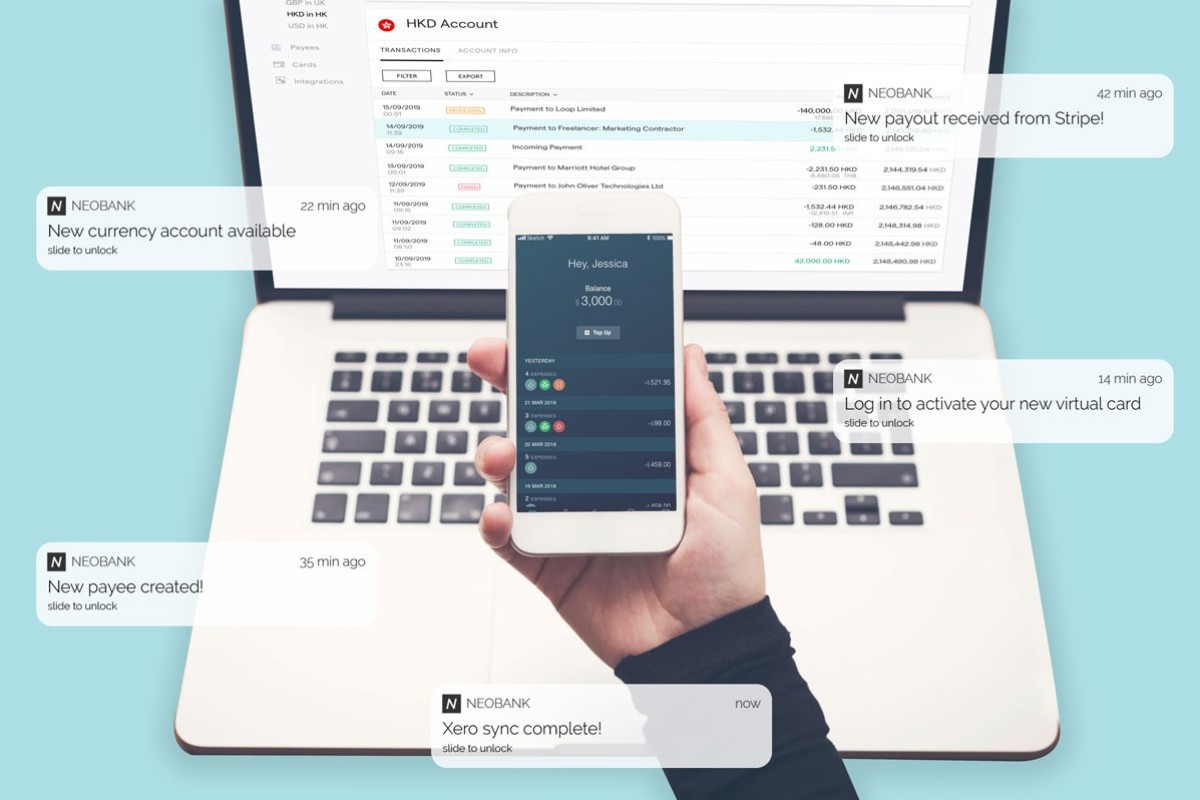
How neobanks are modernising banking


Banking is going through some changes thanks to the arrival of neobanks. The traditional banks continue to work at their own pace, and are still largely bound by legacy systems that go back decades. Change is not a simple process for them: it is similar to trying to change the direction of a massive oil tanker at speed on the high seas. In other words it is something that takes a while.

The arrival of the neobanks, which are the digital-only challenger banks, (there are challenger banks that don’t fit in the neobank niche because they are more like traditional banks) has caused an upset in the banking sector, but what is the real difference between a neobank account and the type of bank account that most of us already have?

The first, and most basic difference is that they are technology driven. And they don’t have physical branches. That can be off-putting to customers who feel more secure by having a branch that they can go to and talk to someone. In this way, neobanks have a greater appeal to younger sections of the population who are used to operating their existing bank account through an app and online.

Often neobanks don’t have a full banking licence, but they can still offer the range of services offered by traditional banks. They can do this because they have an alternative type of financial services licence, such as an e-money licence, or they have partnerships with financial service providers that hold an appropriate licence.

Opening a neobank account is extremely simple and can be done via a smartphone, or a computer in minutes. There’s no wait while all your documents are assessed by head office. This has a huge appeal for many customers, especially those people who may be dismissed by traditional banks, because they don’t have a large enough income to make them a ‘worthwhile’ customer. Some banks now insist that customers keep the balance in their account at a certain level, and this means many people are excluded from holding an account, or find that their account is suddenly closed.

And we all know that traditional banks often charge exorbitant fees. The neobanks offer free accounts, as well as a range of accounts with a monthly fee, but even these are much lower than an established bank would charge for the same service. Chime, for example, is a neobank in the US that offers debit cards and fee-free overdrafts.

Neobanks are also cutting out a sector for themselves with small businesses and freelancers, which is a sector that the traditional banks don’t serve very well. For example, UK neobank Coconut focuses on serving freelancers. They’ve developed specific accounting features, including VAT and invoicing that cater to the day-to-day needs of the self-employed. For example, a freelancer who needs to request payment from a client can use Coconut to send invoices directly from the app.

Overall, neobanks are changing the entire banking experience. It will take some more time to grow this new financial sector, but it seems to me that every day one meets yet another person who has added a digital-only banking service to the tools they use to manage their money, and that is progress.