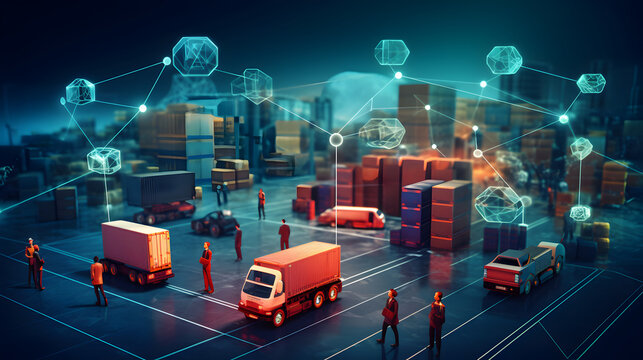
The Rise of Agentic Workflows: A Smarter Approach to AI

The Evolution of AI: From Agents to Agentic Workflows

For years, the AI community has been obsessed with building autonomous AI agents — systems designed to perform tasks independently, making decisions without human intervention. However, the conversation has shifted. The focus is now on “agentic workflows,” a paradigm that integrates AI systems into structured, adaptable processes where humans and AI collaborate dynamically.

What Are Agentic Workflows?

Agentic workflows refer to AI-driven processes designed to be:

  1. Adaptive — Able to adjust based on new information.
  2. Interoperable — Seamlessly integrating with other AI models, software tools, and human input.
  3. Goal-Oriented — Working towards a specific objective rather than just executing predefined commands.
  4. Iterative — Continuously improving through feedback loops.

Unlike isolated AI agents that attempt to replace human involvement entirely, agentic workflows optimize how AI and humans interact, ensuring that decision-making remains efficient, transparent, and adaptable.

Key Drivers of the Shift

1. AI’s Struggles with Autonomy

AI agents, while powerful, often struggle with real-world unpredictability. Fully autonomous systems encounter problems with edge cases, ethical dilemmas, and unforeseen disruptions. Agentic workflows address this by embedding AI into structured processes where human oversight plays a key role.

2. Scalability & Business Adoption

Enterprise AI adoption has revealed that businesses prefer solutions that enhance existing workflows rather than replacing human expertise entirely. Agentic workflows provide a scalable approach, ensuring that AI augments decision-making rather than operating in isolation.

3. Regulatory & Ethical Challenges

Governments and regulatory bodies are increasingly scrutinizing autonomous AI decision-making. Agentic workflows help mitigate risks by maintaining human-in-the-loop systems, ensuring compliance, accountability, and ethical considerations.

4. Multimodal AI Capabilities

Modern AI models, such as OpenAI’s GPT-4 and Google DeepMind’s Gemini, have become multimodal — able to process text, images, audio, and even video simultaneously. This has fueled the rise of agentic workflows, where multiple AI models collaborate on tasks, enhancing efficiency without full autonomy.

The Future: AI as a Partner, Not a Replacement

As AI development continues to accelerate, the focus will likely remain on refining agentic workflows rather than creating fully autonomous agents. The future of AI is not about replacing human intelligence but enhancing and scaling human capabilities through structured, AI-powered workflows.

By 2026, AI’s role in society will be deeply intertwined with human decision-making, ensuring that we leverage its power responsibly while maintaining control over critical processes. The numbers don’t lie — AI is evolving rapidly, and we must be prepared to adapt.

The AI landscape is shifting, and those who embrace agentic workflows will be best positioned for success. The transition from standalone AI agents to collaborative, workflow-driven AI will define the next wave of technological evolution.

Stay ahead of the curve — understand, adapt, and integrate AI strategically.

Google’s Agentspace: The AI Revolution Reshaping Business

A New Era of AI-Powered Business

The future of business has arrived, and it comes with the power of AI. Google has just introduced Agentspace, an advanced AI-driven platform that promises to revolutionize the way businesses operate, interact with customers, and automate tasks. As industries scramble to integrate artificial intelligence into their workflows, Google’s latest innovation could mark a turning point that redefines efficiency, decision-making, and competitive advantage. But what exactly is Agentspace, and how will it change the business landscape forever? Let’s dive deep into this groundbreaking technology and what it means for companies worldwide.

What Is Agentspace?

At its core, Agentspace is Google’s latest AI ecosystem designed to create and manage intelligent digital agents that can perform complex business tasks autonomously. Unlike traditional AI assistants, which are typically limited to predefined commands, Agentspace leverages deep learning, natural language processing (NLP), and contextual decision-making to operate with a level of sophistication never seen before.

Key Features of Agentspace:

  • AI-Powered Digital Agents: These agents can handle customer interactions, analyze vast amounts of data, and make autonomous business decisions.
  • Advanced Machine Learning Integration: Google’s AI models, including Gemini AI, enable the system to adapt and improve over time.
  • Seamless Business Automation: From customer service to supply chain management, these agents can automate complex workflows with minimal human intervention.
  • Personalized User Experience: AI-driven interactions that feel more natural, intuitive, and human-like.
  • Scalability & Customization: Businesses can tailor their AI agents to fit industry-specific needs, whether in finance, healthcare, e-commerce, or logistics.

How Agentspace Will Transform Businesses

The implications of Agentspace stretch across every industry, reshaping how companies function at their core. Here are some of the most profound changes businesses can expect:

1. Hyper-Efficient Customer Service

Gone are the days of robotic chatbots that frustrate customers. Agentspace’s AI-powered digital agents can handle complex inquiries, understand context, and provide real-time solutions with near-human intelligence. Businesses can dramatically cut costs while improving customer satisfaction and response times.

2. Smarter Decision-Making with AI

With real-time data analysis and predictive insights, Agentspace can assist executives in making data-driven decisions faster and more accurately than ever before. Whether forecasting market trends or identifying operational inefficiencies, AI-driven intelligence will become an indispensable tool for business leaders.

3. Unprecedented Business Automation

From HR to finance, marketing, and logistics, Agentspace enables businesses to automate tedious and time-consuming processes, freeing up human resources for more strategic initiatives. This means increased efficiency, reduced errors, and lower operational costs.

4. Personalized Marketing & Sales

AI-powered agents can analyze consumer behavior and personalize customer interactions, resulting in higher conversion rates, better customer retention, and improved sales strategies. Businesses can optimize their marketing campaigns in real time based on AI-driven analytics.

5. Revolutionizing Supply Chain Management

Supply chains are complex, but Agentspace can streamline logistics, predict demand fluctuations, and reduce inefficiencies. Companies will have the ability to anticipate shortages, optimize deliveries, and reduce costs like never before.

Industries That Will Be Most Impacted

  1. E-Commerce & Retail: AI-driven shopping assistants, personalized recommendations, and automated order fulfillment.
  2. Finance & Banking: Fraud detection, AI-powered investment strategies, and customer service automation.
  3. Healthcare: AI-assisted diagnostics, automated patient interactions, and predictive healthcare analytics.
  4. Manufacturing & Logistics: Automated production planning, AI-driven maintenance, and smart supply chain management.
  5. Marketing & Advertising: Hyper-personalized campaigns, AI-powered content creation, and automated A/B testing.

The Challenges of AI-Driven Business Transformation

While Agentspace presents immense opportunities, businesses must also navigate certain challenges:

  • Ethical Concerns & AI Bias: Ensuring AI decisions remain fair, transparent, and unbiased.
  • Data Security & Privacy: Handling sensitive business and consumer data responsibly.
  • Workforce Adaptation: As AI takes over repetitive tasks, businesses must focus on retraining employees for higher-value roles.
  • Implementation Costs: While AI offers long-term savings, the initial investment and integration process require careful planning.

The Future: AI-First Businesses and the Agentspace Revolution

With Google’s Agentspace, we are entering a new era where AI is not just an assistant but a fundamental part of business operations. Companies that embrace this technology early will gain a competitive edge, streamline operations, and unlock new levels of innovation.

The question is no longer if AI will change business — it already has. The real question is: Are you ready to adapt and thrive in an AI-driven future?

Google’s Agentspace is more than just another AI tool — it is a game-changer for business. From revolutionizing customer service to optimizing decision-making and automating operations, it has the potential to reshape industries. As AI continues to advance, businesses must prepare to integrate these technologies or risk falling behind.

What are your thoughts on AI-powered business transformation? Do you think Agentspace will revolutionize industries, or are we overestimating its impact? Let’s discuss! 🚀

AI Is the Key to Surviving Supply Chain Challenges in 2025

The global supply chain landscape is constantly evolving, with disruptions becoming more frequent due to economic shifts, geopolitical tensions, and unforeseen crises such as pandemics and natural disasters. As we move into 2025, businesses must embrace cutting-edge technologies to navigate these challenges. Among these technologies, Artificial Intelligence (AI) stands out as the most transformative tool in ensuring supply chain resilience, efficiency, and adaptability.

The Growing Complexity of Supply Chain Challenges

Supply chains today are more interconnected than ever before, spanning multiple countries and involving numerous stakeholders. However, they also face increasing risks:

  • Global Disruptions – Trade wars, political instability, and pandemics have exposed the vulnerabilities of traditional supply chains.
  • Demand Volatility – Unpredictable consumer behavior and shifting market demands make forecasting increasingly difficult.
  • Labor Shortages – Workforce availability remains a critical challenge, exacerbated by automation and changing job landscapes.
  • Logistics Bottlenecks – Port congestion, rising shipping costs, and transport inefficiencies continue to plague global trade.

To address these issues, businesses must leverage AI-driven solutions to enhance agility and mitigate risks proactively.

How AI is Revolutionizing Supply Chains

1. Predictive Analytics for Demand Forecasting

AI-powered predictive analytics enables businesses to anticipate demand fluctuations with greater accuracy. Machine learning models analyze vast datasets, including market trends, economic indicators, and historical sales, to optimize inventory levels and minimize stockouts or overstock situations.

2. Real-Time Visibility and Monitoring

AI-enhanced supply chain management platforms provide real-time tracking of goods, offering end-to-end visibility. This level of transparency helps businesses detect potential disruptions early and adjust their strategies accordingly.

3. Intelligent Automation in Warehousing and Logistics

  • Robotic Process Automation (RPA) streamlines order processing and reduces manual errors.
  • Autonomous Vehicles and Drones optimize last-mile delivery, reducing transit times and costs.
  • Smart Warehouses use AI-driven robots to manage inventory efficiently, improving overall supply chain performance.

4. Risk Management and Resilience

AI-driven risk assessment tools analyze geopolitical, economic, and environmental factors, enabling businesses to proactively address vulnerabilities. Machine learning algorithms identify patterns that indicate potential disruptions, allowing for contingency planning before issues escalate.

5. AI-Driven Supplier Relationship Management

By analyzing supplier performance, AI can help businesses make data-driven decisions about procurement strategies. AI-powered negotiation tools optimize supplier contracts, ensuring cost-effectiveness and efficiency.

The Future of AI in Supply Chain Management

As AI continues to evolve, it will unlock even greater efficiencies in supply chain management. Future advancements may include:

  • Hyper-Personalized Logistics – AI-driven solutions tailored to individual customer needs, improving satisfaction and retention.
  • Blockchain and AI Integration – Combining AI with blockchain enhances supply chain security, reducing fraud and improving traceability.
  • Quantum Computing for Complex Decision-Making – Emerging quantum technologies will further enhance AI’s capabilities in solving complex supply chain challenges.

As we approach 2025, AI is no longer a luxury but a necessity for businesses aiming to survive and thrive in the face of supply chain challenges. By leveraging AI-driven insights, automation, and risk mitigation strategies, companies can build more resilient and efficient supply chains. The businesses that embrace AI today will be the ones that lead the market tomorrow, ensuring long-term sustainability and competitive advantage in an increasingly uncertain world.

Artificial Intelligence: In-Depth Market Analysis

Artificial Intelligence (AI) is transforming industries across the globe, driving innovation, automation, and efficiency. From healthcare and finance to manufacturing and retail, AI technologies are reshaping the way businesses operate. This report provides an in-depth analysis of the AI market, examining key trends, growth drivers, challenges, and future prospects.

Market Overview

The AI market has been expanding rapidly, with a projected compound annual growth rate (CAGR) of over 35% from 2023 to 2030. According to industry estimates, the global AI market was valued at approximately $150 billion in 2023 and is expected to exceed $1.5 trillion by 2030.

Key segments of the AI market include:

  • Machine Learning (ML): Algorithms that improve automatically through experience.
  • Natural Language Processing (NLP): AI systems that understand and generate human language.
  • Computer Vision: Technology enabling machines to interpret visual data.
  • Robotic Process Automation (RPA): AI-driven automation of business processes.
  • Generative AI: AI models capable of creating text, images, and other media autonomously.

Key Market Drivers

Increasing Adoption Across Industries

  • AI is widely implemented in healthcare for diagnostics, personalized medicine, and drug discovery.
  • The financial sector utilizes AI for fraud detection, risk assessment, and algorithmic trading.
  • AI-powered chatbots and recommendation systems are revolutionizing e-commerce and customer service.

Advancements in Computing Power

  • The development of powerful GPUs and specialized AI chips has significantly improved AI model performance.
  • Cloud computing and edge AI are enabling more efficient deployment of AI applications.

Growth in Big Data and IoT

  • AI relies heavily on data, and the increasing volume of structured and unstructured data fuels AI model training.
  • The integration of AI with IoT devices enhances predictive maintenance and real-time analytics.

Government and Corporate Investments

  • Governments worldwide are investing in AI research and development to stay competitive.
  • Tech giants like Google, Microsoft, and OpenAI continue to push AI boundaries with large-scale investments.

Chalenges Facing the AI Market

Ethical and Regulatory Concerns

  • Bias in AI algorithms remains a significant issue, leading to concerns about fairness and accountability.
  • Data privacy regulations such as GDPR impose restrictions on AI applications.

High Implementation Costs

  • Developing and deploying AI solutions require substantial investments in infrastructure and expertise.
  • Smaller businesses struggle to integrate AI due to high costs and technical barriers.

Lack of Skilled Workforce

  • The demand for AI specialists far exceeds the current supply, creating a talent gap in the industry.

Future Trends in AI

Expansion of Generative AI

  • AI models like ChatGPT and DALL·E are revolutionizing content creation, marketing, and entertainment.

AI in Autonomous Systems

  • Advancements in AI-driven robotics and self-driving vehicles are expected to disrupt transportation and logistics.

AI-Augmented Workforces

  • AI will not replace jobs entirely but will enhance human productivity and decision-making.

Quantum AI

  • The convergence of AI and quantum computing may unlock new possibilities in complex problem-solving.

The AI market is poised for significant expansion, driven by technological advancements and increasing adoption across various industries. However, challenges related to ethics, cost, and workforce development must be addressed to maximize AI’s potential. Businesses and governments must collaborate to ensure responsible and inclusive AI development for a sustainable future.