The craze for ICOs explained

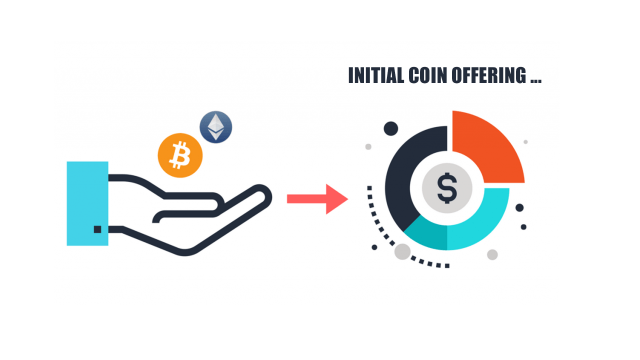
Initial Coin Offerings, which are usually referred to as ICOs, are the hottest trend in the financial world. This is the amazingly innovative tool that businesses are using to raise funds rather than use the more traditional routes of banks and venture capital.

ICOs are proving especially popular with startups as a way to raise cash for projects, because it is more democratic, transparent and faster. It also uses a digital currency or a token, which is a term you’ll hear used by companies launching ICOs.

ico

Tokens or digital coins

So, how do they do it? An ICO typically involves selling a new digital currency, or token at a discount. When the cryptocurrency succeeds and appreciates in value, the investor has made a profit. These tokens are often exchanged against digital currencies like Bitcoin or Ethereum and the new tokens can easily be sold and traded on existing cryptocurrrency exchanges.

Ripple and Ethereum set the trend

The first cryptocurrency to employ an ICO was Ripple, which is a payment system that promises to supplant the current SWIFT transaction procedure used by international banking. Its developers issued 100 billion XRP tokens, and the sale of these funded the development of the Ripple system, which is now finding traction with major banks.

The most prominent ICO, however, has been Ethereum. In mid-2014 the Ethereum Foundation sold ETH coins against a 0.0005 Bitcoin value for each one. This gave them nearly $20 million, which served as the capital base for the development of Ethereum, which is one of the biggest newcomers to the blockchain.

2017 – The Year of the ICO Trend

But 2017 is the year that ICOs really took off. And just to show you how hot the ICO trend is, look at these two examples: Gnosis raised $12 million in 10 minutes, and a new web browser, created by the founder of Mozilla, raised $35 million in 30 seconds. Yes, that’s right, not even one minute.

We are seeing new ICOs being announced every day. For example, a hotel booking company based in Bulgaria that will use blockchain to save its customers from paying expensive booking fees is promoting its LOK tokens via social media. It has the potential to become the next Booking.com, and if it does, then the people who have bought the LOK tokens at the pre-sale price, which is discounted, will stand to make an excellent profit. Just look at the figures for Ethereum and Gnosis and you will get a good idea of just how big these ICOs go, and how fast.

For example, if you had bought ETH, the Ethereum ICO coin, when it was sold at 0.0005 Bitcoin and that value is now 0.05 Bitcoin., you would have made substantial gains. Successful, ICOs can provide gains to their investors of anything from 100 to 500 per cent.

We’ll be bringing you more information about ICOs and how they use smart contracts, another blockchain innovation that is set to enter the mainstream thanks to Ethereum. This is truly an exciting time for startups, because ICOs offer a truly revolutionary way to raise funds for a business dream.


Introducing Bloom: The Future of Credit

Sometimes my social media feed throws up something that immediately catches my eye because it smells of revolution. This morning was one of those days. I don’t always pay much attention to sponsored posts, but when I spotted one that mentioned blockchain, Ethereum and credit in the same sentence, I thought I’d take a look. I have to say that I found something that I think is has a very strong potential to change the world.

CC

Three billion people without credit!

I discovered that despite all the advances we have made there are three billion people who can’t access the most basic credit services and in many of the developing economies, people are forced to take out illegal loans at great cost, and sometimes it is not just the repayments that are at sky-high interest rates, the lenders can turn to violence if a borrower gets behind with clearing the debt. For people without access to credit, buying a home or starting a business is simply inaccessible.

Credit scoring is unfair everywhere

But, it isn’t only developing economies where people can’t get credit. Just look at the USA, the world’s No.1 economy, and yet there are 45 million Americans with no credit score. This means that these people, who are in fact creditworthy, are unable to own a home or start a business because of the limitations of artificial credit scoring. I learnt some other surprising facts about credit scoring from the Bloom website:

  • In China your political opinions affect your credit score
  • In Spain, France, Portugal and Scandinavia there are no credit scores, but any negative financial behaviour is kept on file
  • In the UK you may have trouble getting credit unless you are registered to vote
  • In the UAE, religious restrictions on lending have prevented the development of a credit scoring system.

The Bloom revolution

And, despite the fact that credit around the globe is so obviously brimming with inequalities, nobody questions it. Except for the four guys who have started Bloom. And they are Jesse Leimgruber, Alain Meier, John Backus and Ryan Faber.

These four young men from Stanford University have come up with Bloom because they believe that everyone deserves access to credit, since this access is what helps economies grow.

Bloom is built on Ethereum (blockchain) and the InterPlanetary File System (IPFS), which is a new hypermedia distribution protocol. This platform will provide “end-to-end protocol for identity verification, risk assessment and credit scoring, entirely on the blockchain.” Let’s be clear, Bloom is not a lending agency, it is a new technology platform that facilitates credit lending – it is a platform to migrate all lenders to the blockchain. And here is the ultimate vision: “From mortgage providers to local credit unions, lenders across the globe will be able to tap into a far more comprehensive credit database and expand their market to three billion new borrowers.”

Not only will this platform enable those three billion with no access to finally be able to get credit, it will provide a whole new scoring methodology for the world’s population of seven billion.

A White Paper and more information is available at Bloom where you can find out more about decentralized credit scoring powered by Ethereum. Hopefully, the world can look forward to a fairer future through this blockchain technology.


The Internet of Value: What It Means and How It Benefits Everyone

Blockchain has been called the “second significant overlay on the Internet” with the web being the first layer when it appeared back in 1990. That’s how important blockchain is. I know that when I mention blockchain to a lot of people, the first thing that comes into their minds is “Bitcoin.” That’s fair enough, because Bitcoin cryptocurrency has made blockchain famous. You’re probably aware that there is now a whole bunch of cryptocurrencies in addition to Bitcoin and although it remains the coin with the highest value, others like Ethereum are taking hold in the markets. But, there are many more exciting things that can be done with this technology beyond financial transactions using digital currencies and it is called “The Internet of Value’.

1475782089285494

Instant transactions

What is it? It is when Internet technology makes it possible to exchange ‘value’ as quickly as information. The banking system is one place where the Internet of Value can really make a big difference. For example, although information moves around the world instantly, a single payment from one country to another is slow, expensive and unreliable. According to Ripple, a blockchain transaction solution, in the US, a typical international payment takes 3-5 days to settle, has an error rate of at least 5% and an average cost of $42. Worldwide, there are $180 trillion worth of cross-border payments made every year, with a combined cost of more than $1.7 trillion a year.

But, with the technology from the Internet of Value, a value transaction, like a foreign currency payment, can happen instantly.  And it doesn’t have to be limited to money, although currently that is the primary use of this aspect of blockchain – the Internet of Value will enable the exchange of any asset, including stocks, votes, frequent flyer points, securities, intellectual property and more.

Blockchain and Value exchanges

The most common way of exchanging assets is using a bank, credit card or a booking service, but blockchain technology is changing all that. It allows these assets to be transferred directly from me to you without any other entity in the middle. The transfer is validated, permanent, and completed instantly – just like sharing information on the web. It has huge potential to change the world as we know it. It will decentralise every transaction, empower the individual and it will disrupt the financial markets as well as consumer ones.

This is not something that is a futuristic dream. It is already happening. Exchanges like NASDAQ are using blockchain technolog, Estonia, which is becoming the Silicon Valley of Europe, stores its citizens’ health records on blockchain and some airlines are accepting cryptocurrency payments for flights.

Very soon we will see the adoption of industry standards using an Interledger Protocol (ILP) that will set the standards for the settlement of transactions across different networks. ILP can be thought of much like the protocol HTTP used in web address that became the global standard for online information exchange.

With the use of this protocol there will be one, frictionless experience to send money globally using the power of blockchain. It will connect billions of people globally and give rise to new businesses and it will also liberate the millions of people who don’t have access to banking. The Internet of Value is bringing us into a bold, new world where the individual has more power. The Internet revolution is taking another step forward – we must embrace it.

I hope you enjoyed this and found it useful. Please subscribe to my blog if you’d like to receive an alert when I post new content.