Coinbase counsel predicts crypto regs push in 2019

Marcus Hughes, the British lawyer and lead counsel for San Francisco-based crypto exchange Coinbase, predicts that 2019 is going to be the year that we see big changes in bitcoin regulations.

Hughes remarked, “Within the next year or two, we’ll see big developments, and regulation will take shape this year, particularly in Europe.”

He pointed to the fact that the United Kingdom’s Financial Conduct Authority (FCA) is in the process of carrying out a consultation regarding crypto derivatives. This could see a ban on the sale of derivatives based on cryptocurrencies such as bitcoin. Furthermore, the British government has pledged to empower the FCA to oversee all crypto assets.

An article in the UK’s Daily Telegraph at the end of 2018 also revealed that the FCA is investigating 18 companies “in connection with cryptocurrency transactions amid escalating concern over the threat posed by Bitcoin and other digital assets to the integrity of financial markets.” But that is not all: the FCA has opened 67 inquiries since November and is clearly stepping up its scrutiny of all firms involved with crypto in any manner.

Nicky Morgan MP, who hairs the influential Treasury select committee, said, “t is clear that the government and the FCA share the committee’s concerns on crypto-assets, including the lack of regulation, minimal consumer protection and anonymity aiding money laundering … The committee will keep a close eye on these consultations and will continue to press for regulation.”

And the European Banking Authority is calling for standardised regulations for cryptocurrency operations within the European Union. This is to remove the potential for “unfair regulatory arbitrage while protecting bitcoin and cryptocurrency investors across the bloc.”

Hughes said about this scenario: “We could end up with E.U. member states creating their own crypto laws, but it’s certainly possible we’ll get a unified approach in Europe. It would make life for companies like Coinbase a lot easier.”

He also has his own views on the future of bitcoin, which also reflect those of Coinbase: “We need to move beyond the speculation phase of bitcoin and cryptocurrency to the utility phase. The utility phase will mean bitcoin and crypto becomes more widely accepted and understood.”

He also commented on the arrival of institutional investors in the crypto sphere, saying: “I would be surprised if other traditional financial services executives didn’t make the move across to the bitcoin and cryptocurrency world. As the industry matures and is better regulated it will need the talent and experience to manage it.”


 

3 types of decentralised exchanges

Image result for decentralised exchanges

Cryptocurrencies are making steady progress in the traditional financial system. Their ascendance shines a spotlight on exchanges where people trade crypto assets and a number of them have been found wanting, due to a ‘single point of failure’ that allows hacks to occur.

The solution is decentralised exchanges (DEX), because this type of exchange allows users to keep control of their funds throughout the trading procedure. As might be expected there is more than one type of decentralised exchange to choose from, and there are three formats that are considered the most likely to be the exchange models of the future.

At the moment, decentralised exchanges are being developed in three modes:

  1. On-chain order books and settlements
  2. Off-chain order books with on-chain settlement
  3. Smart contract-managed reserves

On-chain order books and settlements

These are entirely blockchain based and are really the first generation model. With this DEX, every new order or adjustment to an existing order updates the state of the blockchain.

What’s the problem with this type of DEX?

Although it protects user privacy and security this form of DEX makes exchanges illiquid, slow, expensive and unable to operate with other DEX.

Off-chain order books and on-chain settlement

The Ox protocol is good example of this model. It is built on the Ethereum blockchain’s solution for off-chain orders. Execution of the trades happens on the Ethereum blockchain,which means users have control of their funds until the exchange takes place. The order books are hosted by a third party called Relayers. This enables the exchange to maintain liquidity and create a more robust infrastructure for traders. For example, after submitting an order to the Relayer, a market maker waits for an order to be filled, at which point the trade is trustlessly executed on the blockchain.

Smart contract-managed reserves

This model connects the buyer and seller function when there is low liquidity. With smart contract-managed reserves, instead of having to find a buyer for the bitcoin, a user can trade with an external reserve, depositing bitcoin into the reserve and receiving ether in return. Bancor is an example of this model.

Although the existing decentralised exchanges need work to bring them up to a comparable speed with the traditional centralised exchanges, there are several innovative entrepreneurs working on finding the best solutions, and hopefully we will see them next year, if not in 2018.


Why you need a decentralised identity

We have all been warned about identity theft. Even the big banks like Barclays are running TV ad campaigns showing customers how a phone call that seems to legitimately come from your bank can be used to steal your online banking pin number. There is plenty of information out there about how to keep your details safe, but no matter what precautions we take, there are always bad actors out there (this is now a ‘polite’ way of referring to people who are nothing more than criminals) who are relentless in their search for new ways to access our private information.

Tomislav Markovski, writing on Medium tells a story about how he nearly became the victim of bank fraud when he rented a property. After providing every possible kind of document to the real estate agent, including bank statements and investment portfolio details, he received a call from his bank a few days after he had moved in saying that someone wanted to cash a large check drawn on his account. Markovski knew he didn’t have that much money in is account, but the bank then told him that “he” had made a transfer from his savings account by phone. Of course, he’d made no such call, and thanks to his bank calling when they did, the theft was stopped. But, as he says, it was a “masterfully crafted plan that involved just four key steps”

1. Call the bank pretending to be Markovski

2. Change his phone number (to confirm large withdrawal)

3. Transfer all his savings into his current account

4. Have a fake cheque made and present it to the bank for withdrawal

They were able to do this because they had access to all the necessary information on him, including his social security number. They couldn’t catch the scammer, but it made Markovski think about why so much information was required to rent an apartment and why are we still relying on physical documents.

Blockchain has a solution — decentralised identity

Blockchain technology is opening up a range of possibilities to prevent this kind of crime and decentralised identity could be the way forward. As Markovski says, decentralised identity is “publicly discoverable identity information.” It uses blockchain technology to provide tamper-evident information about an entity or a subject and “allows a model of truth to be established between parties that rely on communication and exchange of data.”

There are already a few platforms working on this, including Civic, uPort and Sovrin. As Markovski says: “Decentralized identity platforms will change the current broken identity system that relies on numerous online services requiring us to remember passwords for each of them. They can help us protect our personal information and allow us to control how this data is shared.”

Until these platforms gain mass adoption — be careful out there!

The craze for ICOs explained

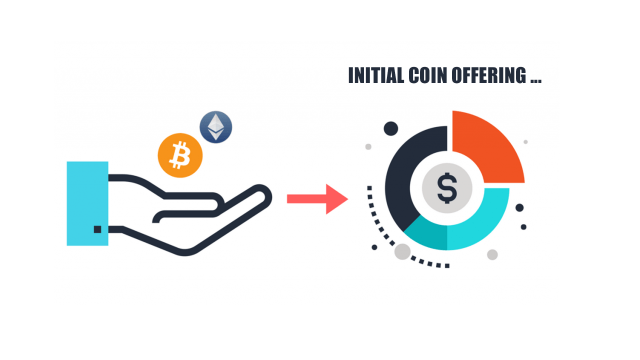
Initial Coin Offerings, which are usually referred to as ICOs, are the hottest trend in the financial world. This is the amazingly innovative tool that businesses are using to raise funds rather than use the more traditional routes of banks and venture capital.

ICOs are proving especially popular with startups as a way to raise cash for projects, because it is more democratic, transparent and faster. It also uses a digital currency or a token, which is a term you’ll hear used by companies launching ICOs.

ico

Tokens or digital coins

So, how do they do it? An ICO typically involves selling a new digital currency, or token at a discount. When the cryptocurrency succeeds and appreciates in value, the investor has made a profit. These tokens are often exchanged against digital currencies like Bitcoin or Ethereum and the new tokens can easily be sold and traded on existing cryptocurrrency exchanges.

Ripple and Ethereum set the trend

The first cryptocurrency to employ an ICO was Ripple, which is a payment system that promises to supplant the current SWIFT transaction procedure used by international banking. Its developers issued 100 billion XRP tokens, and the sale of these funded the development of the Ripple system, which is now finding traction with major banks.

The most prominent ICO, however, has been Ethereum. In mid-2014 the Ethereum Foundation sold ETH coins against a 0.0005 Bitcoin value for each one. This gave them nearly $20 million, which served as the capital base for the development of Ethereum, which is one of the biggest newcomers to the blockchain.

2017 – The Year of the ICO Trend

But 2017 is the year that ICOs really took off. And just to show you how hot the ICO trend is, look at these two examples: Gnosis raised $12 million in 10 minutes, and a new web browser, created by the founder of Mozilla, raised $35 million in 30 seconds. Yes, that’s right, not even one minute.

We are seeing new ICOs being announced every day. For example, a hotel booking company based in Bulgaria that will use blockchain to save its customers from paying expensive booking fees is promoting its LOK tokens via social media. It has the potential to become the next Booking.com, and if it does, then the people who have bought the LOK tokens at the pre-sale price, which is discounted, will stand to make an excellent profit. Just look at the figures for Ethereum and Gnosis and you will get a good idea of just how big these ICOs go, and how fast.

For example, if you had bought ETH, the Ethereum ICO coin, when it was sold at 0.0005 Bitcoin and that value is now 0.05 Bitcoin., you would have made substantial gains. Successful, ICOs can provide gains to their investors of anything from 100 to 500 per cent.

We’ll be bringing you more information about ICOs and how they use smart contracts, another blockchain innovation that is set to enter the mainstream thanks to Ethereum. This is truly an exciting time for startups, because ICOs offer a truly revolutionary way to raise funds for a business dream.