The problem with Segwit2X for BTC owners

fork-bitcoin-e1502896754549

Somebody asked me the other day why there was so much heated debate over the upcoming Bitcoin fork. The other day I wrote about what might happen after the fork, but I’d like to clear up some of the confusion over why the fork is happening and why there is something of a turf war in the Bitcoin camp.

However, as I started to write this, a ‘breaking news’ item flashed across my screen from one of the crypto exchanges that I use. It announced that the leaders of the Segwit2X have suspended their plans indefinitely. As a result, Bitcoin shot up in value just after the announcement to touch $7,800, although it has since decreased in value to around $7,300. It seems to have boosted other coins as well, with Dash and Ethereum both showing some impressive gains; ETH has finally gone past the $300 mark.

But, back to the Segwit2X hard fork war. If a truce hadn’t been reached, what might have happened?  The first issue is that there would have been two types of BTC and who would decide which was the ‘real’ one and which one would be allowed to use the well-known BTC ticker symbol. It’s a bit like kings fighting for a crown and one claims they are the real king and the other is the usurper. We’ve seen what happens in history when this situation arises. There is always a war and supporters decide which side they are taking. This is what we’ve been watching within the BTC community.

But, it would have meant a payout to existing BTC holders. For example, Coinbase, one of the biggest exchanges announced that it would give every user BTC2x coins to match the amount in their BTC wallet. It sounds like ‘free money’, but, there is a downside.

In the past there have been other forks for Bitcoin Cash and Bitcoin Gold, but nobody considered those as replacements for the original Bitcoin. However, many thought the Segwit2X fork would pitch the new coin against the original and therefore damage the value of the original BTC. That doesn’t sound so good for people who are holding BTC.

Thankfully, this has now become hypothetical again and the original Bitcoin remains the only one. Perhaps Segwit2X will never happen, although in the world of crypto currencies, you can never be sure what is coming next.



Beyond the Blockchain

Blockchain

Most people assume that Bitcoin was the beginning of the blockchain, but in fact there were versions of crypto coins in existence before its arrival. BMoney and BitGold are a couple of examples. However, they didn’t have much success, partly because Bitcoin became the one to buy and put every other coin in the shade. But, there is another reason for their lack of success – they were on a centralised structure, whereas the key selling point for BTC was, and remains, the “decentralized, immutable, transparent” ledger in which transactions could be recorded.”

This aspect of the blockchain gave Bitcoin a huge advantage, but now it looks like developers are searching for another way to create crypto. The first one to emerge is the Direct Acyclic Graph (DAG). In mathematical and technical terms, this is a finite directed graph with no directed cycles. DAGs can model all kinds of information – a spreadsheet is one example and they are very handy for data processing networks. It can also be used to create a decentralised ledger, and one of its advantage sis that it has the capacity to solve old problems and add new features. Some believe it will even replace the blockchain eventually.

Back in 2013, Yonatan Sompolinsky and Aviv Zohar introduced the GHOST protocol, which proposed a change to Bitcoin’s structure from a blockchain into a tree, thus reducing confirmation times and improving security. Although this change has not been implemented in Bitcoin, other cryptocurrencies are using the DAG-based system successfully.

Byteball is one. This is a DAG-based currency without any blocks. Instead, transactions are linked directly to each other and each transaction contains one or more hashes of previous transactions. The set of links between the transactions forms what is known as the DAG, as opposed to the block system used in Bitcoin and other cryptocurrencies.

There is still a lot of work to be done on Byteball and its DAG-based system, but one thing is clear: this system is a viable alternative to blockchain technology and can even solve some of the most prominent problems found in the technology, such as such as speed, sustainability, scalability, security, privacy and legal compliance. However, and this is of particular interest to me; when compared with Ethereum, Byteball smart contracts are not as powerful, but they are simple, allowing them to be displayed in user-readable form.

Will DAG-based cryptocurrencies replace blockchain? It’s hard to tell right now, but we need to keep an eye on this development as some projects are making a bit of noise in the cryptosphere, which suggests DAG-based coins will be more popular in the future.


Estonia Embraces Blockchain

blockchainis

Estonia, one of the smaller countries in the European Union, is becoming one of its most fascinating for the Fintech entrepreneur, partly because there are so many innovative companies that have come out of Estonia – think Skype and Transferwise – and now because the government is digitising its services using blockchain technology.

One of its most sensational advances has been establishing the ‘e-residency programme’ that allows any person, anywhere in the world to simply make an online application and become a virtual Estonian citizen. This can prove extremely helpful for those who want to establish a business outside their usual country of residence, because once you’re an e-resident of Estonia, you can have a business address and bank account there. And, as a virtual citizen, that person can access the same online platforms that Estonia’s physical economy is based on, and the same online public services that native Estonians use. It is also working on bringing blockchain technology to a number of public services projects, such as its healthcare service, and there are plans for an Estonian digital currency.

Other countries competing with Estonia

It seems that if any country can make blockchain work on a bigger scale and showcase its potential, Estonia is the one most likely to do it first.  Fellow EU member country Slovenia is following in Estonia’s steps and hoping to outperform it. The UK is another country that is piloting blockchain in the public sector; in its case it is trialling a scheme to pay health benefits claimants. And Russia’s national bank has signed a deal to develop a national system called Ethereum Russia.

China will re-introduce ICOs

And where Russia goes, China is never far behind. It is looking at the prospects of developing a national crytpocurrency. Yes, China did ban ICOs, but that was only a temporary measure and not the absolute end of ICOs in China. Now it is looking at introducing a regulatory framework for ICOs that will prevent illegal activity in this massively growing method of fundraising for Fintech startups. It will be something like the licensing system called BitLicense, used in New York State, most experts suggest.

China should move quickly, because the countries that are showing support for ICOs and blockchain will take business away from the Chinese blockchain community and send it to Japan, Singapore and Hong Kong. Meanwhile in Europe, all eyes are still on Estonia, which has grasped the power of blockchain technology and is fast becoming the ‘Blockchain Valley’ of Europe.


The craze for ICOs explained

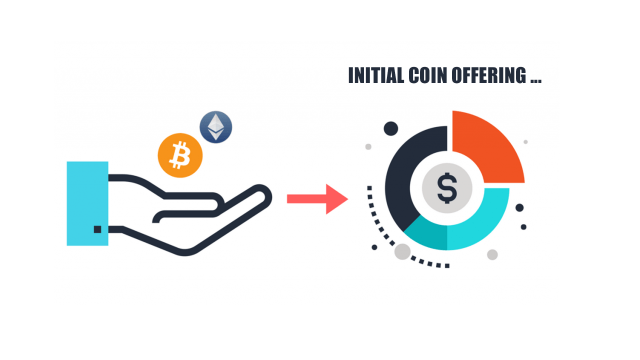
Initial Coin Offerings, which are usually referred to as ICOs, are the hottest trend in the financial world. This is the amazingly innovative tool that businesses are using to raise funds rather than use the more traditional routes of banks and venture capital.

ICOs are proving especially popular with startups as a way to raise cash for projects, because it is more democratic, transparent and faster. It also uses a digital currency or a token, which is a term you’ll hear used by companies launching ICOs.

ico

Tokens or digital coins

So, how do they do it? An ICO typically involves selling a new digital currency, or token at a discount. When the cryptocurrency succeeds and appreciates in value, the investor has made a profit. These tokens are often exchanged against digital currencies like Bitcoin or Ethereum and the new tokens can easily be sold and traded on existing cryptocurrrency exchanges.

Ripple and Ethereum set the trend

The first cryptocurrency to employ an ICO was Ripple, which is a payment system that promises to supplant the current SWIFT transaction procedure used by international banking. Its developers issued 100 billion XRP tokens, and the sale of these funded the development of the Ripple system, which is now finding traction with major banks.

The most prominent ICO, however, has been Ethereum. In mid-2014 the Ethereum Foundation sold ETH coins against a 0.0005 Bitcoin value for each one. This gave them nearly $20 million, which served as the capital base for the development of Ethereum, which is one of the biggest newcomers to the blockchain.

2017 – The Year of the ICO Trend

But 2017 is the year that ICOs really took off. And just to show you how hot the ICO trend is, look at these two examples: Gnosis raised $12 million in 10 minutes, and a new web browser, created by the founder of Mozilla, raised $35 million in 30 seconds. Yes, that’s right, not even one minute.

We are seeing new ICOs being announced every day. For example, a hotel booking company based in Bulgaria that will use blockchain to save its customers from paying expensive booking fees is promoting its LOK tokens via social media. It has the potential to become the next Booking.com, and if it does, then the people who have bought the LOK tokens at the pre-sale price, which is discounted, will stand to make an excellent profit. Just look at the figures for Ethereum and Gnosis and you will get a good idea of just how big these ICOs go, and how fast.

For example, if you had bought ETH, the Ethereum ICO coin, when it was sold at 0.0005 Bitcoin and that value is now 0.05 Bitcoin., you would have made substantial gains. Successful, ICOs can provide gains to their investors of anything from 100 to 500 per cent.

We’ll be bringing you more information about ICOs and how they use smart contracts, another blockchain innovation that is set to enter the mainstream thanks to Ethereum. This is truly an exciting time for startups, because ICOs offer a truly revolutionary way to raise funds for a business dream.