Is U.S. Congress clueless about crypto?

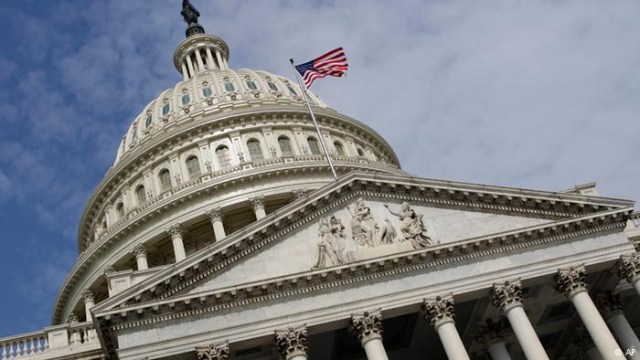
Last week the folks on Capitol Hill made a few headlines and stirred up a Twitter storm. Well, at least Congressman Brad Sherman, a Democrat from California did that with his statement that all crypto and mining should be banned, thus provoking the crypto community into meeting his remark with total outrage online. This was a unique event in itself as the crypto sphere is known for its sniping and clashes. However, Sherman brought them all together.

Whilst Brad Sherman’s message tended to dominate the press reports, for obvious reasons as it makes a good story, other headlines didn’t do much to instil any sense that Congress has finally understood what cryptocurrency and the blockchain world is all about. In fact, to some onlookers it appears as to be the case that Congress is more hostile to crypto now than it was five years ago. For

example, Federal Reserve Chairman Jerome Powell said cryptocurrencies are “great if you’re trying to hide or launder money,” at a separate hearing on the same day Sherman made his astonishing statement. Perhaps he didn’t notice that the FBI had indicted 12 Russians for trying to tamper with the U.S. elections and that the FBI achieved this by tracing the conspirators bitcoin transactions. So much for that argument Mr Powell!

Were things better in 2013?

Let’s remember that when Congress discussed crypto towards the end of 2013, Jennifer Shasky Calvery, then-director of the Financial Crimes Enforcement Network (FinCEN), told bitcoin exchanges and wallets to register with FinCEN and people took this a positive sign. In fact, as Coindesk points out, Calvery’s invitation boosted bitcoin’s price in December 2013 to just over $1,100.

Beyond the big headlines

Of course there is danger in focusing too much on big headlines from the Congress hearings and not looking into the progress that has been made. For instance, regulatory understanding has moved forward even if it hasn’t arrived at an end point that everyone is happy with. Law firms are heavily engaged with it and some staff at the SEC, the Commodity Futures Exchange Commission and other agencies are much more comfortable with the crypto industry than five years ago. In a massive bureaucracy things were never going to move at lightning speed.

And things will keep moving forward. Why? Because there are too many people and too much money engaged and invested in this industry for anyone in politics and policymaking to ignore it completely. In the end those who understand crypto and its potential will outnumber people like Sherman and Powell and we’ll have a Congress that isn’t so clueless.


Crypto is the people’s currency

There are a lot of people out there who are convinced that cryptocurrencies can never replace fiat money. However, I beg to differ and I see that serial entrepreneur Jeffrey Wernick is also more positive about crypto challenging fiat and has a few theories about why the world’s legacy finance system is faulty.

Wernick, who has invested in Airbnb and Uber, was talking to Business Insiderabout why he started investing in Bitcoin in 2009 and is somebody who can be considered as a leading investor in the crypto market. He believes that the fact that cryptocurrency is “people-oriented” and its decentralised nature, which “affords people equal access to operate under unanimously consented guidelines,” gives it a major advantage over the way fiat money is structured in the world.

He said:”So it’s a people’s currency, it’s defined by the people, and it’s defined by rules and a protocol that people trust. So it’s not like somebody says, if I need to have economic growth, I’m going to give this institution money, and they’re going to transmit it to a certain universe of people.”

It is vital to remember that when we look at ‘legacy finance’ and then to the developing economies where so many people are ‘unbanked’ that in the majority of cases politicians control the central bank of that country. What is the problem with this situation? Well, those politicians use the central bank as their personal bank account and have been known to embezzle huge amounts of money from their own nation, and nobody dares to stop them. There are countries that are vastly rich in natural resources, like Nigeria, yet the majority of its people live in unnecessary poverty. That’s one big problem with legacy finance and central banks.

The cryptocurrency ecosystem has the potential to reverse that situation. In the crypto sphere it is almost impossible for any one entity to control more than 50 percent of the network. Wernick explained his view of it: “Everybody has the same access to it at any point in time, just different units of it according to whatever their own personal budget constraints are. But nobody has privileged access to it, except, you could say, maybe the miners who pay to produce it and they take a business risk associated with it and anybody could choose to get into the mining business.”

Wernick has for some time supported the idea that the central banks should be accountable to the people, not to politicians, and it is easy to see why — the old ways do not benefit the many, they favour the few.

Have Bitcoin futures done crypto a favour?

bitcoin

Yukio Noguchi, a very famous Japanese economist and advisor to Waseda University’s Business and Finance Research Centre, claims that Bitcoin’s price will not see another massive surge, because we can now trade in Bitcoin futures.

Noguchi is not against Bitcoin. In fact, he sees the current Bitcoin price as a ‘good thing’, because it brings makes it cheaper than bank transactions when used as a system of payment and this is something he welcomes. Japan, of course, offers more opportunities for people to spend Bitcoin than any other country, so Noguchi is more familiar with this practical aspect of the Bitcoin use case than others who only have a theoretical knowledge.

Bitcoin futures trading caused price drop

His argument is that the introduction of the futures market at the end of last year, when Bitcoin’s price skyrocketed to almost $20,000, is the instrument that caused the drop in value to about a third of what it was in early December 2017. He started talking about this back in January, when he said, “Bitcoin prices were a bubble, to begin with, and now we’re seeing a return to normal values,” and the San Francisco Federal Bank backed his thinking.

Federal Bank backs Noguchi theory

He uses a paper published by the Federal Reserve Bank of San Francisco, “How Futures Trading Changed Bitcoin Prices“, authored by Galina Hale, Arvind Krishnamurthy, Marianna Kudlyak, and Patrick Shultz as support for his claim, and quotes this passage in particular:

“From Bitcoin’s inception in 2009 through mid-2017, its price remained under US$4,000. In the second half of 2017, it climbed dramatically to nearly US $20,000, but descended rapidly starting in mid-December. The peak price coincided with the introduction of bitcoin futures trading on the Chicago Mercantile Exchange. The rapid run-up and subsequent fall in the price after the introduction of futures does not appear to be a coincidence. Rather, it is consistent with trading behavior that typically accompanies the introduction of futures markets for an asset.”

The Japanese economist also believes that the market is moving towards a situation where traders will be able to short-sell Bitcoin futures and that this will contribute to keeping the price down even more.

Bitcoin price drop is a blessing in disguise

However, all this doesn’t mean that he sees a decline in the popularity of Bitcoin. The answer is a resounding no, because as mentioned above he believes its boosts the practical use case for Bitcoin. Noguchi says that as the Bitcoin price drops it becomes a more attractive way of sending money and quotes costs based on Japanese banking.

According to his calculations, sending money via Mitsubishi UFJ Bank costs you 432 yen ($3.90) for any amount above 30,000 yen ($271). But with the current value of Bitcoin, it’s cheaper to send via a regular bank transfer than BTC, unless the value of BTC falls to 675,000 yen (that’s $6,000 today). Noguchi claims that when BTC returns to that level, it will finally be trading at what in his estimate is a normal value.

If we don’t see any further surges in Bitcoin price, will this dramatically change the way people start to look at Bitcoin and its use case? Last year, people bought it to make money, but perhaps we will soon see people view Bitcoin as an alternative currency for payment that is cheaper and more efficient than fiat currencies. Perhaps that is the change of perception that Bitcoin needs to mature.

Bermuda is banking on the blockchain

Fintech

Something unusual has just happened in Bermuda, the Caribbean island paradise, retreat for the rich and offshore haven — the government has told the island’s banks that they are just not moving fast enough into the cryptocurrency market. It’s a rare occurrence, because most governments are taking a cautious approach to cryptocurrency and none seem to be insisting the conventional banking industry adopts a crypto-friendly approach.

A new class of bank for crypto

In fact, Bermuda is going even further. It is making amendments to its Banking Act so that it can establish a new class of bank that will be able to serve the crypto community, fintech startups and any other type of business that is blockchain based.

The local banks have only themselves to blame for this radical move. They have been denying service to crypto companies, citing fears about risk and regulatory concerns as the reason for shutting the door in potential clients’ faces.

Government supports fintech growth

The government takes a rather different view: Bermudian Premier and Minister of Finance David Burt said that the banks’ stance “cannot be allowed to frustrate the delivery on our promise of economic growth and success for Bermudians.” It appears that Bermuda wants to emulate the successes of jurisdictions like Gibraltar and Malta in becoming safe havens for blockchain explorers, and they all share the characteristic of being relatively small in terms of population, but big on financial services that serve the whole world. Of course, this is perfectly understandable: if you don’t have the environment to be a manufacturing or agricultural economy, financial services are the best way of ensuring that your economy thrives, especially if you keep introducing innovations that attract companies or individuals who can’t find a banking home elsewhere.

David Burt also said in parliament: “The fintech industry’s success globally depends on the ability of the businesses operating in this space to enjoy the necessary banking services. In other jurisdictions, banking has been the greatest challenge and for us in Bermuda, it is equally so and therefore it must be resolved.”

Bermuda welcomes Binance and Shyft

He clearly sees that Bermuda’s future must not be held hostage by the banks’ fear of the blockchain. This year Bermuda has already signed deals with Shyft network, which will reportedly provide $10 million on blockchain technology education and economic development on the island, and Binance is on Bermuda to establish funding for educational programmes related to fintech and blockchain. It has said it wants to build a “global compliance base” on the island.

It’s a smart move by the Bermuda government and is yet another step forward in opening up the banking sector worldwide to the reality that businesses operating in the crypto sector need forward-thinking banking — and that they’re going to grow in strength rather than disappear. Ignore them at your peril.