The world’s 6 best performing economies

It is interesting to note that although there are shifts in the best performing economies from time to time, overall they tend to remain the same. You could say that the ‘usual suspects’ are always at the head of the list, but there are undoubtedly some threats to the Big Daddy of world economies, and I am referring to the USA.

bc16-intro-editorial

The United States of America

It is still No.1 in terms of nominal GDP. In fact it accounts for 25% of the world’s gross product. It takes this spot thanks to its advanced technology, infrastructure and natural resources and it only beats China due to the fact that its GDP per capita is higher. GDP per capita for the US economy is approximately $59,609 versus $16,676 in China.

China


With a GDP of $23.19 trillion it should be in No.1 position. It has transformed itself from a closed economy into a manufacturing and exporting hub. This started back in 1978 and since then it has achieved on average, an annual economic growth of 10%. It has lifted almost 1.3 billion people out of poverty and it is estimated that it will pull into the top spot over the next few years.

Japan

The Land of the Rising Sun is still a world economic leader with a GDP of $4.8 trillion, although it has been going through some challenging times since 2008 when it showed symptoms of a recession. Further strains have been put on the economy by a weak currency and subzero bonds, but growth of 1.2% is predicted for 2017 and it is likely to stay at around 1% for the next five years.

Germany

Germany remains Europe’s largest economy and forth in the world in terms of GDP. Its strength lies in exports of machinery, automobiles, chemicals and household equipment, plus it has a skilled labour force. It does face some challenges, including the UK’s Brexit and a refugee crisis. However, it is predicted that it will maintain stable growth at about 1%-2%.

United Kingdom

The UK is in fifth place with a GDP of $2.5 trillion. It is driven by service industries, particularly in the financial sector, which accounts for 75% of GDP. Manufacturing and agriculture are small, but important contributors. However, its current position is threatened by the decision to leave the EU and economist predicts that it could result in anywhere between a 2.2% to a 9.5% loss in GDP. So, its future in the league table is uncertain.

India

India has a GDP of $2.45 trillion. Its large population lowers its GDP per capita and it is very dependent on agriculture compared with Western countries. However, the services sector now accounts for 57% of the GDP, while industry contributes 26%. The economy’s strength lies in a limited dependence on exports, high saving rates, favourable demographics and a rising middle class. It is now a faster growing economy than China and is expected to rise to fourth place by 2022.

The Top 6 are followed by France, Brazil, Italy and Canada. It will be interesting to watch what happens. Predictions say the leader list will look much the same in 2022 as it does now – let’s see,


 

Stop Focusing On Short-Term Results

Firms get very excited when their half-year results are good, but what does six months of great profits and soaring stocks really mean in the bigger picture. Is there a good reason to feel things are going so well that there is no need to consider a downside? I don’t think so. But, the short-term should not be your focus when markets are buoyant, or when they in a decline.

markets

Let’s say you look back at what was happening a year or two years ago. Perhaps your business was doing well, but did you make any changes as a result of improvements in performance. On the whole, large and small businesses tend not to do anything; they feel content with the status quo. And there is a good reason for this.

The media creates panic

Even political activity that makes the markets jittery is just a lot of noise in the media. The markets react in their own way. As I’m writing this, North Korea has just fired a test missile over Japan and newspapers report that the Dow Jones opened at lower average and buying of physical gold is up. Whatever happens, there will always be a short-term response to the situation. But that is just today’s story. There is another picture to consider.

Currently the markets are pretty strong –the response to North Korea aside –but everyone who invests knows that what goes up can also come down. I’m not sure when the markets might start to be more ‘bear’ than ‘bull’, but one thing is certain – it will happen.

The history of ups and downs

You only have to look at history to know this is true. For example, Capital Research produced an overview of market declines based on the Dow Jones Industrial Average from 1900 to 2016 and they found something interesting:

  • There is a decline of roughly 5% three times every year
  • About once per annum there is a decline of around 10%
  • Approximately every two years, the 10% decline will become a 15% decline
  • Every 3.5 years the market decline will reach 20%+

So, what does this tell us? First, that there are declines every year and that makes them ‘normal. The research also shows that 2015 was the last year in which there was a 5% decline, and this means, based on probability, that there will be one coming soon. And, finally, even though we have declines, things always pick up again.

Focus on the long-term

This is important information to consider when you’re investing for the long-term. Accept that there will always be a downturn and factor that into your investment plan. Don’t panic when a market starts to drop, and don’t suddenly pull out unless you really have to, because as the research shows, sooner rather than later, your investment will be back on track again.

I hope you enjoyed this and found it useful. Please subscribe to my blog if you’d like to receive an alert when I post new content.


Future World Governments

Political systems go through change, as history shows us, and as technology and society advances and changes, we are certain to see some alterations in the style of government around the world. There are a few ways that our governments may look dramatically different in the future and some of them are potentially terrifying. Here are five possible scenarios.

WGS17

A Noocracy

This is a political system based on the “priority of the human mind.” The concept comes from the Jesuit mystic Teilhard de Chardin, who saw this as a possible evolution of democracy that would create “a flexible and adaptable system comprised of conscious, systematic, and institutionalized elements which will operate in decentralized autonomous subsystems.” The upshot of a system like this is the development of a hive-like civilisation brain that integrates all individual minds, both human and AI, through information networks.

A Cyberocracy

In this system, governments would rule by the effective use of information. This could take two forms: one that supplants bureaucracy and technocracy as we know it, and or one that redefines the relationship between the state and society. It will be driven by decisions based on information, which means a government will seek to obtain as much information as possible about everyone and every entity. It is likely to result in a bureaucratic system run by administrative AIs.

A democratic global government

A global liberal democracy will be one capable of “ending nuclear proliferation, ensuring global security, intervening to end genocide, defending human rights, and putting a stop to human-caused climate change,” says George Dvorsky. We are already on the way to this in terms of culture and economics, but we have yet to reach the political stage. The European Union is an example of this type of government on a small scale.

A Futarchy

This system is the creation of economist George Mason and futurist Robin Hanson. They say that under a futarchy we would “vot on values, but bet on beliefs.” How does that work? Hanson says: “Elected representatives would formally define and manage an after-the-fact numerical measure of national welfare. Market speculators would set prices that estimate national welfare conditional on adopting proposed policies. When the market estimate of welfare conditional on adopting a policy is higher than the estimate conditional on non-adoption, that proposal becomes law.”

Post Apocalypse Hunter-Gatherers

Finally, there is the possibility that we will experience a catastrophic event – natural or man made– that forces us back into a paleolithic political system in which we will return to living in small tribal groups, existing by hunting and gathering for our existence.

Which type of futuristic government would you prefer if you had a choice? I look forward to hearing your views.

I hope you enjoyed this and found it useful. Please subscribe to my blog if you’d like to receive an alert when I post new content.

Star Wars: The Galactic Economy and the Real World

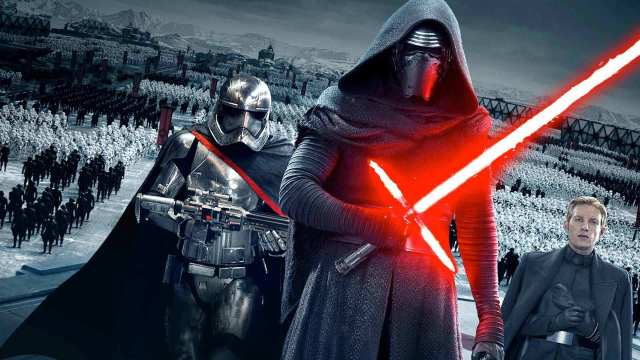
May 25th this year was the 40th anniversary of the first Star Wars film. Fans of the franchise may wonder what Luke and Co have to do with economics, but if you study the films and look beyond the quirky creatures and the fantasy storylines, you’ll notice that the Star wars story is underpinned by an economic and political system that mirrors the real world. At its most basic, it is economic problems that lead the Empire into war. That is something we are familiar with.

star-wars-the-force-awakens

The galaxy and the global economy

To start with, the Star Wars economy is galactic in scope –a situation similar to the globalised economy—and it is based on the working principles of modern trade. For example, planets trade products and services and the trade routes traverse multiple galaxies. This planets based at major intersections on these trade routes tend to do best, and there are plenty of real world examples that match this. Think of where Hong Kong and Singapore are located in Asia, the position of Dubai in relations to Europe, Africa and Asia, London’s location as a bridge between North America and Europe and the list goes on. It also goes way back in time to trade routes like the Silk Road and the Incense Route of antiquity. Cities along these trade routes grew in prosperity and some of them had a monopoly on specific products.

In Star Wars, Bothawui is poised at the crossroads of four trade routes, This makes it a popular meeting place and a venue for trade negotiations. The intergalactic firms operate across several planetary systems – think Microsoft, Coca Cola and all the global businesses we have today that operate in the same way.

The Corporate sector and free zones

It also has a Corporate Sector, which is really like a free trade zone and it has a simplified tax code compared with other parts of the Empire. To make trade easier they also have trade agreements and consortiums that wield political and economic influence. In the real world, we have the Pacific Trade Agreement, the WTO, the EU and EFTA amongst others that act in the same way. And, there is the Intergalactic Banking Clan – a parallel universe for the IMF, ECB and World Bank?

The German economy of the 1930s

George Lucas, the creator of Star Wars based the Galactic Empire’s economy on that of Nazi Germany. As he pointed out, both emerged on the back of an economic crisis. If you watch the films with that in mind, you’ll see other similarities, including the compulsory military service that made both ‘states’ ready for war. The Death Star station is a war machine and there is a dedication to building military might across the Empire that strongly echoes 1930s Germany.

A Military Industrial Complex

And as in the real world, the planets on the Outer Rim of the system are more oriented towards agriculture, design technology and the further out the planet from the centre, the more primitive its economy. Their distance from the power of a Military Industrial Complex, which results in them having weaker economies reflects the situation in the real world.

If you thought Star Wars was just a bit of fun entertainment, perhaps you’ll watch the whole series again and realise that George Lucas was giving us all a lesson in world economics, in the most entertaining format he could come up with.


I hope you enjoyed this and found it useful. Please subscribe to my blog if you’d like to receive an alert when I post new content.