
At the beginning of the year, Chat GPT brought a lot of buzz to the market. This has seen more people adopt AI for their day-to-day activities.
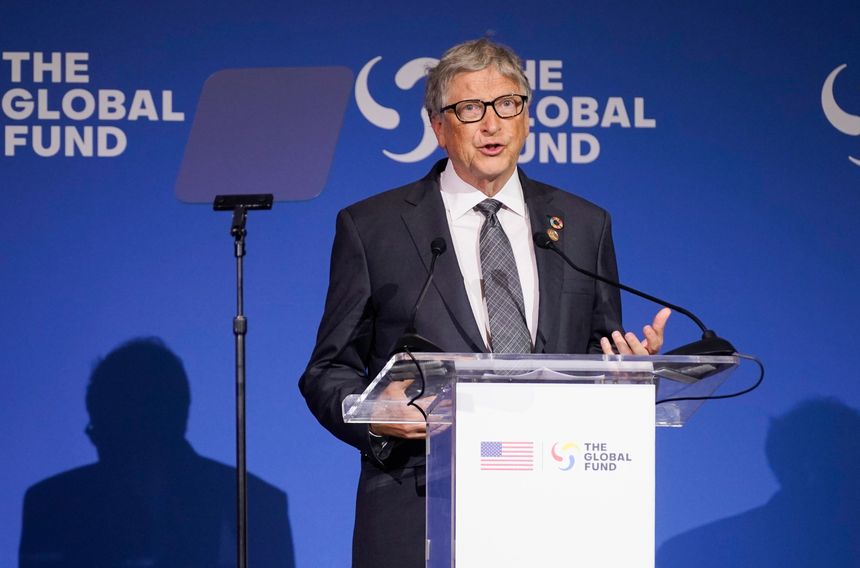
Bill Gates recently drafted a seven-page letter addressing AI and its possibilities for the future. The Microsoft co-founder published a letter that the age of AI has begun. AI is a good way of solving inequities in the world.
He believes AI can solve problems in three primary industries: healthcare, education, and productivity. The letter was published the same day Google released its AI chatbot bird which joins chat GPT and many other AI softwares.
Even though Bill Gates talked about many benefits of technology in the letter, he also underlined the risks of the technology, such as being misused by humans. The letter discusses how AI will revolutionize and increase productivity while addressing global inequalities, especially in developing countries. Health and education are the main areas that need AI, as there are insufficient workers to meet the demand. Billy Gates also believes the two will significantly help reduce inequity.
Productivity
According to Bill Gates, AI will help do basic everyday activities, such as administrative tasks, increasing productivity. In his opinion, when AI is integrated into digital tools such as Microsoft Office, it can help write and manage emails. It can also support different people in a company, such as sales and administration, to do repetitive tasks. Tasks such as handling documents, creating content, arranging data, etc., can be handled by AI, helping them to focus on more productive tasks.
AI is likened to having an assistant helping you to do different tasks. In the future, it will be like a digital personal assistant that will be able to read your emails and know the tasks you have at hand. It will help you in scheduling and communications. All you will have to do is to train it.
An increase in productivity will free up society as people will have the freedom to focus on other things and increase work-life balance.
Health care
AI will be a real game changer for the healthcare industry. For instance, it can speed up the healthcare process by doing tasks such as filing insurance claims, doing paperwork, and analyzing doctor reports.
In developing countries, AI can help healthcare workers be more productive. It can also aid in treating those who do not live near health facilities. They can do triage and get advice on how to deal with their situation.
AI is commonly used for analyzing medical data and drugs and in the supply chain of medicine and medical equipment. Billy Gates believes that AI will lead to medical breakthroughs as it will accelerate data analysis to understand complex systems. This will help identify the source of diseases and design of drugs. There are already some companies using the technology to design cancer drugs.
It will commonly be used to predict diseases and different medications’ side effects. AI can also be used for automatically calculating the dosage required.
When it comes to crops and livestock, AI-generated insights can help design seeds suitable for certain climates and help develop vaccines for the animals.
AI will aid in advising farmers on best practices based on the soils and conditions in their area.
Education
Technology has brought many changes in the education sector, and AI will even accelerate it further.AI will change how teachers and students operate.
Teachers will have to adapt according to the changes. AI will help deliver content according to a student’s learning style and stage in the learning process. This will help to keep students engaged and love learning.
It will also help plan educational content and assess student’s comprehension of the topics. Even though AI will play a significant role in education, it will never replace teachers.
It will help low-income students access education and improve their skills, especially in maths. He believes that when students are good in math, it allows them to be good in other areas.
It will also help students with writing essays and doing different assignments.
Even though AI is going to bring so many changes, it will have to be trained to be able to work efficiently. It may have to learn different languages in some areas to deliver what is required.
AI will foster innovation and will get more intelligent with time.
As much as AI is intelligent, it comes with many risks. In most cases, it is not able to understand a human context. It also has issues with abstract reasoning; hence it is likely to give you wrong math answers. AI can also be used for malign purposes. As the technology evolves, there are chances the risks will be solved.
Did you like this post? Do you have any feedback? Do you have some topics you’d like me to write about? Do you have any ideas on how I could make this better? I’d love your feedback!
Feel free to reach out to me on Twitter!
 Mehran Muslimi