The New Necessities

As technology progresses we have created a list of new necessities that we see as absolutely fundamental to living in a way that we see as fitting. In past decades, such as the 50s and 60s, these ‘things’ were fewer in number and many of them were focused around the domestic scene, such as vacuum cleaners, washing machines and dishwashers. Some of these were only available to wealthier people, whereas today, a refrigerator is present in almost every home in the developed world.

Today, we have moved on to the latest gadgets and services. The need for Wi-Fi, not just in the home, but everywhere we go, is just one of the new necessities. The mobile phone is another one, and younger generations can’t believe that people managed to survive without one. The smartphone has raised the game in mobile telecoms and now, if you don’t have an iPhone or Samsung Galaxy, you are seen as being out of step with society.

the new

What people want

I was looking at a recent survey of the luxuries that people couldn’t do without and was quite surprised to read what people considered vital and what could easily be discarded. Pets, a clothes dryer and a good mattress were classed as ‘must haves’ alongside Wi-Fi and a smartphone. It is a rather eclectic list. Buying lunch and eating out was also prioritised over going to the gym in the health and wellness category, which is also slightly odd, and such is the hold of coffee on today’s population that it was chosen as the ‘must have’ beverage.

Interestingly, grocery delivery isn’t as popular as the Amazon Prime service, and a music streaming service like Spotify is less popular than Netflix. Beauty products are almost a ‘must have’ but not quite, and in fact the whole Health and Beauty sector scored very poorly in terms of necessities, which strikes me as curious given the amount of marketing that goes into this sector.

A personal trainer is at the bottom of the health list, followed by massages and manicures, the latter scoring about the same as a grocery delivery service. Salon haircuts and attending a gym are on a level with Amazon Prime and organic produce, while the beauty products are on a par with having a dishwasher. But, nothing in Health and Beauty makes it onto the ‘must have it’ list.

Huge potential for the mobile industry

What we can conclude from this piece of research is that communication tools are the things we value most. Of course things like Amazon Prime don’t work without Internet, so many of the services that are further down the list are dependent on those two items at the top – Wi-Fi and a smartphone. Both these give us access to a world, at a new speed. And this is why the mobile telecoms industry is such an exciting one, because it is an important part of people’s new necessities.
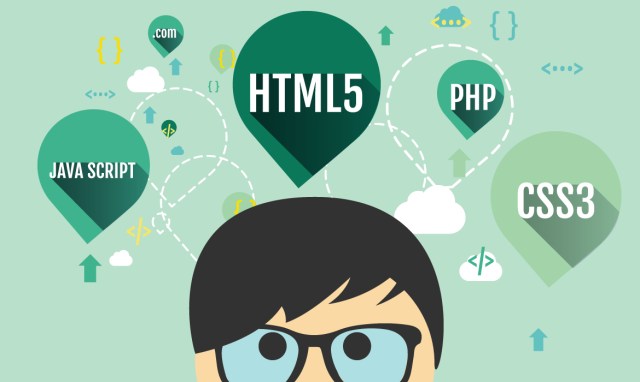
6 Steps to hiring a great web developer

Building your brand online requires stylish web design and a website that works seamlessly. To achieve this you need a highly skilled web developer. At first, you may think that finding a great web developer will be an easy task, because there are so many developers available, but it isn’t as simple as that, as many have found out at great expense. So, here are six things you need to consider when you’re hiring a web developer.

FullStack-Image

  1. What do you need the developer to do?

You need to decide what their task is first. Do you want them to work on the front end of your website or the back end? Or do you want them to do everything from A-Z? Front-end developers are more skilled in design; they code for ‘good looks’ with HTML and Javascript.  Whereas those who are better at back-end stuff, know all about databases and programming languages like PHP. The developers who can handle both are usually more expensive, but the upside of this is that there are no communication issues; you only have one person to talk to.

  1. Freelance or full-time employee?

There are plenty of freelancers available and this is a more flexible option. You can hire them on a per project basis, which is more economical than taking one on full-time.

  1. What’s your budget?

Website budgets vary greatly and the more complex the site, the more it will cost. Figure out your budget first and talk to the developer about what you can achieve with that. Also, be prepared to wait 12-16 weeks for a site to be completed, some may even take six months.

  1. Will you work well together?

When you are hiring a developer to work with you and your team you must consider how the person will get on in your company culture, even if they are freelance. Happy employees are more productive, so take time to assess the developer’s attitudes, enthusiasm and adaptability; it will save you time in the long run.

  1. What is their skillset?

You need to establish where they are strong and weak. Give them technical tests to complete, such as their proficiency in HTML, and ask questions like:

  • What are the benefits of using Javascript?
  • How do you devise a timeline for your projects?

Also ask to see their portfolio.

  1. Do they understand what you want?

The last step is essential because you need to be sure that you and the developer are on the same page. You should go over the following:

  • Reporting structure
  • Deadlines
  • Expectations
  • Tools
  • Payment

Hiring is always hard work, but it is worth the effort to get the right person, because that will pay off in the end in every way; in saving time and money and in building the brand that you really want. So, take the time to decide what you need first and then follow these steps to get the best web developer possible.


The Internet of Value: What It Means and How It Benefits Everyone

Blockchain has been called the “second significant overlay on the Internet” with the web being the first layer when it appeared back in 1990. That’s how important blockchain is. I know that when I mention blockchain to a lot of people, the first thing that comes into their minds is “Bitcoin.” That’s fair enough, because Bitcoin cryptocurrency has made blockchain famous. You’re probably aware that there is now a whole bunch of cryptocurrencies in addition to Bitcoin and although it remains the coin with the highest value, others like Ethereum are taking hold in the markets. But, there are many more exciting things that can be done with this technology beyond financial transactions using digital currencies and it is called “The Internet of Value’.

1475782089285494

Instant transactions

What is it? It is when Internet technology makes it possible to exchange ‘value’ as quickly as information. The banking system is one place where the Internet of Value can really make a big difference. For example, although information moves around the world instantly, a single payment from one country to another is slow, expensive and unreliable. According to Ripple, a blockchain transaction solution, in the US, a typical international payment takes 3-5 days to settle, has an error rate of at least 5% and an average cost of $42. Worldwide, there are $180 trillion worth of cross-border payments made every year, with a combined cost of more than $1.7 trillion a year.

But, with the technology from the Internet of Value, a value transaction, like a foreign currency payment, can happen instantly.  And it doesn’t have to be limited to money, although currently that is the primary use of this aspect of blockchain – the Internet of Value will enable the exchange of any asset, including stocks, votes, frequent flyer points, securities, intellectual property and more.

Blockchain and Value exchanges

The most common way of exchanging assets is using a bank, credit card or a booking service, but blockchain technology is changing all that. It allows these assets to be transferred directly from me to you without any other entity in the middle. The transfer is validated, permanent, and completed instantly – just like sharing information on the web. It has huge potential to change the world as we know it. It will decentralise every transaction, empower the individual and it will disrupt the financial markets as well as consumer ones.

This is not something that is a futuristic dream. It is already happening. Exchanges like NASDAQ are using blockchain technolog, Estonia, which is becoming the Silicon Valley of Europe, stores its citizens’ health records on blockchain and some airlines are accepting cryptocurrency payments for flights.

Very soon we will see the adoption of industry standards using an Interledger Protocol (ILP) that will set the standards for the settlement of transactions across different networks. ILP can be thought of much like the protocol HTTP used in web address that became the global standard for online information exchange.

With the use of this protocol there will be one, frictionless experience to send money globally using the power of blockchain. It will connect billions of people globally and give rise to new businesses and it will also liberate the millions of people who don’t have access to banking. The Internet of Value is bringing us into a bold, new world where the individual has more power. The Internet revolution is taking another step forward – we must embrace it.

I hope you enjoyed this and found it useful. Please subscribe to my blog if you’d like to receive an alert when I post new content.