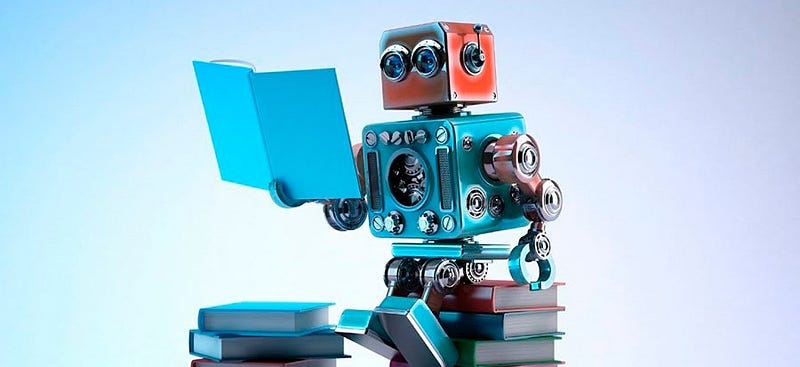
Man vs. Machine? Or Man with Machine? How 2025’s AI Conflicts Are Forging the Next Productivity Supercycle

The dawn of artificial intelligence has ignited a global conversation that feels eerily similar to past revolutions — from the steam engine to the semiconductor. But 2025 is different. This isn’t just about new technology. It’s about redefining what it means to be human in an age of intelligent machines.

In workplaces across the world, algorithms are already outperforming humans in speed, precision, and scale. Writers face GPTs, designers battle with generative visuals, and financial analysts are now sharing the floor with AI that trades faster, cheaper, and without emotion. It’s not science fiction. It’s happening.

And yet — amid all the fear and uncertainty — something remarkable is emerging: a new type of productivity boom driven not by replacement, but by reimagination.


⚔️ The Conflict: Fear, Resistance, and the Myth of Replacement

Much of today’s tension with AI comes from a deeply rooted assumption: “If AI can do it, why do we need humans at all?”

This belief fuels a reactive approach: workers resisting automation, companies slow-walking adoption, and governments scrambling for regulations. Headlines amplify the narrative — “AI takes X million jobs!” — while ignoring the nuance.

But history teaches us that technology rarely replaces humans wholesale. Instead, it reshapes the landscape. The printing press didn’t eliminate writers. The camera didn’t destroy painting. In every case, the arrival of new tools created new needs, roles, and value.

So, what if the same holds true for AI?


🛠️ The Shift: Augmentation, Not Obsolescence

The most transformative AI users today aren’t the ones trying to replace their workforce. They’re the ones re-skilling them — empowering human talent to leverage AI as a multiplier.

Consider these examples:

  • In law, AI is digesting thousands of legal documents in seconds — freeing lawyers to focus on argument strategy and client interaction.
  • In medicine, AI is catching anomalies in scans with superhuman accuracy, allowing doctors to spend more time in diagnosis, empathy, and planning.
  • In journalism, AI handles rapid-fire news alerts while humans tackle investigative reporting and long-form analysis.
  • In design, AI provides endless iterations, but it’s still the human eye that decides what resonates emotionally.

In every case, AI acts as a force multiplier, not a replacement.


🌍 Global Trends: The Rise of the AI-Human Hybrid Workforce

A recent McKinsey report suggests that by the end of 2025, 60–70% of jobs will involve some form of AI collaboration — from chatbots in HR to code-completion tools in software engineering. Companies that invest in AI fluency today are already outperforming peers in speed to market, innovation cycles, and customer satisfaction.

What’s emerging is not a battle between man and machine — but a fusion of the two. And this fusion is already unlocking:

  • 10–30% productivity gains in AI-assisted workflows
  • New categories of work, from prompt engineers to AI ethicists
  • Creative outputs once thought impossible at scale (think: video generation, AI-assisted drug discovery, hyper-personalized education)

🧩 The Paradox: AI Reveals Human Value

Ironically, the more capable AI becomes, the more it spotlights what only humans can do:

  • Empathy in leadership
  • Ethical reasoning in decision-making
  • Taste in design and culture
  • Context in strategy and negotiation

If you can prompt a machine to write a report in 5 seconds, the value shifts to the quality of your prompt, the decision you make from the insights, and the narrative you build around the data.

AI doesn’t make you obsolete. It forces you to level up — to refine your uniquely human edge.


🔮 The Takeaway: The Next Boom Won’t Be Human or AI — It’ll Be Human-AI

2025 may go down as the year when the fear of AI peaked — and then pivoted into power. The companies, professionals, and industries that thrive won’t be the ones who resist AI. They’ll be the ones who embrace it — not blindly, but boldly.

Because in the end, the productivity boom won’t come from AI working alone.

It will come from you + AI, working smarter, faster, and more creatively together.

5 AI trends in 2019

As the use of Artificial Intelligence (AI) has grown in 2018, we can expect to see even stronger growth in the technology in 2019. One of the reasons it is bound to increase its presence in our lives is that it makes life easier, whether it is chatbots in business or Alexa in the home. According to Analytic Insightsand Forrester Research, in 2019 we will also “see the rise of new digital workers with an increased competition for data professionals with AI skills.” But, what else can we expect from AI next year?

More chatbots and virtual assistants

We will see more advanced use of AI virtual assistants on websites to answer customers’ queries and provide customer service assistance. For example, companies will create virtual agents with a face and personality to match to handle complex tasks to drive business, like, Autodesk’s virtual agent Ava has a female face with a voice that speaks emulating the company’s brand.

Improved speech recognition

Alexa may have started the trend, but in 2019 voice-activated services are going to be even bigger business. Already Sony, Hisense and TiVo have unveiled TVs that can be controlled by voice, and even home appliance makers such as Delta, Whirlpool and LG have added Alexa’s voice recognition skills to assist people control everything in their homes.

Smart recommendations

When we shop online we are already inundated with a series of recommendations about what to buy next based on our previous purchases. This is going to get bigger in 2019, with recommendations based on “sentiment analysis” as well as your search history.

Advanced image recognition

We can expect some is changes here in 2019. Don’t be surprised if there is image recognition to detect licence plates, diagnose diseases, and permit photo analysis for a range of verifications.

Cyber security

In 2019, expect artificial intelligence to be more powerful in fighting off cyber threats and prevent potential hackers. Companies including Darktrace have deployed and machine learning technologies to detect online enemies’ in real-time and identify cyber threats early on, and so prevent them spreading.

How companies use machine learning

The machine learning market is growing at pace. According to Research and Markets it should reach $40 billion by 2025. Currently it is already over the $1 billion mark, but to reach the estimated value it will have to make a major leap in growth.

What will cause it to grow? Every company will start using it once they have identified a use case, and that is one of the barriers to adoption at the moment, but we can learn from the ways in which major companies are already using machine learning.

Apple

Apple is working on a cross-device personalisation tool and has already applied for the patent. It is rumoured that what this will do is allow your Apple Watch to connect with your iTunes playlist and find a piece of music to match your heart rate.

Twitter

Twitter is working on visibility problems with thumbnail images. It is using neural networks to find a scalable, cost-effective way to crop users’ photos into compelling, low-resolution preview images.

AliBaba

This Chinese retail giant has 500 million customers and each of them uses the store in a distinct way. So Alibaba is using machine learning to track every customer’s journey. Furthermore, all Alibaba’s online storefronts are customised for each shopper and searches will bring customers the products they want to see. There’s also a chatbot who handles most of the spoken and written customer service inquiries. Every element of Alibaba’s business has been built for engagement with the shopper, and every action the shopper takes teaches the machine more about what the shopper wants. It’s extremely effective.

Target

American retailing giant, Target, is using machine learning to reach and respond to its pregnant customers. In fact, Target’s model is so precise that it can reliably guess which trimester a pregnant woman is in based on what she’s bought.

Typically companies have been driven by the seasons, but machine learning can help businesses respond to ‘seasons’ in people’s lives. For example, a person who has just bought a car doesn’t want to see car ads, but motor insurance ads are appropriate. Basically, machine learning can pick up on those rhythms, helping companies recommend their products to customers when the timing is just right.