Financialization, Web 3.0, and DeFi’s Push: How It All Affects Your Portfolio and Future

In the ever-evolving landscape of finance and technology, the convergence of financialization, Web 3.0, and the relentless growth of DeFi (Decentralized Finance) is fundamentally altering the way we manage our portfolios and plan for the future. This article delves into this transformative intersection and its implications for your investments, assets, and financial strategies.

Financialization: A Historical Perspective

Financialization is the process by which financial markets, financial institutions, and financial motives become increasingly dominant in shaping economic policies and economic outcomes. It’s a concept that has been steadily growing in influence over the past few decades. Key elements of financialization include:

  • The Rise of Complex Financial Instruments: The proliferation of derivatives, swaps, and other financial instruments has become a hallmark of financialization, allowing for the creation of diverse investment options.
  • The Growth of Financial Institutions: Large financial institutions have extended their reach into various sectors of the economy, including traditional banking, asset management, and insurance.
  • Securitization: The process of bundling loans and selling them as tradable securities has fueled financialization, enabling investors to take on more complex and diverse positions.

Web 3.0: A Paradigm Shift in Technology

Web 3.0 represents the third generation of the internet, characterized by decentralization, blockchain technology, and a return to user control over data and digital assets. This paradigm shift includes:

  • Blockchain Technology: Blockchain is at the core of Web 3.0. It provides transparency, security, and decentralization, making it a fundamental component for DeFi.
  • Decentralized Applications (dApps): These are applications that run on decentralized networks, offering various use cases from gaming to finance, and enabling users to directly interact with each other.
  • Digital Sovereignty: Users have more control over their digital identities, data, and assets, reducing reliance on centralized platforms and institutions.

The Rise of DeFi: Democratizing Finance

DeFi, or Decentralized Finance, is the embodiment of the financialization of the blockchain. It’s a system of financial applications built on blockchain technology that aims to recreate traditional financial systems without the need for banks and other intermediaries. Key aspects of DeFi include:

  • Lending and Borrowing: DeFi platforms allow users to lend or borrow assets, earning interest on their holdings or taking out loans without a traditional financial intermediary.
  • Decentralized Exchanges (DEXs): DEXs enable users to trade cryptocurrencies directly from their wallets, without relying on a centralized exchange.
  • Yield Farming and Liquidity Provision: DeFi offers opportunities for users to provide liquidity to various protocols and earn rewards in the form of tokens.
  • Staking and Governance: Users can stake their assets in decentralized networks to participate in governance and decision-making processes.

Implications for Your Portfolio and Financial Future

The intersection of financialization, Web 3.0, and DeFi has significant implications for your portfolio and financial future:

  • Diversification Opportunities: DeFi introduces new asset classes and investment opportunities. By diversifying into DeFi assets, you can mitigate risk and potentially enhance returns.
  • Ownership and Control: Web 3.0 technologies provide you with more control over your digital assets and financial identity, reducing reliance on centralized entities.
  • Risk and Volatility: DeFi assets can be highly volatile, and the regulatory environment is evolving. A careful approach to risk management is crucial.
  • Financial Inclusion: DeFi has the potential to expand access to financial services for unbanked and underbanked populations worldwide.
  • Adaptability: To stay ahead in this evolving landscape, being adaptable and staying informed about emerging technologies and investment opportunities is vital.

Conclusion: Navigating the New Financial Frontier

The intertwining of financialization, Web 3.0, and DeFi presents both challenges and opportunities for investors. As the financial landscape continues to evolve, understanding these developments and adopting strategies that align with this new paradigm can be essential for building a resilient and forward-looking portfolio. Embracing digital sovereignty, staying informed, and being open to new investment opportunities in DeFi are steps toward securing your financial future in this dynamic era.

Did you like this post? Do you have any feedback? Do you have some topics you’d like me to write about? Do you have any ideas on how I could make this better? I’d love your feedback!

Feel free to reach out to me on Twitter!
Navigating the Complex Relationship Between AI and Web3

In today’s rapidly evolving tech landscape, two prominent trends are at the forefront: Artificial Intelligence (AI) and Web3. While each has the potential to revolutionize industries on its own, their convergence presents a unique set of challenges and opportunities. In this article, we’ll explore the intricate relationship between AI and Web3, dissecting their core principles, examining potential roadblocks, and uncovering ways they can collaborate effectively.

Understanding the Core Ideas

Let’s begin by dissecting the fundamental principles of AI and Web3. Web3 represents the next phase of the Internet, transitioning from the centralized Web 2.0 model, where data is controlled by a few major entities, to a decentralized paradigm where users own and control their data. In contrast, AI relies on vast datasets to learn and perform tasks efficiently. AI models, particularly neural networks, depend on the availability of extensive data for training.

The Clash of Principles

At its core, Web3 promotes decentralized data ownership, ensuring that no single entity has control over user data. This approach directly contradicts AI’s reliance on centralized data access for effective learning. The clash of principles arises from the fact that AI models thrive on extensive, often centralized, datasets, while Web3 aims to distribute data ownership.

Challenges Ahead

The challenges of integrating AI into the Web3 ecosystem are multifaceted. First, decentralized AI-powered systems may suffer from performance issues, as they require a multitude of user GPUs operating continuously to match the processing power of a single specialized GPU in a centralized cloud. This poses a significant hurdle to achieving the required speed and efficiency.

Decentralization vs. Fraud Detection

Consider the application of AI in fraud detection, a crucial element in the financial sector. AI-driven anti-fraud mechanisms analyze vast datasets to detect and prevent fraudulent activities in real-time. However, in the Web3 environment, decentralized data ownership complicates the process. Identifying transaction senders, recipients, and purposes becomes more intricate, limiting the availability of relevant data. Additionally, real-time anti-fraud AI assessments could significantly slow down transaction processing, contradicting Web3’s goal of seamless and rapid transactions.

The Risk of Centralization

Moreover, entrusting centralized AI systems with the responsibility of detecting fraud could inadvertently reintroduce centralized control and undermine the decentralized ethos of Web3. This challenge highlights the potential risk of reverting trust back to automated centralized systems.

A Symbiotic Relationship

Despite these formidable challenges, AI and Web3 can coexist effectively, but the integration must be approached differently. Rather than embedding AI directly into the Web3 infrastructure, it can serve as a complementary asset. Specialized AI models designed explicitly for crypto and blockchain analytics can provide insights into market trends, user behaviors, and potential vulnerabilities within a blockchain, all while preserving the decentralized core of Web3.

Enhancing the User Experience

AI can also play a crucial role in user education within the Web3 ecosystem. As more services, platforms, and tools are built around Web3, AI-driven platforms can simplify and translate complex information related to blockchain and crypto, ensuring that the average user can participate meaningfully in this digital revolution.

Real-World Applications

To illustrate this symbiotic relationship, consider Grap3, a project aiming to simplify the creation of smart contracts using AI. Grap3 allows users to describe smart contract requirements in plain language. A neural network, powered by a linguistic model, then guides users through a series of questions to generate a ready-to-use smart contract. This example showcases how AI can enhance the Web3 experience without compromising decentralization.

The Path Forward

In conclusion, while the direct integration of AI into Web3 presents challenges due to their distinct principles, there are avenues to harness the strengths of both. Crafting solutions that allow AI and Web3 to coexist and complement each other without compromising their core values will be essential. As the tech landscape evolves, this symbiotic relationship holds the potential to unlock new dimensions of digital innovation, benefiting industries and users alike.

Did you like this post? Do you have any feedback? Do you have some topics you’d like me to write about? Do you have any ideas on how I could make this better? I’d love your feedback!

Feel free to reach out to me on Twitter!

State of Crypto 2023 by Andreessen Horowitz

There has been so much happening in the crypto scene. There has been a fluctuation in the prices, wrangles in regulation, etc. This inspired the crypto VC firm Andreessen Horowitz, AKA a16z, to give a crypto market report early this month.

The report started with an overview of the current state of the crypto market, which is characterized by crypto companies collapsing, crypto cycle, crypto regulation, and decentralization.

According to the report, most of the setbacks in the industry are caused by centralization. Centralization happened for selfish reasons, as some entities wanted to maximize the crypto market cycle gains. The solution to this is decentralization.

The second part of the report talks more about crypto market cycles. A positive feedback loop causes crypto market cycles. When the prices go up, it increases the interest rates, which leads to new ideas and projects, making the price go up again. There have been four crypto market cycles so far. The crypto market cycles happen every four years, just like Bitcoin halving.

The report’s authors talk about the different layer cryptos and how to layer two cryptos are gaining a lot of traction. Almost seven percent of all Ethereum fees are on L2s.

Ethereum was highlighted for reducing its energy use by 99.9% by changing its consensus from proof of work to proof of stake.

They reviewed the rising popularity of zero-knowledge proofs, NFTs, and the growth of web3 gaming which has yet to be nearly as impacted by the crypto bear Market. Participation in DAOs has also steadily increased, but this might not necessarily be a bullish sign.

The report discusses the three proposed crypto regulations, including the bipartisan crypto bill by Senator Cynthia Lamas and Kirsten Gillibrand, seven pending crypto cases, including the SEC’s case against Ripple, and three proposed crypto rules, including the SEC’s crypto custody rule.

In the report, there was a highlight on crypto market metrics. It includes the number of active developers, smart contracts, the number of crypto-related academic publications, and the number of people looking for crypto-related jobs.

Crypto adoption indicators include the number of active crypto wallet addresses, the number of crypto transactions, the number of transaction fees paid, the number of mobile crypto wallet users, the amount of trading volume on decentralized exchanges, NFT buyers, and stablecoin trading volume.

What is next?

According to the report, crypto adoption may be likened to internet adoption in the mid-90s. If it takes the same path, crypto will hit 1 billion users in 2031. This will, however, be dependent on crypto regulation and education. Some of the expectations the authors of the report have include:

1. Web 3 will grow. They expect the best web3 products and protocols to be developed during the remaining part of the crypto bear market.

2. Smart contract security will improve. This will lead to more crypto development.

3. Zero-knowledge proofs will continue to become more popular. This makes sense considering institutional investors require Financial privacy, which is something that zero-knowledge proofs can provide.

4. Big Tech will continue to take greater control of the Web 2 internet, and this will highlight the importance of Web 3.

5. Web3 gaming will become more popular. People adopt crypto for speculation, necessity, or entertainment. The entertainment part is growing.

6. There will be more crypto-specific hardware, particularly for zero-knowledge proofs.

7. Decentralized social media will become popular due to issues with centralized social media.

8. Light clients will enable mobile devices to become more involved in crypto infrastructure. This will mean bringing more crypto to mobile devices.

9. There will be new kinds of community governance in DAOs.

10. Governments will pass bipartisan crypto regulations. The crypto regulations will not only be in the US but in other countries too.

11. Non-speculative crypto use cases will emerge.

12. Hiring treasury management and sustainable funding will be a focus for DAOs. This is a subtle reference to a new crypto niche called ReFi or Regenerative Finance, which involves investing in tokenized carbon credits.

What does the a16z report mean for the crypto market?

The report gives a lot of insights into what institutional investors think of the crypto market. Since they are the dominant share, they impact the market. Factors such as crypt regulation and decentralization are important to investors, affecting the entire market. This can help us know what to expect in the future and plan accordingly.

Did you like this post? Do you have any feedback? Do you have some topics you’d like me to write about? Do you have any ideas on how I could make this better? I’d love your feedback!

Feel free to reach out to me on Twitter!
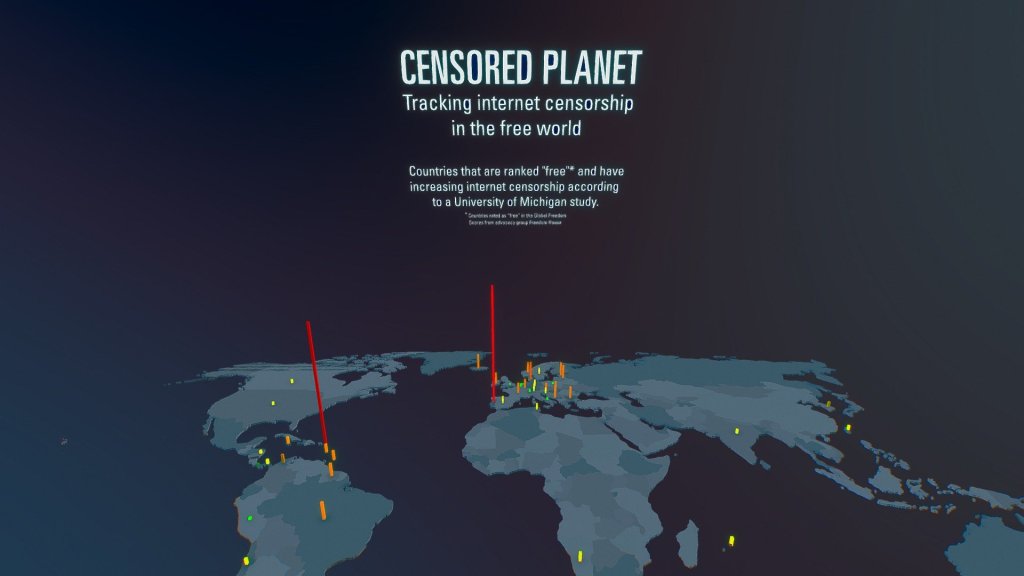
Online censorship is Coming : 4 countries to watch

Too much information on the internet can be good and, at the same time, bad. This is why governments are considering censoring some information from their citizens. The main culprits are Canada, the UK, Europe, and the US. The relevant federal governments are in charge of enacting the censorship law. Some governments have already proposed internet censorship bills, and it is only a matter of time before they are passed into law. Here are four countries to watch as this debate takes center stage:

Canada’s C-11

Canada is one of the countries to enact an internet censorship bill. The bill, dubbed c-11, is a  modification of the c-10 proposed in November 2010 but failed. The main reason for failure back then is its contents could have made more sense to some people. The bill re-emerged in February 2022 as c-11 and was passed by the Canadian House of Commons. Once the bill is passed into law, it is believed to give the Canadian Radio-Television and Telecommunications Commission (CRTC) the power to control what Canadians can see on Youtube and social media. This will also apply to user-generated content. One of CTRC’s criteria is inclusion and diversity in content. The bill is currently with the Canadian Senate and will be voted on in February. If it garners enough votes, then it will be debated by the Canadian parliament. There are high chances of the bill turning into law as big Tech giants such as Youtube have failed to convince the Senate to remove user-generated content from the bill.

UK’s Online safety bill

Unlike Canada, the Uk decided to give its bill a more friendly name. The bill was introduced in May 2021 and is yet to be passed into law. The bill’s goal is to give the UK government the power to censor whatever it considers harmful. In the UK, the regulator of the bill is the Office of Communications (OFCOM) which is similar to Canada’s CTRC. Legal but harmful content was excluded from the bull back in November. OFCOM will, h however, have the power to protect quote content of democratic importance and news publishers. It also plans to do age verification to prevent minors from accessing some information. It will be a requirement for Tech companies to do a KYC for their customers.

EU’s data governance Act                                                 

This was passed in the summer of 2022 and may be passed into law autumn this year. It will be mandatory to share data with the government. There will also be an artificial intelligence regulation act. Monopolies will be fined in a bid to make the EU competitive. It also aims to increase innovation in the digital markets. Every EU country will have a ministry of truth to censor certain information and fuel government propaganda. Illegal information will be taken down immediately. Offenders of the bill will be banned from the Digital Services Act. It will weed out hate speech, social media crises, etc.

United States

The US has two documents related to online censorship, the kids’ online safety act and the supreme court case. Kids will be protected from inappropriate content. The Federal Trade Commission FTC argued that parents must ensure their kids are safe online. Social media companies will have more liabilities as they will be under watch not to support any illegal activities, propaganda, or crime. Or else, they will have to deal with the supreme court according to section 230.

Conclusion

These bills could drastically change the way people consume the internet in these countries. Seeing that these countries are at the forefront of economic development, it will only be a matter of time before other countries join and start regulating the internet. Once these draconian bills are passed in these countries, they will get to decide what type of content will be considered inappropriate or needs to be moderated.-potentially resulting in a dystopian society with little or no freedom of expression.

Did you like this post? Do you have any feedback? Do you have some topics you’d like me to write about? Do you have any ideas on how I could make this better? I’d love your feedback!

Feel free to reach out to me on Twitter!