In business, we often look outward to explain stalled progress — market conditions, increased competition, shifting consumer trends, or funding gaps. While these factors matter, they’re rarely the root issue. The deeper constraint, more often than not, lies within. The real bottleneck to growth is not external — it’s the untrained mind.
Behind every decision, every strategy, every meeting and moment of execution is a mind. If that mind is scattered, reactive, or fear-driven, no amount of capital or opportunity will move the needle. Leaders today are navigating unprecedented complexity. Strategy alone is no longer enough. Mental clarity, emotional control, and disciplined thinking have become critical business assets.
In high-performing organizations, mindset is treated as infrastructure. The mental resilience of a founder under pressure, the clarity of a CEO making decisions in chaos, the discipline of a team staying focused when noise peaks — these are the intangible yet powerful drivers of performance. Without a trained mind, even the best strategies collapse under the weight of stress, distraction, and indecision.
An untrained mind in business shows up subtly. It disguises itself as chronic overthinking, decision paralysis, the inability to say no, and the addiction to comfort disguised as “stability.” It creeps in as short-termism, reactive leadership, or avoidance of risk. These behaviors erode momentum. They create a slow bleed that stalls innovation, weakens culture, and shrinks the capacity to lead at scale.
The truth is, talent and tools alone are no longer differentiators. Everyone has access to information. Everyone can hire smart people. But the leaders and organizations that consistently win are the ones that can think clearly under pressure, remain calm when stakes are high, and adapt faster than the chaos around them. That level of performance is not instinctual. It’s trained.
Training the mind doesn’t require retreating to silence or meditating on a mountain. It requires consistency, discipline, and awareness woven into daily routines. It begins with creating space to think — real thinking, not reacting. It involves choosing discomfort, making hard calls, and leaning into feedback rather than avoiding it. It means becoming conscious of your mental patterns, not to judge them, but to rewire them toward clarity, resilience, and purpose.
Mental training is not self-help. It’s self-leadership. And in a world moving at the speed of distraction, it’s the most underutilized business strategy of our time.
If your company is plateauing, if your leadership feels scattered, or if you keep hitting the same wall, it’s time to stop asking what’s wrong with the business. Start asking what’s untrained in the mind running it.
Because ultimately, your business can only grow to the level of your thinking. And if the mind isn’t built for growth, no strategy will scale it.
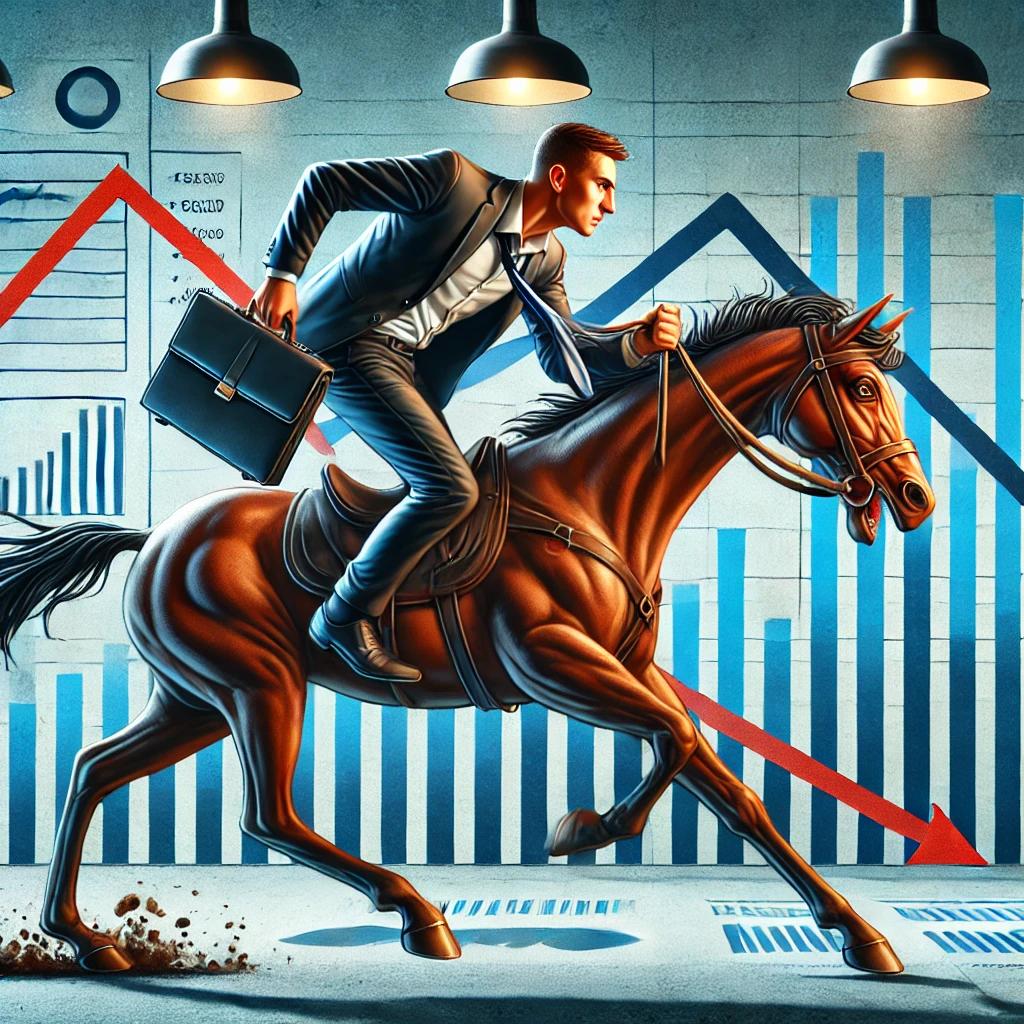
In the business world, one of the most common yet costly mistakes is the tendency to continue investing time, money, and resources into failing ventures. This phenomenon is often referred to as “beating a dead horse” — a metaphor that describes the futile effort of persisting with a strategy, product, or business model that is no longer viable. Despite clear indications of failure, companies and individuals often struggle to abandon unsuccessful endeavors, leading to significant financial losses, wasted opportunities, and stunted innovation. This article delves deep into why businesses continue this pattern, the psychological and economic factors behind it, and how organizations can identify and pivot away from doomed strategies.
Understanding the “Dead Horse” Phenomenon in Business
At its core, the dead horse strategy occurs when businesses refuse to acknowledge that an initiative, market trend, or product has run its course. Instead of pivoting, they double down, hoping that persistence alone will turn things around. This reluctance to move on can manifest in several ways, including:
Investing in Obsolete Technology — Businesses that fail to adopt emerging trends and instead pour money into outdated solutions often find themselves irrelevant in the market.
Clinging to Failing Business Models — Some companies resist adapting to changing customer behaviors, holding onto business models that no longer generate profits.
Continuing with Poor Leadership — Keeping ineffective leadership in place despite ongoing failures can further entrench stagnation.
Marketing to a Nonexistent Audience — Businesses sometimes continue marketing products to an audience that has either moved on or never existed in the first place.
Refusing to Adapt to Market Shifts — When industry disruptions occur, businesses that resist change rather than evolve can find themselves on the path to extinction.
The Psychological and Economic Drivers Behind Sticking to Failure
Why do businesses persist in beating a dead horse? The answer lies in a combination of psychological and economic factors that create resistance to change:
1. The Sunk Cost Fallacy
This cognitive bias causes individuals and organizations to continue investing in a failing venture simply because they have already poured substantial resources into it. Rather than recognizing the need to cut losses, companies feel compelled to justify previous expenditures by persisting.
2. Fear of Admitting Failure
Admitting that a business decision was wrong can be difficult, especially for leaders who have publicly supported a strategy. The fear of losing credibility often results in prolonged denial and further investment.
3. Emotional Attachment to Ideas
Business owners and executives often develop an emotional connection to their ventures, making it harder to view situations objectively. This attachment can cloud judgment and hinder necessary course corrections.
4. Groupthink and Internal Politics
When entire teams or companies are invested in a decision, challenging the status quo becomes difficult. Employees may hesitate to speak out, fearing backlash or being perceived as disloyal.
5. Hope and Optimism Bias
Sometimes, businesses hold onto hope that external factors will change in their favor, such as believing that a failed product will suddenly become popular or that a declining market will rebound.
Consequences of Beating a Dead Horse in Business
Failing to recognize when to let go can have severe consequences for businesses:
Financial Drain: Continuing to invest in failing projects diverts resources from more promising opportunities.
Missed Opportunities: Companies that focus on the past often miss emerging trends and new markets.
Employee Morale Decline: Working on a failing project can demotivate employees and lead to higher turnover rates.
Loss of Market Relevance: Brands that refuse to innovate risk becoming obsolete.
How to Identify and Stop Beating a Dead Horse
Recognizing when a business strategy is failing and having the courage to pivot is crucial for long-term success. Here are some steps to help businesses make informed decisions:
1. Conduct Honest Performance Reviews
Regularly assess the effectiveness of business strategies through key performance indicators (KPIs), customer feedback, and market analysis. If the data suggests stagnation or decline, it’s time to reassess.
2. Encourage Open Dialogue
Create an organizational culture where employees feel safe voicing concerns and offering alternative solutions without fear of retribution.
3. Set Clear Exit Strategies
Having predefined exit criteria for projects can prevent emotional decision-making and allow businesses to cut losses at the right time.
4. Be Willing to Pivot
Successful companies recognize when to shift focus. If a product, service, or market isn’t working, exploring new directions can be more beneficial than forcing a failing initiative.
5. Embrace Failure as a Learning Experience
Rather than fearing failure, businesses should treat it as an opportunity to learn and evolve. Some of the most successful companies today, including Amazon and Netflix, have pivoted multiple times before finding their winning formulas.
Case Studies: Companies That Knew When to Move On
1. Netflix vs. Blockbuster
Blockbuster failed to recognize the shift from physical rentals to streaming, while Netflix adapted and thrived. Blockbuster’s reluctance to pivot resulted in its downfall.
2. Kodak’s Digital Misstep
Despite inventing the digital camera, Kodak continued to invest in film photography, ultimately losing its industry dominance to competitors who embraced digital innovation.
3. Nokia’s Smartphone Struggle
Nokia’s insistence on sticking with outdated mobile operating systems instead of embracing the smartphone revolution led to its decline in the market.
Know When to Let Go
Beating a dead horse in business is a common but avoidable mistake. Recognizing when a strategy is failing and making the necessary changes can mean the difference between stagnation and success. By fostering adaptability, encouraging critical thinking, and being willing to pivot, businesses can ensure long-term growth and relevance in an ever-changing market. The key to sustainability isn’t persistence in failure — it’s the ability to recognize and embrace change.
There is some very positive information in Deloitte’s “Merchants Getting Ready For Crypto” report released in collaboration with PayPal on 8th June. Those involved in projects that enable crypto payments should be pleased with the findings.
According to the report, three quarters of US retailers plan to accept crypto or stablecoin payments within the next two years. Plus, more than half of large retailers with revenues over $500 million are currently spending $1 million or more building the required infrastructure to make it happen.
Even small and medium-sized retailers are preparing for a crypto payments future. Some 73% of retailers with revenues of between $10 million and $100 million are investing between $100,000 to $1 million to support the needed crypto payment infrastructure.
This infrastructure spending is set to accelerate in 2022, says Deloitte, as more than 60% of retailers said they expect budgets of more than $500,000 to enable crypto payments over the course of this year.
Consumer interest
Retailer adoption is being driven by consumer interest, with 64% of merchants saying their customers have expressed significant interest in using crypto for payments. And 83% of retailers expect this to increase this year.
Around 50% of retailers believe that adopting crypto will improve the customer experience, and the same percentage claimed that accepting crypto would make their brand seem more “cutting edge.” Of those retailers already accepting crypto payments, a whopping 93% reported a positive impact on their customer metrics.
Of course, the merchants acknowledged there are challenges to adoption of crypto. The main ones were the security of the payments system (43%) changing regulations (37%), volatility (36%) and a lack of a budget (30%).
The survey polled 2,000 senior executives at U.S. retail organizations between Dec 3 and Dec 16, 2021 when crypto prices were still riding high, but the results have only just been revealed. The executives were distributed equally among the cosmetics, digital goods, electronics, fashion, food and beverages, home and garden, hospitality and leisure, personal and household goods, services, and transportation sectors.
The survey also highlighted the fact that 85% of retailers believe the acceptance of crypto payments will be ‘ubiquitous’ in their sectors in five years time.
Many people must be wondering what the rest of this decade might look like after such a disastrous start to the 2020s. Can we look back at history and see a trend? For example, the 1920s that followed World War I and the Spanish flu epidemic was a Golden Age when economic growth surged, society relaxed a lot of its restrictions, women cut their hair for the first time, all of it captured and portrayed in F. Scott Fitzgerald’s ‘The Great Gatsby’. Now there’s a book that has never gone out of fashion.
This week I read an article by Rich Karlgard in Forbes that is written from the optimist’s viewpoint. He believes there are four possible reasons that the 2020s might be another 1920s, although he does so with caution.
Digital tech will accelerate
There is no doubt that the pandemic made all things digital vastly more important. Otherwise, we wouldn’t have seen so much change in such a short time. Karlgard first points to the fact that back in 2017, Diane Greene, then the Google Cloud CEO, told a Forbes audience that the rate of digital technology progress was accelerating rapidly. But that does not necessarily bring productivity along with it, because the business model needs to change for that to happen. Then along came Covid-19, which forced a rapid business change. Microsoft CEO Satya Nadella has said that five years of digital transformation had taken place in six months, all because businesses needed to work smarter, faster and be more nimble.
Artificial Intelligence is now scalable
A number of digital technologies reached maturity at the same time: cheaper cloud computing, universal digital computing and faster telecoms with the arrival of 5G. And then there is Artificial Intelligence (AI). Karlgard says this will be the decade of enterprise AI, and that’s spot on. Prior to 2020 using AI was hard, labour-intensive, expensive work, but now it is very much easier to use and it is going to transform many areas of industry, from logistics to customer service.
We’re awash with capital
Although it may not always be obvious the world is swimming in capital right now, which makes it easier for start-ups to get the funding they need. Investors have their eyes on digital technology and AI products, because as Karlgard says, “thy know they are game changers.” He adds, “These will disrupt business models and markets, and power enormous fortunes.”
Revolutions in the physical world
We are not talking about physical revolutions here; but revolutions in the way aspects of the physical world are being changed by technology. For example, autonomous trucks don’t need to take rest breaks, drone cameras can improve agricultural crop yields, and gene sequencing combined with AI can create personalised medical treatments.
However, whilst all these may lead to a boom after what feels like a bust, if we look back at the 1920s, we must note that while cities grew and grew, rural areas were not invited to the party, creating a divide that lingers to this day. The 1920s also experienced a stock crash in 1921 that almost buried the decade, followed by the more famous Wall St crash of 1929. So, even the Golden Age had its downsides. Still, after our experience of 2020-21, one that has been globally shared, let’s focus on optimism and the way in which the Covid-19 pandemic has accelerated digital technology for our benefit and forced us to be more agile.




 Mehran Muslimi