Canada – a leader in innovative technology

I was fortunate to move to Canada in the 1980s and be educated there. It’s a country of extraordinary beauty and diverse cultures. The Canadian Rockies are breathtaking and Whistler, its prime ski resort, is a match for any in the world. It’s a fantastic place for a family vacation, and you’ll find that Canadians are generally friendly, kind and welcoming to all visitors.

I’m also proud of Canada’s achievements in technology. I studied for my Bachelor’s and MBA at Prince Edward Island University and it gave me the solid foundation I needed to take me into the communications and IT industries, and my particular specialism –mobile communications – is a sector where Canada has a leading edge.

Canada and communications

maxresdefault
The first company I worked for was FCC Ltd. We collaborated with Bell Canada to Fix and Bring mobile traffic origination and termination consolidation.

Out of all Canadian technology innovations, the phone has had the most profound effect on the world. Scottish-born Alexander Graham Bell (1847-1922) and Nova Scotia resident, who is credited with inventing the telephone, founded the Bell Telephone Co, which today is called BCE Inc and is Canada’s largest communications company.

And, Canada is the home of Blackberry. It may be facing a lot of competition now from Apple’s iPhone, but its secure BlackBerry Messaging service remains tops in the industry, party due to the fact that BBM’s encrypted data makes it hard to trace the messages back to the owners. Plus, Blackberry has added an even more secure version of the service aimed at users in healthcare, finance and government.

Canada also brought you the IMAX. The concept started in Montreal back at Expo 67 when three artists designed an installation of an immersive movie experience. Three years later the first IMAX film appeared and soon after the IMAX theatres appeared as well.  Now, there are IMAX cinemas and films all around the world.

Investing in Canada

1280px-Canadian_flag_on_building

The election of Donald Trump in the USA prompted an increase in business people thinking of relocating to Canada. Canada’s world profile is also much bigger than in the past, in part due to Prime Minister Justin Trudeau’s activities. Therefore, more eyes are on Canada than ever before and market analysts suggest that investing in Canadian real estate is a good move. I’d agree and suggest investors look at areas with strong population and employment growth. Brampton in Ontario for example, which has Coca Cola, Air Canada, Canon Canada are just a few of the blue chip employers relocating there or expanding existing facilities. Other cities I’d recommend looking at real estate in are Milton and Richmond Hill, and I’m sure there are many more.

Canada’s strong economy and well-educated labour are also key reasons why global companies want to establish or expand their business in Canada. We have a broad selection of industry sectors that are ripe for investment. These include digital media, wireless communications and software, areas that are of personal interest to me. Did you know that Canadian studios are responsible for developing one in every six top-selling console games? Blockbuster titles from Canada include Ubisoft’s Assassin’s Creed, EA/BioWare’s Mass Effect, EA Sports’ FIFA Soccer.

And, Canada is leading the growing international demand for wireless technologies with leading infrastructure vendors, application developers and telecom software companies based in Canada. We are also seeing cutting-edge R&D work coming out of Canada from some of the biggest names in the sector: Alcatel-Lucent, AT&T, Avaya Inc., BlinQ, Ciena, Cisco Systems, Deutsche Telekom, Ericsson, JDSU, Nokia Solutions & Networks, Samsung and Sony.

Canada may have been overshadowed for some time by its neighbour to the south, but all the signs are that Canada is poised to maximise its opportunities for investment and to continue playing a leading role in high tech innovation that will secure for it a new status in the world economy. ‘
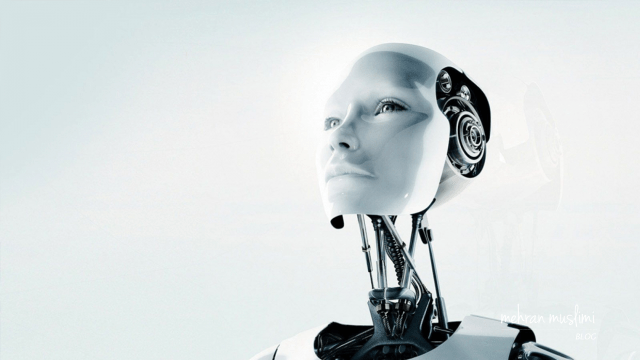


I Robot? No, I Creative

robot

In my last blog post I wrote about Artificial Intelligence (AI) and how it is modelled on the human brain’s neural pathways. However, as the post pointed out, whilst AI algorithms can mimic our thinking to a certain extent, as yet it can’t think at the same level of complexity as us. I’m aware that while some people are excited by the potential of AI, there are others who fear that it will replace human activity in the form of robots. The good news is, robots will increasingly help us by performing specific tasks – manufacturing is an example of where robots are useful—but there is one area in which the robots will not take over, and that is in the realm of creative thinking.

Robots free up time for more human creativity

Merrill Lynch published a report a couple of years back suggesting that 47% of jobs are “at risk of replacement by robots over the next 20 years.” These jobs are mostly in manufacturing and service industries. This kind of statistic plays into the hands of those who fear robotics. But, what we should be looking at is this; these robots will take over menial tasks, freeing humans up to use their time in being more creative. The report asked: “A major question is whether this will empower humans to go further than before, or if people will just be pushed out?”


The positive view of the advance of robots is that there are still many areas of work where the machines simply can’t replace humans. As I mentioned earlier, they can’t think creatively and there are other skills it is unlikely that will replace, at least for the next several decades. There are certainly some professions where we are unlikely to ever see robots.

Robots can’t teach kids

For example, robots can’t replace teachers, because a robot can’t relate to a child through human experience. As Ian Pearson from the World Academy for Arts and Sciences told Business Insider:

“A human will always be able to identify with another human on an emotional level better than a robot can.”

So, if you are a teacher you can feel confident that your job is safe, at least from robots.

Robots likely to make wrongful arrests

Another workforce that is unlikely to see its members’ replaced by robots is the police. The reason for this is that policing requires the skill of making judgements about situations. A robot can’t be programmed to make a judgement about a scenario. If robots were employed in this role, it is likely that they couldn’t differentiate between action that may look criminal but aren’t and an actual crime. A human can make a judgement call about what they are observing, and approach it based on previous experience and other aspects of our knowledge.

Robots can’t motivate

Motivational leaders and management positions are similarly safe from robots. Pearson even points out that people who are leading industry or service sectors will gain advantages from the employment of robots for menial tasks: “You will spend more time with colleagues, more time in meetings, more time in emotional analysis and trying to sway people. All of these other human skills become more important as the information skills become less important.”

Robots create more jobs

And finally, if you are still worried about being replaced by a robot, here is the good news from the Merrill Lynch report: countries like Germany and South Korea that have a high level of robots in manufacturing show a less decline in human employment than those countries with fewer robots employed, plus, “even as robots replace jobs, another 3.5 million jobs will be created because of robots.”

Our creative thinking is unique to us – it will be some time before robots and AI can replace that.

I hope you enjoyed this and found it useful. Please subscribe to my blog if you’d like to receive an alert when I post new content.


Artificial intelligence is all around you

Artificial intelligence

Step by step Artificial Intelligence has infiltrated our lives to the point where it is all around us. Its developers have made remarkable progress with its uses; it can play games of strategy with us, but more often it has a more serious commercial use that we encounter every day.

AI is based on the human brain

Human intelligence is the blueprint for AI. How else could its creators construct it? Its very workings are the product of humans and their thinking, so it is natural that it emulates human brain functions. Having said that, it has not yet acquired all our skills, because we don’t even know all the ways in which our brains work, so until we have that knowledge, we can’t replicate it in an algorithm. For example, one of the burning questions amongst those who follow the development of AI is, “does AI actually think?”

Does AI really ‘think’?

The answer is that to some extent, yes it does. The neural pathways of the human brain dynamically exchange information all the time and transmit bits of data to its different centres, such as memory and language. We also have the ability to learn and connect what we learn to what we already know. The complexity of these processes is mind-boggling and each one of us has a unique intelligence; you will rarely find a person who encompasses all the types of intelligence we have catalogued in our world, such as academic excellence, street smarts, EQ, business acumen, artistic vision, manual skills and spiritual wisdom. And that’s just the tip of the iceberg. But, can AI ever hope to replicate our diversity in thinking?

AI imitates the brain’s neural pathways

Well, it is already able to ‘think’ to a certain extent, otherwise we wouldn’t be able to play chess with AI as the opponent. Instead of neurons carrying information, AI has Artificial Neural Networks (ANN). These are “a type of machine learning algorithm in which nodes simulate neurons that compute and distribute information,” says technology writer Joelle Renstrom. These algorithms allow AI to follow the same ‘layered’ thinking that we do. For example, Renstrom in her excellent article on AI in the Daily Beast, explains how we view a sporting event, taking in an enormous range of diverse information and in processing it, we use, “memory, pattern recognition, statistical and strategic analysis, comparison, prediction, and other cognitive capabilities.” The, what is called ‘deep learning’ of AI is doing the same and we encounter its ‘thought’ processes every day.

AI in your media

Have you ever posted a message on social media about shopping for shoes and moments later you notice that adverts for shoe brands are popping up on your screen? That’s AI. You mentioned shoes; it will give you shoes. And it is capable of finding the type of shoes you like, because at sometime or other you’ve probably browsed shoes online, and now Facebook’s algorithm shows you some alternative brands, and in a style that corresponds with your original choice. Mention that you’re visiting Ibiza on social media and you’ll discover ads for Ibiza-related products when you go to read a newspaper online. It’s uncanny.

There are many more exciting aspects to AI that I will look at in future blogs, including how it will acquire general intelligence and whether or not it will ever have the capacity to replicate human creative thinking. AI is here to stay, so we must learn how to maximise its use for our benefit, rather than see it as a competitor to our intelligence.


I hope you enjoyed this and found it useful. Please subscribe to my blog if you’d like to receive an alert when I post new content.


The World’s Most Innovative Companies

Most Innovative Companies

Who are the world’s most innovative companies?

This isn’t an easy question to answer, because the criteria used to select them varies between the different publications that publish the league tables. Some attempt to take an objective approach and others are clearly more subjective. Is one better than the other? Well, ‘objective’ is logically superior, but in my opinion, it doesn’t always result in an unequivocally definitive answer. For example, there are two highly respected publications that pride themselves on being objective – Forbes and Thomson Innovation – yet when you examine their lists of the Top 100 most innovative companies, there is not one company that shows up on both lists. The reason for this lack of consensus all comes back to different definitions of ‘innovation’.

The usual suspects

If I asked you to name the most innovative companies of 2017, who would you choose? Surveys show that many people name companies like Nike, Apple and Google. This has more to do with these firm’s high visibility and what marketing people call ‘brand equity’, which means they get selected because they create an impression of always being on the cutting edge. But does that mean they actually are being innovative? In many cases the answer is yes. Some may be riding the waves of previous achievements, but others continue to innovate based on their existing platform, and to me that is a sign of a successful innovator.

For example, The Fast Company, which publishes an annual league table of the most innovative companies, puts Amazon in No.1 spot. Its table is based on consumer and marketers research. So, that needs to be kept in mind when assessing their list. Why is Amazon at the top of its list, because consumers perceive it as “offering more, even faster and smarter?” Scrolling down its list, there are a lot of the usual suspects in the Top 10: Uber, Google, Facebook and Netflix are all there, as you might expect.

Communications innovation features strongly

However, if you look at the winners by sector, there are less well-known names, and these really interest me, partly because more than a few are in my field of communications. Tencent’s WeChat messaging app is so popular that it “has more users than there are smartphones in China.” It has reached this level of popularity in China because it isn’t just a messaging app; users can also book a taxi, or a restaurant and even pay the bill for dinner without leaving WeChat. Alongside, Alibaba, an innovation winner in the retail sector, these are the two most valuable companies in Asia. BBK is in the smartphone market and one of its innovations is targeting the rural areas of China with solid, low cost mobile handsets. This approach has given them domination of the Chinese market: BBK sells through 200,000 independent retailers who receive healthy commissions for sales in this historically untapped market. As you can see, Asia features prominently in mobile communication innovation.

Open Whisper’s Signal app

Open Whisper Systems and its Signal app is another winner. Its open-source protocol, “which ensures messages are visible only to their intended recipients, is used for confidential messaging in apps collectively installed by more than 2 billion users.” The business has achieved this without ever placing an ad or having a marketing budget. It relies on just a handful of staff paid with funds from grants and donations, as well as code contributions from a worldwide community of developers and users. This is an extraordinary achievement and certainly deserving of an innovation award.

So, innovation comes down to who you ask. As the Global Innovation Institute says: “Ultimately, innovation effectiveness has to measure actual, real value delivered to the marketplace (customers) and the innovation–based growth that happens inside of companies as a result of that.”

Who would you nominate as an innovative company based on the above criteria?

I hope you enjoyed this and found it useful. Please subscribe to my blog if you’d like to receive an alert when I post new content.