Has George Soros changed his mind?

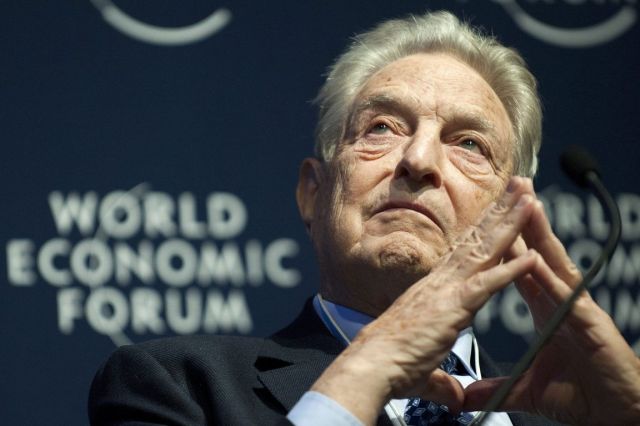
World Economic Forum, WEF, in Davos

Back in January 2018, the multi-billionaire announced that cryptocurrencies were a ‘bubble’. He hasn’t been the only one to say this, of course. However, in the last week he seems to have quite radically changed his mind about this, as his ‘family office’, valued at $26 billion, has announced via Bloomberg and other media outlets, that it plans to trade digital assets.

Soros Fund Management, which is based in New York, and its macro investing division headed by Adam Fisher, got the green light internally to trade in digital currencies, although Bloomberg says he has yet to actually make a trade.

When Soros spoke at the World Economic Forum at the beginning of the year, he was scathing about crypto and claimed it could never function as a viable currency. He also said: “As long as you have dictatorships on the rise you will have a different ending, because the rulers in those countries will turn to Bitcoin to build a nest egg abroad.” This is similar to the many, many commentators on cryptocurrencies who have tried to tarnish the reputation of Bitcoin and other altcoins by connecting crypto with either the nefarious dark net, or with those who seek to beat the system in some way.

However, he didn’t predict what would happen to the cryptocurrency in the first quarter of 2018. The precipitous drop in the Bitcoin market cap sent some, like hedge fund manager Mike Novogratz, scurrying away from trading in cryptocurrency. For example, Novogratz decided against setting up a crypto fund, but has pursued links with a merchant bank that focuses on cryptocurrencies and blockchain technology ventures.

But other hedge fund managers in macro investing have been turning towards it as hedge fund profits slide. John Burbank is one example, He closed hi main hedge fund and “plans to raise $150 million for two funds investing in digital currencies,” says Bloomberg.

And Soros has been betting on cryptocurrencies, even if it is by a roundabout route. At the end of 2017, his firm acquired a large stake in Overstock.com, which is an online discount company. It accepts payment in cryptocurrencies and was the first major retailer to do so. Overstock then announced it would launch a digital currency exchange and an ICO, but this awakened the SEC last month, and it is investigating the proposals. Consequently, Overstock’s share price dropped.

Nevertheless, let’s remember that George Soros had, and still has, skin in the game, whilst warning the world that Bitcoin et al, are in a ‘bubble’.


The human genome: a suitable case for the blockchain

blockchain

New blockchain projects are announced every day in the crypto press. They range from the practical to the fantastical, but one that caught my eye this morning, is the Shivom project that aims to “enable DNA data owners to collaborate with revolutionary change-makers in biotechnology, healthcare industry and government-ordained research institutes and contribute to an unprecedented era of medical marvels.”

What is the offer for you and me? Essentially, we can ‘donate’ our DNA for use by researchers, have a guarantee that there is securely controlled access to our DNA data and get rewarded for making the donation.

If you’ve been following the human genome story, you’ll know that since 2003, research into this element of the human makeup has been ever more intensely researched. It has already led to increased understanding of the way specific genes contribute to our health and to disease.

Shivom wants to build the world’s largest genomic hub. Participants will be rewarded for sharing their DNA with scientists and the sale of DNA testing kits to donors is another element of Shivom’s revenue stream. Cointelegraph writes: “Members of the Shivom ecosystem will have access to ‘an open marketplace for healthcare providers to add their apps and services, alongside genomic data analytics and personalised medicine.”

The most important thing with this project, in my view, is security. No DNA donor wants this most personal of data, the blueprint of who each individual is, getting into the hands of persons unknown. The Facebook-Cambridge Analytica case has already put the wind up a number of social media users, who feel betrayed that their personal data was essentially sold on without their agreement. To put it bluntly, it was stolen. But there is a significant difference between a Facebook profile and a person’s DNA.

According to Shivom, there is tight security around the DNA that will be stored on the blockchain. When data is sold to third parties, each of these must have a paired private key to access the data, with donors controlling access to their information even after it has been sold.

The scientific potential of this project is not to be underestimated. For example, the data could be used in clinical trials, or for more general drug research and development.

It is selling the OmiX token that will give holders access to the benefits of rewards for donating data, accessing genome database and acquiring DNA kits. It is working with several scientific bodies, the Indian state of Andhra Pradesh, which will give Shivom access to around 60 million people’s DNA, and India’s largest cancer care and research facility.

It’s another example of just how flexible and diverse the blockchain is; it isn’t just about cryptocurrency, it is potentially changing the direction of every aspect of the world we inhabit, and the future of humans in it.


Abra CEO predicts big investment in crypto in 2018

xtimthumb.php,qsrc=https,3A,_,_cryptoslate.com,_wp-content,_uploads,_2018,_03,_abra-bitcoin-cover.jpg,aw=824,ah=298,aq=75.pagespeed.ic.EnEIYf79xw

Abra is a cryptocurrency investment app and its CEO has recently made the headlines in Cointelegraph by making a bold prediction that big investors will “make all hell break loose” in the altcoin market this year.

Speaking to Business Insider last week, Bill Barhydt of Abra, which is backed by American Express, explained that he believes the cryptocurrency sector will boom again this year when the really big investors stop sitting on the sidelines and decide to get involved.

He said: “I talk to hedge funds, high net worth individuals, even commodity speculators. They look at the volatility in the crypto markets and they see it as a huge opportunity. Once that happens, all hell will break loose.” And, as he also points out, once these guys open the door, it won’t be closed again.

Barhydt admits that the cryptocurrency market has been going through a massive wobble, reflected in the decline in the overall market value of crypto. It peaked at $800 billion in December 2017 and is currently around $300 billion. Searches on Google for Bitcoin and other cryptocurrencies have declined in tandem with this, and there is a correlation between crypto prices and Google activity.

However, he is confident that prices will recover as the year progresses and institutional investors, such as hedge finds, decide to explore the potential of the crypto market. He gave the example of Japan where the crypto prices went up as financial institutions invested in them. Now, Barhydt believes that the West needs to catch up with Japan.

He concluded the interview by saying: “There really is zero large-scale institutional money from the west in crypto right now. Once a large, sizable chunk of Western institutional money starts to come in — watch out.”

Once the floodgates open in the West, what is happening on Google trends will become irrelevant. Will 2018 be the year we see mass adoption of crytpocurrency by big financial investors? We still have a way to go to find out, but if Barhydt is correct then there is a compelling case to HODL your crypto, regardless of the recent volatility.


Twitter, Facebook and Google under fire from Eurasia

facebook-reu-L

The social media giants’ blanket ban on crypto and blockchain related advertising hasn’t gone down well in Russia, China and South Korea. According to a report in Cointelegraph the major blockchain associations of these countries are planning to file a joint lawsuit against Google, Facebook, Twitter and Yandex, says the news agency TASS.

Facebook started the ball rolling with this back in January, although after the emergence of its role in the Cambridge Analytica scandal, Zuckerberg and Co. don’t have much moral high ground to stand on when it comes to “misleading or deceptive promotional practices,” which was its given reason for banning ICO adverts and anything related to crypto.

Google also announced a ban in March, which comes into effect in June, and Twitter confirmed its ban this week. Yet, Jack Dorsey has been talking up Bitcoin as the world’s future single currency. It’s undoubtedly confusing and smacks of something like hypocrisy.

The Eurasian organisations, which include the Russian Association of Cryptocurrency and Blockchain (RACIB), the Korea Venture Business Associations, and LCBT, a Chinese association of crypto investors, are not going to just sit back and let it happen though. The RACIB has already stated at a conference in Moscow, “the actions of these four tech companies have negatively affected the crypto market.”

Its President, said:

“We believe that this is a use of the monopoly position of these four companies, which have entered into a cartel agreement with each other in order to manipulate the market. The ban from these four organizations has led to a significant drop in the market in recent months.”

To fund the lawsuit, the organisations have created an umbrella Eurasian Association of Blockchain, and they have been asking anyone to “chip in” whatever they can.

Most significantly, Yury Pripachkin of RACIB, said the “claim will also be filed against the companies’ shareholders if they have crypto wallets.” The lawsuit will be filed in the USA, primarily because Pripachkin noted that it has states like Wyoming that are “loyal to cryptocurrency.”

This is a story to watch, because if the Eurasian Association of Blockchain is successful, and even if it isn’t, we will all have a clearer view of social media’s muddy waters around the cryptosphere.