The New Necessities

As technology progresses we have created a list of new necessities that we see as absolutely fundamental to living in a way that we see as fitting. In past decades, such as the 50s and 60s, these ‘things’ were fewer in number and many of them were focused around the domestic scene, such as vacuum cleaners, washing machines and dishwashers. Some of these were only available to wealthier people, whereas today, a refrigerator is present in almost every home in the developed world.

Today, we have moved on to the latest gadgets and services. The need for Wi-Fi, not just in the home, but everywhere we go, is just one of the new necessities. The mobile phone is another one, and younger generations can’t believe that people managed to survive without one. The smartphone has raised the game in mobile telecoms and now, if you don’t have an iPhone or Samsung Galaxy, you are seen as being out of step with society.

the new

What people want

I was looking at a recent survey of the luxuries that people couldn’t do without and was quite surprised to read what people considered vital and what could easily be discarded. Pets, a clothes dryer and a good mattress were classed as ‘must haves’ alongside Wi-Fi and a smartphone. It is a rather eclectic list. Buying lunch and eating out was also prioritised over going to the gym in the health and wellness category, which is also slightly odd, and such is the hold of coffee on today’s population that it was chosen as the ‘must have’ beverage.

Interestingly, grocery delivery isn’t as popular as the Amazon Prime service, and a music streaming service like Spotify is less popular than Netflix. Beauty products are almost a ‘must have’ but not quite, and in fact the whole Health and Beauty sector scored very poorly in terms of necessities, which strikes me as curious given the amount of marketing that goes into this sector.

A personal trainer is at the bottom of the health list, followed by massages and manicures, the latter scoring about the same as a grocery delivery service. Salon haircuts and attending a gym are on a level with Amazon Prime and organic produce, while the beauty products are on a par with having a dishwasher. But, nothing in Health and Beauty makes it onto the ‘must have it’ list.

Huge potential for the mobile industry

What we can conclude from this piece of research is that communication tools are the things we value most. Of course things like Amazon Prime don’t work without Internet, so many of the services that are further down the list are dependent on those two items at the top – Wi-Fi and a smartphone. Both these give us access to a world, at a new speed. And this is why the mobile telecoms industry is such an exciting one, because it is an important part of people’s new necessities.

Leadership Matters More Than the Leader

Some people think that a CEO determines the success of a business; that it is their personality and style that is the decisive factor. However,  CEOs come and go, yet the business they are in charge of survives, so I would argue that it is not down to one person and how they do things, but instead it is the leadership strategy that is the key to a company’s longevity.

As Josh Bersin wrote in Forbes magazine: “Long term business performance comes from leadership culture and careful continuous development of leadership at all levels.”

And his research into the business performance of a number of companies with high profile CEOs, indicates that it is the development of leadership within all levels of the business that has the most impact.

chess

The enormous benefit of developing a leadership culture is that it protects the business against changes in ‘personalities’ at the top. The boat is not so easily rocked when a healthy strategy is in place and there are several ways of achieving this kind of stability.

It is noticeable that the best performing businesses link leadership strategy to business strategy. What this means is that operations at the mid and lower levels are aligned in a way that ensures a business thrives. This is achieved through coaching and training programmes that enable the best leaders in the company to rise to the top of departments, and all of them understand that strategy and team work are more important than personalities.

Leadership is not the same as management. For example, ‘management’ is concerned with the overall organisation, planning, integrations, budgets and development. But ‘leadership’ is focused on a very different set of activities, because it is, or should be, based on leading the people who work in the company to ensure its success.

Therefore, leadership develops the following attributes:

  • Motivation
  • Encouragement
  • Selection of talented people
  • Coaching and training
  • Building trust

You can see that these are quite different qualities to those valued by the management function of an organisation. They are all people-centred and focused on getting the best out of everyone, at every level, and on finding the best people for every job.

Leadership is about team building and creating loyalty. It is about making every member of the organisation feel that they have something of value to contribute, regardless of what level they are at. A strong leadership strategy embraces its members, and in a way replicates our notion of family. This in turn creates an emotional investment in the success of a business, which is invaluable to its owners.

When an inclusive and encouraging leadership strategy is firmly established, the business is well defended against any mavericks who might set themselves above the rest of the organisation and try to impose their personal whims on it. Leadership strategy trumps the role of CEO in any business; that’s why leadership is more important than leaders.

The craze for ICOs explained

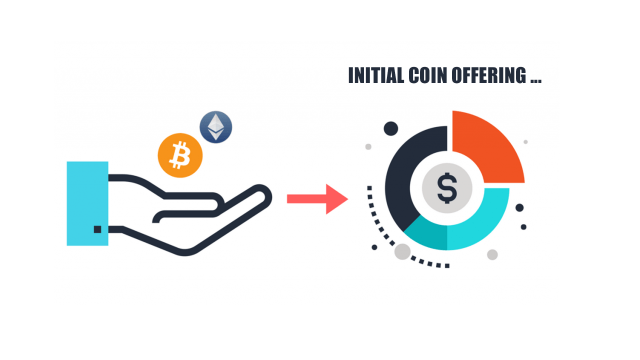
Initial Coin Offerings, which are usually referred to as ICOs, are the hottest trend in the financial world. This is the amazingly innovative tool that businesses are using to raise funds rather than use the more traditional routes of banks and venture capital.

ICOs are proving especially popular with startups as a way to raise cash for projects, because it is more democratic, transparent and faster. It also uses a digital currency or a token, which is a term you’ll hear used by companies launching ICOs.

ico

Tokens or digital coins

So, how do they do it? An ICO typically involves selling a new digital currency, or token at a discount. When the cryptocurrency succeeds and appreciates in value, the investor has made a profit. These tokens are often exchanged against digital currencies like Bitcoin or Ethereum and the new tokens can easily be sold and traded on existing cryptocurrrency exchanges.

Ripple and Ethereum set the trend

The first cryptocurrency to employ an ICO was Ripple, which is a payment system that promises to supplant the current SWIFT transaction procedure used by international banking. Its developers issued 100 billion XRP tokens, and the sale of these funded the development of the Ripple system, which is now finding traction with major banks.

The most prominent ICO, however, has been Ethereum. In mid-2014 the Ethereum Foundation sold ETH coins against a 0.0005 Bitcoin value for each one. This gave them nearly $20 million, which served as the capital base for the development of Ethereum, which is one of the biggest newcomers to the blockchain.

2017 – The Year of the ICO Trend

But 2017 is the year that ICOs really took off. And just to show you how hot the ICO trend is, look at these two examples: Gnosis raised $12 million in 10 minutes, and a new web browser, created by the founder of Mozilla, raised $35 million in 30 seconds. Yes, that’s right, not even one minute.

We are seeing new ICOs being announced every day. For example, a hotel booking company based in Bulgaria that will use blockchain to save its customers from paying expensive booking fees is promoting its LOK tokens via social media. It has the potential to become the next Booking.com, and if it does, then the people who have bought the LOK tokens at the pre-sale price, which is discounted, will stand to make an excellent profit. Just look at the figures for Ethereum and Gnosis and you will get a good idea of just how big these ICOs go, and how fast.

For example, if you had bought ETH, the Ethereum ICO coin, when it was sold at 0.0005 Bitcoin and that value is now 0.05 Bitcoin., you would have made substantial gains. Successful, ICOs can provide gains to their investors of anything from 100 to 500 per cent.

We’ll be bringing you more information about ICOs and how they use smart contracts, another blockchain innovation that is set to enter the mainstream thanks to Ethereum. This is truly an exciting time for startups, because ICOs offer a truly revolutionary way to raise funds for a business dream.


Mobile Technology Trends of 2017

The development of mobile technology continues to move at speed and this year we have seen some critical new applications, so much so, that I believe 2017 will be seen as the benchmark year for mobile technology, especially in its use by small businesses.

There have been some outstanding apps developed by consumer brands like Subway and Starbucks, and this opens the way for less well-known businesses to do the same. In fact, I read that 50% of small businesses are creating a mobile app this year and that is a great indication of the importance they place on mobile for growing a company.

wordpress m

Location, location

Another trend that has grown impressively this year is that of location-based apps. These allow a business to offer a service based on the customer’s location and it is not difficult to foresee that the ability to offer real-time services in a specific location will have an impact on a variety of small businesses, and the larger ones.

Augmented reality

Augmented reality apps are another trend that is gaining traction. Some people thought these were just a gimmick, but when you combine the AR technology with a utility app, in other words one that is practical and useful, you have an app that is very engaging. They particularly appeal to the millennial generation and businesses that work on using augmented reality will have better engagement with customers in this group.

Instant apps are a winner

I also see that instant apps are becoming more important, for obvious reasons. There is no need to find the app and download it, install it and all the rest. The apps that run instantly when needed and are the secret of a faster, simpler mobile experience. Google’s new technology is leading this sector.

Artificial Intelligence

Artificial Intelligence (AI) is also making inroads in mobile apps. A number of developers are embedding it in their apps, which is a significant step forward for educational apps. For example, apps that teach children based on how that child learns are emerging. All children have different learning styles and these apps will help them to achieve even better exam results. It can also be applied to consumer shopping with the creation of apps that help you to shop based on what you like, so that the consumer would essentially have a personal shopper on their mobile device.

Remote control

We are also seeing more gadgets and household equipment being linked to the Internet and this requires apps to control them remotely. This is another trend that will boost the growth in mobile technology. And, security is another factor that developers are working on this year, as our mobile devices become increasingly storage devices for money and its equivalent.

It has been predicted that around 268 million mobile apps will be downloaded by the end of 2107 and this translates into $77 billion in business revenue. This sum doesn’t just come from purchasing apps; it is revenue that is also based on increased sales through improved customer engagement and loyalty. This is the secret of growth and why businesses should be adopting mobile technology as soon as possible.