Initial Coin Offerings – the hot new trend

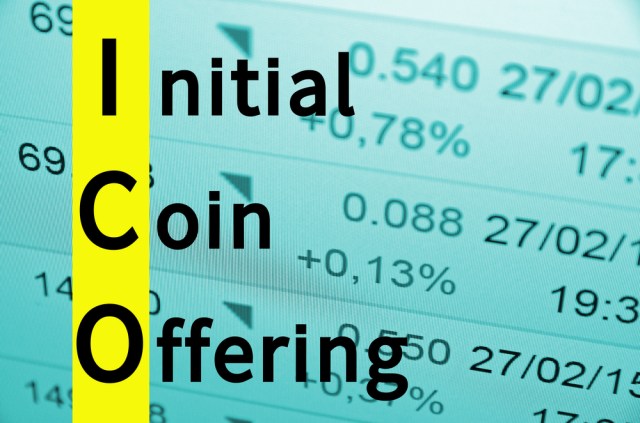
Everybody is talking about Initial Coin Offerings or ICOs. Whether it is the expert analysts or the mainstream newspapers, there is a buzz around issuing new digital coins. And no wonder – startups around the world are raising hundreds of millions of dollars through ICOs.
shutterstock_665273755

Richard Kastelstein, a partner at Cryptoassets Design group, which helps companies launch ICOs, told Business Insider in July 2017 that half a billion dollars had been raised since the start of the year. It’s a sensational sum of money, given that ICOs didn’t even exist five years ago.

Raising millions in minutes

And, get this, Gnosis, a prediction market for digital currency Ethereum raised $12 million in 10 minutes in April this year. Brave, a new web browser started by the founder of Mozilla, raised $35 million in 30 seconds by selling ‘Basic Attention Tokens’.

April 2017 is being cited as the month that ICOs really caught fire and financial experts believe they will get bigger and bigger. So, how do you set up an ICO?

Setting up an ICO

It’s quite simple really. To raise money through an ICO, a company issues a new digital currency that can either be spent within its ecosystem, a bit like Disneyland dollars, or used to power part of the business, like the fuel you put in your car. And as one ICO expert pointed out: “With tokens/digital coins you can get thousands of engaged supporters who are extremely motivated to see your company succeed.”

Foe example, Jan Isakovic, CEO of ICO platform Cofound.it has a token that is used on its platform by all the startups applying to join the platform. He raised $14.8 million in June this year through an ICO and this is funding the construction of a platform to connect ICO-funded companies with experts who can help grow their business.

Better than venture capital

Isakovic prefers ICOs because of poor experiences with the more traditional ways of raising funds, such as venture capital. As he says, this method is slow and startups don’t always get the support they need, but with an ICO, the funding comes in fast and all the people who put their money into it are engaged and energised to make it work.

Setting up an ICO is relatively simple, and most companies use the Ethereum blockchain network that allows people to write ‘smart contracts.’ Isakovic explains: “A smart contract is effectively a piece of software, a piece of code. In our smart contract, it says we are selling 125 million tokens, our cap is at 56,000 Ether or something. The ICO lasts until the cap is reached or until four weeks is done. Calculate the contribution and then send tokens. It’s two or three pages of programme and Ethereum does everything else.”

ICO exchanges

And there is another advantage: unlike buying shares in an early stage company, investors in ICOs can trade the coins almost immediately on a number of exchanges, rather than waiting for a company to list on a stock market. This attracts investors looking to make money, and this is pushing up valuations.

When you look at kript.io, a decentralised mobile app and social network for investing and trading in ICOs, you realise the phenomenal array of investment opportunities that are available, the simplicity of the concept and its security, because the Ethereum platform used for ICOs has proved itself to be bomb proof.

A booming market

The market capitalisation for cryptocurrencies has been steadily growing since the beginning of 2017; in fact it has multiplied by 1.5 times. Without doubt blockchain technology is going to be the future of the financial market and ICOs are going to play a massive role in fund raising. ICOs really are the trend to watch.


 

Economic Predictions And Trends For 2017

Trend watching, especially when it comes to what is happening in the economy is always interesting, sometimes very exciting and occasionally a bit of a let down. In 2017 we’ve been highly focused on political news, and the new trend of what is fake and what is not, and the economies have been in something of a state of flux as a result, but here are some directions that we’ve been going in that may continue into next year.

top

American expansion

The soothsayers predicted that the sustainable expansion seen during the Obama era would suddenly see expansion with the election of Trump. Was that because he is a businessman rather than politician? Perhaps, but Donald’s big boom hasn’t yet happened, although there is some growth.

The Brexit Effect

Many foresaw that the UK leaving the EU would bring uncertainty to the UK economy, and guess what, it has done just that. Every time a statement is made from Downing St. about the state of the exit negotiations, the markets either have a moment of hope, or take a nosedive. Expect to see more of this.

The EU

Euro-sceptics said that the Netherlands, France and Germany would surprise everyone with a vote against membership of the EU. So far, elections in France and the Netherlands have shown strong support for the EU and it is now hard to imagine that Germany will show any inclination to leave.

Chinese stability

China’s economy is looking increasingly stable and its deflation pressures are easing. Lowered interest rates will ease the country’s high debt levels and this helps the global community as well.

Watch Trump

It has been quite a year of watching Trump and what he tweets, and then watching how stock markets and other governments respond. He was very bullish about China and imposing high tariffs on their goods during his election campaign, but so far any anti-trade action has been subdued, perhaps due to the fact he is now more preoccupied with North Korea. But Trump and China is still one to watch.

Interest rates

As predicted in 2017, the USA has hiked interest rates twice this year so far. This is a show of confidence in the U.S. economy thanks to a rise in employment levels. Will this continue? We have yet to see. The UK by contrast has been extremely cautious with its interest rates and a speech by Mark Carney, Governor of the Bank of England on 19th September 2017, suggested that any rises would be “limited and gradual.” This gave sterling a very slight advantage over the dollar during trading following the announcement, and the pound has been bouncing up and down all day and the FTSE 100 went into the red. What will happen with sterling and the dollar by December is the question everyone would like an answer to.

Higher stock prices

In 2017, stock prices have looked extremely solid and have followed an upward trajectory as predicted in 2016. We can expect to see this continue into 2018.


The New Technology and Human Values

Values, personal, national and international are at the core of human societies. They are complex and as individuals we get them from multiple sources: parents, culture, experience and beliefs about what is a good life and what gives life meaning.

When we make a choice, we use our values to come to a decision. And we like to think that we have the freedom to make choices based on our values in every area of our lives. However, this is not quite how it is, and new technology plays a role in determining our values, that then affects our decisions, whether we admit it or not.

blog m

Choices, power and status

In reality our choices are limited and our values change over time in significant ways that are often unpredictable. I was reading an interesting article by Brad Allenby at Slate, who said in relation to new technology and change: “Values that may lead one society to reject a technology are seldom universal, meaning that the technology is simply developed and deployed elsewhere.” The upshot of this is that in a world that overall values technology very highly, those countries which adopt a new technology are seen as having power and status, whereas those that reject it are perceived to be significantly inferior.

We never have the full picture

We would also like to make our choices based on having complete information, but we never get this.  This is true for you and me as individuals as well as for corporate entities and governments. For example, if I made investments based on having the full picture, I’d be very wealthy in a short time. But, like other investors, the whole picture is kept from us. All we have is “the best available information” and we have learnt to make decisions based on ‘best available” because otherwise we wouldn’t take any action.

Change and stability

And, we are used to a rate of change in society that allows us to shift our values and choices in a way that maintains stability. In other words, change is rarely so radical that our values and choices struggle to keep up. Yes, there have been times in history and in specific parts of the world where there have been dramatic shifts that have left people feeling as if the world was collapsing from under them, and we are in a period of rapid change right now, due to new technology, that gives us a feeling of losing balance.

The key areas of technology responsible are: nanotechnology, biotechnology, information and communication technology, robotics and applied cognitive science. As Brad says: “The cycle time of technology innovations and the rapidity with which they ripple through society have become far faster than the institutions and mechanisms that we’ve traditionally relied on to inform and enforce our choices and values.”

Moving into future values

Right now we are scrambling and trying to keep up with the advance of technology. We haven’t yet grasped how to make meaningful choices, not have we scoped out responsible values regarding the application of all these technologies. Currently, we are trying to use ‘old world’ ideas that are “naïve and superficial” and making choices that don’t quite fit the technology, or at least don’t maximise its potential uses.

I believe we will get there, because history shows us that we have always been able to move our values and choices forward, even if it takes us a little time to catch up with the technology.


Introducing Bloom: The Future of Credit

Sometimes my social media feed throws up something that immediately catches my eye because it smells of revolution. This morning was one of those days. I don’t always pay much attention to sponsored posts, but when I spotted one that mentioned blockchain, Ethereum and credit in the same sentence, I thought I’d take a look. I have to say that I found something that I think is has a very strong potential to change the world.

CC

Three billion people without credit!

I discovered that despite all the advances we have made there are three billion people who can’t access the most basic credit services and in many of the developing economies, people are forced to take out illegal loans at great cost, and sometimes it is not just the repayments that are at sky-high interest rates, the lenders can turn to violence if a borrower gets behind with clearing the debt. For people without access to credit, buying a home or starting a business is simply inaccessible.

Credit scoring is unfair everywhere

But, it isn’t only developing economies where people can’t get credit. Just look at the USA, the world’s No.1 economy, and yet there are 45 million Americans with no credit score. This means that these people, who are in fact creditworthy, are unable to own a home or start a business because of the limitations of artificial credit scoring. I learnt some other surprising facts about credit scoring from the Bloom website:

  • In China your political opinions affect your credit score
  • In Spain, France, Portugal and Scandinavia there are no credit scores, but any negative financial behaviour is kept on file
  • In the UK you may have trouble getting credit unless you are registered to vote
  • In the UAE, religious restrictions on lending have prevented the development of a credit scoring system.

The Bloom revolution

And, despite the fact that credit around the globe is so obviously brimming with inequalities, nobody questions it. Except for the four guys who have started Bloom. And they are Jesse Leimgruber, Alain Meier, John Backus and Ryan Faber.

These four young men from Stanford University have come up with Bloom because they believe that everyone deserves access to credit, since this access is what helps economies grow.

Bloom is built on Ethereum (blockchain) and the InterPlanetary File System (IPFS), which is a new hypermedia distribution protocol. This platform will provide “end-to-end protocol for identity verification, risk assessment and credit scoring, entirely on the blockchain.” Let’s be clear, Bloom is not a lending agency, it is a new technology platform that facilitates credit lending – it is a platform to migrate all lenders to the blockchain. And here is the ultimate vision: “From mortgage providers to local credit unions, lenders across the globe will be able to tap into a far more comprehensive credit database and expand their market to three billion new borrowers.”

Not only will this platform enable those three billion with no access to finally be able to get credit, it will provide a whole new scoring methodology for the world’s population of seven billion.

A White Paper and more information is available at Bloom where you can find out more about decentralized credit scoring powered by Ethereum. Hopefully, the world can look forward to a fairer future through this blockchain technology.