Are the rewards of DeFi platforms sustainable?

Decentralised finance (DeFi) has emerged as a very productive economy within the crypto industry. It is generating billions of dollars in fees and “distributing vast wealth to project founders and users,” says Edward Oosterbaan. But, he wonders if there is a chicken and egg question to be answered. “Are users using these applications out of genuine want/need or are token incentives and yield artificially boosting demand?”

As he says, there is really no easy answer to this, because there is a “positive feedback loop” between real adoption and the amazing yields that many users are enjoying. It’s this loop that has boosted the market, with users either earning yield on both sides of lending platforms, or receiving 50% interest annually on trading fees and token incentives for providing stablecoin liquidity to exchanges.

From what he is saying it would appear that the rewards DeFi can give to users is driving use of its platforms, rather than a more purist belief in the future potential of DeFi to disrupt the financial system. It’s a case of the small picture towering over the bigger picture.

But it won’t always be this way. As Oosterbaan says, even the DeFi community agree that the substantial rewards will not last forever, and are in fact unsustainable. He points out that yields dropped harshly in the early summer as asset prices fell and trading volume slowed. And if we hit a sustained bear market like the one we experienced from 2018 to 2020, what then?

Compound, which is a leader in the DeFi lending market, recently issued a report highlighting the fact that when token incentives were factored in, protocol earnings were negative. Oosterbaan points out that what Compound has basically been doing is this: “It has essentially been trading equity to rent liquidity that may or may not be sticky when it eventually decides to stop emitting COMP in coming years, as per the Compound governance model.”

Others are doing the same, except for a few notable names, such as Uniswap, Maker and OpenSea. For example, Curve distributed 33.3 million CRV to liquidity providers over the past 30 days worth $156 million. During the same period, Curve had $5.7 million in earnings for its protocol and token holders. However, there is an important difference between Curve and some of the other platforms. Curve has created a strong utility for its token, so its token distribution does not equate to selling pressure.

But Curve is quite distinct. In the DeFi ecosystem there are many, many more platforms that “use inflationary tokenomics for short-term speculation and attention.” As Oosterbaan says, inflation and yield without adoption is a recipe for disaster.
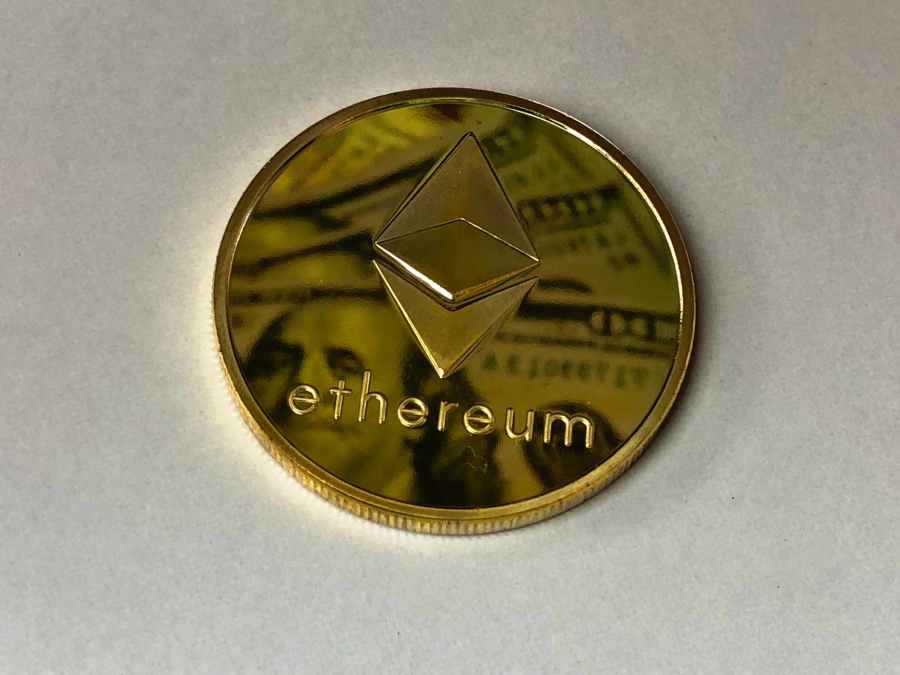
Is Ethereum too expensive?

I’m not referring to the Ethereum token (EYH), but to the gas fees associated with using the Ethereum blockchain, the main ‘go-to’ for DeFi. Will Gottsegen in a fine opinion piece for Coindesk quotes a crypto investor named Zhu Su who pulled no punches last weekend, when he tweeted, “Yes Ethereum has abandoned its users despite supporting them in the past. The idea of sitting around jerking off watching the burn and concocting purity tests, while zero newcomers can afford the chain, is gross.”

Before we go any further, Gottsegen says we should be aware of the fact that Su is a founder of investment firm Three Arrows Capital, which is betting big on an Ethereum competitor called Avalanche. So there is an agenda behind Su’s attack on Ethereum, but he may have a point about the gas fees.

If you want to use dapps, explore DeFi protocols, or get in on the NFT (non-fungible token) trend, you will eventually come up against Ethereum’s fees which – at this point in the development of the blockchain – can be shockingly high, as Gottsegen says. He points out that minting an NFT on Ethereum will generally cost between $60 and $250, depending on the time of day and the stress on the network. And the more users there are competing to get their transactions through, the higher the fees go.

Gottsegen describes his own experience when he tried to swap “about six cents worth of ETH for 50 Pisscoin”, the latter being an Ethereum-based token he was researching for a story, only to be told “I would need to pay an additional $616.10 for a transaction that might clear in about 40 minutes.” What is more, if the transaction failed the fees would be lost forever, as is the case with crypto.

Of course, Ethereum has its many defenders. Crypto venture capitalist Chris Dixon, whose company, Andreessen Horowitz, is heavily invested in the Ethereum ecosystem replied to Su’s tweet suggesting that the network is still in its infancy, and that infrastructure may eventually make things cheaper and easier to use.

But at the moment infrastructure is minimal. Polygon, a so-called “layer 2″ scaling product built on top of Ethereum, is designed to make fees a little cheaper. Other networks, like Solana, are betting that users may just ditch Ethereum altogether.

Gottsegen concludes by saying, “As it’s now set up, Ethereum is like a poker table with a high buy-in. Everyone else will have to wait for a cheaper option.”

Kraken grabs ‘top influencer’ spot for 2021

According to a recently published study from Utility Bidder , the fintech sector is set to surpass $382 billion in 2027. It also estimates that blockchain-specific fintechs are likely to be worth in excess of $67.4 billion in the same timeframe. The report also had good news for Kraken, which it named the most influential blockchain company of 2021.

The Utility Bidder study analysed 50 fintech firms selected from the Forbes’ Fintech 50 report. They used four factors to assess each firm: total funds raised, the latest known valuation, number of Twitter followers, and the global searches stemming from Google Ads Keyword Planner between August 2020 and July 2021. Each one was given a score out of 10 for each factor, and as the report’s results show, Kraken was a very clear winner with a total influence score of 5.64.

Kraken is one of the largest cryptocurrency exchanges in the world and also was the most followed fintech company on our list, with a Twitter following of over 780,00, far more than the majority of other fintechs Utility Bidder looked at. It is now available in over 170 countries around the world, with over 70 cryptocurrencies available for trade Kraken also recently became the first crypto exchange in the United States to be granted a special purpose depository institution (SPDI) charter.

Gemini, in second place, only managed to achieve 2.33, while the others in the top 10 didn’t even manage to score 2 – Alchemy at the eight spot only scored 1.10. It is interesting to note that Kraken has a valuation of $20 billion, whilst Gemini’s valuation is around $5 billion. Alchemy has a valuation of only $505 million.

Robinhood is another winner

In terms of financial technology as a whole, the top five fintech firms include Robinhood, Stripe, Kraken, Klarna, and Wise. Robinhood clocked up a score of 7.22 for being the “most searched for” fintech on this list, with over 28 million searches in the last twelve months, and they’ve also raised the greatest VC funding with $5.6 billion. As the report says, Robinhood is one of the big boys of the fintech world, with over 13 million users using the app to invest in stocks and funds commission-free.

Stripe, the software as a service company that has changed the game when it comes to payments, with no monthly or setup fees and no hidden costs scored 6.07. Started by two brothers in Ireland, Stripe is now worth an estimated $95 billion having experienced rapid growth and it is now investing in other start-ups such as Monzo.

Thinking about crypto as money

There are a number of people in the financial world who make derisory remarks about cryptocurrencies ever becoming accepted as ‘real money’. Their arguments point to its volatility, which they say makes it impossible “for cryptocurrencies to serve what traditional economics describes as the three functions of money: 1) a medium of exchange, 2) a store of value, and 3) a unit of account,” as Michael J. Casey writes at Coindesk.

Casey suggests that this argument doesn’t work if “the three functions framework is based on a flawed, or overly narrow, definition of money.” He points us towards a book by Felix Martin ‘Money: The Unauthorized Biography’, in which the author says that historically people have had a flawed view of money as a “thing”, i.e. a banknote, but he says that it is really “a socially invented governance system for tracking transfers of property and clearing debt in a commonly trusted manner.” Martin believes we have “fetishized” money as something to be owned and accumulated, rather than seeing it as a means to an end.

In Martin’s view a nationally accepted currency, such as the dollar, is merely a tool that makes it easier to carry out transactions “across a community of otherwise untrusting strangers.” Casey says this makes cash similar to a decentralized, peer-to-peer record-keeping device. Still, it is difficult to challenge the dominant thinking about national currencies, which are effectively a system of social organization and control in sovereign states. But is this the only way to think about money?

Cryptocurrrencies do challenge the sovereign state narrative about money, simply because they are “censorship-resistant, geography-agnostic value transfer systems.” They provide rules and a framework of trust for users without needing to draw their authority from governments, although as Casey mentions, crypto users still have to follow the laws of their governments around cryptocurrencies.

Casey also argues that while some see Bitcoin as a replacement for the dollar, there is a bigger picture to consider, and that is the potential of digital assets to dispense with the need for universal common currencies altogether. As he correctly says, we are a long way from that happening. However, if interoperability protocols and transaction processing can be scaled in a properly decentralized manner, allowing cross-chain atomic swaps in mass numbers without having to trust intermediaries, something like a global system of fractionalized digital value exchange could be realised.

According to Casey, central banks in Singapore and the United Arab Emirates are already exploring interoperability solutions for their central bank digital currencies (CBDCs). This is a move that threatens the status of the dollar as the world’s reserve currency. If this happens, crypto could become a universal unit of account. Casey concludes by pointing out that if the dollar’s role is diminished then “the role of bitcoin, ether, NFTs and other digital assets could increase.” And how we think about money will have changed as well.