
BTC thieves stealing in the streets

btc

The whole point of cryptocurrencies is that they only exist online; they’re never going to jangle like small change in your pocket. All of us involved in the crypto world know that online theft is a risk, albeit one that can be mitigated by storing crypto assets in cold storage. Now, with more people taking crypto security more seriously, and better security tools available, we find that the crypto thieves are taking their activities offline. How can they do that?

The answer is: they are targeting those wise investors who store cryptocurrency offline and, in addition to this, they are finding out the identity of these crypto investors and actually attacking them in the street. As Darryn Pollock in Cointelegraph writes: “A number of cases have been reported where Bitcoin owners are being attacked face-to-face by thieves and being forced to deposit huge amounts of digital currency into anonymous wallets.”

He also cites the case of a Russian businessman who was held hostage on the Thai island of Phuket and forced to log in to his BTC account and pay $100,000 for his release.

This is a shocking development, but there are some steps crypto owners can take to avoid a face-to-face mugging. For a start, never brag about your Bitcoin account balance. Don’t post online about how much you have made in an amazingly short period of time. Would you normally tell people how much you have in your bank account? No, we don’t discuss those things, even with close friends. So, why do it with a crypto account?

Another Russian (they seem to be particularly unlucky) called Pavel Rashin was attacked and robbed in his home. They took about $425,000. They didn’t come for his BTC, but he had publicised online that he had recently become a millionaire thanks to his crypto investments. That was enough to make thieves take an interest in him and as he has an online blog, he wasn’t that hard to find.

Of course, if you’re a famous crypto investor, it is impossible to stay out of the news and there have been some high profile kidnappings, including that of the director of a currency exchange in the Ukraine.

Staying safer

So, don’t talk about your crypto assets publicly. Then take a technical step by setting up a multisignatory wallet. Wallets that require confirmation from multiple addresses to make a transaction permit allow the controlling keys to be spread out to different deposit boxes, banks, safes, and other locations. Therefore, even if one key is compromised, you still have control over your funds.

And finally, if you are faced with theft – give them the crypto. Your life is always worth far more.



Cybercriminals hijack major cryptocurrencies

Cyber Stock

There is a common misconception in the mainstream media that cryptocurrency, especially Bitcoin, is primarily used by criminals as a means of payment. However, the real scenario is that cryptocurrency is a target for criminal hackers. As a result, they have unwittingly created a new market for cyber security firms.

Since cryptcurrencies emerged almost a decade ago, about $1.2 billion of Bitcoin and Ether have been stolen by hackers, according to Lex Sokolin, global director of fintech strategy at Autonomous Research LLP. And as crypto values keep rising, it is more likely that crypto hacking is an ‘industry’ worth $200 million per annum.

It also costs governments and companies a substantial amount in lost revenues and illegal transactions. Susan Eustis, CEO at WinterGreen Research estimates that this figure is around $11.3 billion and she points out that the blockchain ecosystem is also at risk. Eustis also believes that his criminal activity could skyrocket as more investors and businesses enter the cryptocurrency market, especially if they do so without adequate protection.

Setting up for super security

There is a perception that the blockchain is innately secure because its records are shared and hard to alter. But, blockchain security company Comae Technologies says it is no safer than any other form of software. Indeed, its experts argue that because the blockchain is still in its infancy, it may be even less secure than software that has existed for some time. And when you factor in the issue of there being so many cryptocurrencies, each with its own particular bugs, it is a challenge to make them all secure. The answer to this will be to whittle the sector down to a few key players it seems.

Andras Cser at Forrester Research adds:” So while hacking a blockchain may be harder than breaking into a retailer’s database, the rewards are greater and you have much more information you can steal.”

A business opportunity

The situation is good news for cyber security firms. Quantstamp plans to release an automated tool that searches smart contracts for bugs, and established security firms such as McAfee Inc. may also repurpose their products for the blockchain community.

The market for software, services and hardware to secure blockchain activity was $259 million in 2017 and WinterGreen estimates it will grow to $355 billion as the digital economy expands and banks and financial institutions adopt it.  No doubt they will be keeping those funds secure.


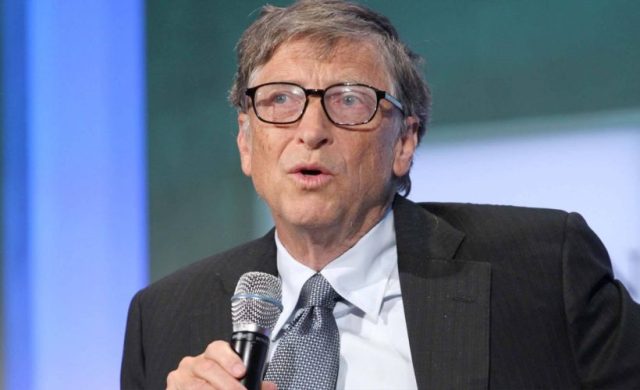
Bill Gates says crypto causes deaths: WTAF?

Bill-Gates-states-Crypto-caused-deaths-820x500

One assumes Bill Gates is a fairly intelligent man, but this became doubtful when he caused an uproar at a Reddit ‘Ask Me Anything’ session by asserting that cryptocurrencies are “a rare technology that has caused deaths in a fairly direct way.”

This is the full text of what he said, as published in Cointelegraph:

“The main feature of crypto currencies is their anonymity. I don’t think this is a good thing. The Government’s ability to find money laundering and tax evasion and terrorist funding is a good thing. Right now crypto currencies are used for buying fentanyl and other drugs so it is a rare technology that has caused deaths in a fairly direct way. I think the speculative wave around ICOs and crypto currencies is super risky for those who go long.”

But, hold on a moment – aren’t more people using dollars and other fiat currencies to buy drugs? Indeed, the 2017 Global Drug Survey shows that whatever country you look at, less than 50% of drug users purchase their fix via the dark web, which is the only online drug source using crypto for payment, and the global average is 10%.

As a result, Bill Gates’ statement went down like a bowl of cold sick with the Reddit audience. Some participants advised him to re-read the Bitcoin whitepaper, whilst others accused him of using his celebrity status to influence a negative view of the cryptocurrency market.

Is it possible that Bill Gates is being deliberately obtuse? When one audience member pointed out that fiat currencies can also be used for illegal activities such as money laundering, tax evasion, terrorist funding, and drug purchases, a statement that you don’t need to have a Harvard education to figure out (oh yes, Bill Gates dropped out of Harvard!), Gates replied: “the necessity of a physical presence makes illicit activities and transfers more difficult.”

Where has this man been living? Because, if you visit any city, even a small town, there are people paying cash for drugs on a regular basis, and it isn’t difficult o find out where it’s going on.

Is there something more shady behind Gates’ announcement? In 2015 he said, “Bitcoin is better than currency.” And the Bill & Melinda Gates Foundation has sponsored the development of blockchain solutions so that Kenyan merchants can accept cryptocurrency.  And, Microsoft is pursuing the development of blockchain technology. So, what’s happening Bill? Who’s pulling your strings?


Will advertising regulators kill the ICO star?

ico points

When Facebook announced it would not publish paid posts for ICOs, this was a strike at the heart of most ICO marketing campaigns and their social media teams had to quickly rethink their approach. However, Jonathan Keane, writing for Coindesk points out that there may be an even more “intimidating threat” around the corner, coming from global regulators.

Facebook’s statement said that it was banning “misleading or deceptive” adverts about financial products and services, with the emphasis being on anything related to Bitcoin and ICOs. In effect it was a blanket ban on all adverts for crypto startups, because Facebook can’t distinguish between the fair offer and the fake one.

This is just one marketing avenue but Keane quotes Johanna R. Collins-Wood of legal group Pepper Hamilton. She is a member of the law firm’s blockchain group, and she said: “The regulators will look at advertisements put out by the company. That’s always something they’re going to look at.”

Others are concerned about the large amount of suspect adverts for ICOs and crypto exchanges amongst others, and there are many who see it as an “immensely popular Wild West” where the legitimate business vies with the scammers for the same space. And, as Keane points out, “all the issuers and entrepreneurs in the space are still grappling with just what kinds of claims they can make in their marketing.” It is also certain that the blockchain industry needs to police itself before the regulators do the job for them and impose more stringent rules than is strictly necessary.

For example, on 22nd February, France’s stock market regulator, the L’Autorite Des Marches Financiers (AMF), released a statement about possibly curbing advertising on cryptocurrency-tied derivatives. This is not the only regulatory financial authority looking at the claims made in advertising; the SEC and CFTC are also examining the public statements made by companies in the sector.

The situation is made worse by the fact that there are no formal guidelines in place about what an ICO can claim in its marketing messages, and none of the advertising industry regulators have yet to formulate a policy. This leaves the blockchian-based startups in the dark, yet they are being penalised by platforms like Facebook. So, why not apply the existing rules for false and misleading adverts to the blockchain industry?

Here is what Keane discovered: “New Zealand’s Advertising Standards Authority told CoinDesk it had not received any crypto-related ad complaints, and the UK’s ad standards body said they had received less than 10 cryptocurrency-related ad complaints so far. A spokesperson from the UK Advertising Standards Authority responded to this by saying, “And none have resulted in us finding grounds for an investigation.”  The FCA, which does have a responsibility for financial advertising said, “it has no position on crypto ads.”

Currently the answer lies with lawyers who are telling ICO clients to comply with securities laws, and the expectation is that this compliance will eliminate any issues over misleading advertising. Google and Twitter also seem to believe that their existing advertising rules are robust enough to cover ICO adverts.

Meanwhile, many ICOs are policing their own messaging and have internal procedures that guard against any outrageous claims about low risk and large returns.

Will other channels follow Facebook, or like the advertising regulators, will they continue to take a ‘wait and see’ approach. I suppose we will also have to wait and see.